Grain Processing
KIMRINES SUPPLIERS LIMITED buys pulses from farmers in Eastern Kenya, processes them at its own cleaning and calibration facility, and supplies exporters, packers and wholesalers. Revenue reached EUR 1.21 million in January–October 2026, already exceeding the full-year 2025 result. The company is requesting EUR 500,000 to finance deliveries under two signed framework agreements with Kenyan buyers.
Company Background
KIMRINES SUPPLIERS LIMITED is a Kenyan agricultural trading and processing company based in Mutomo, Kitui County. It was incorporated on 26 January 2022 and started trading in 2023.
The company is owned and managed by Wilberforce Kayugira Luvai, who holds 100% of its shares and serves as its director. He manages the company's procurement, supplier relationships, pricing, stock planning and quality control.
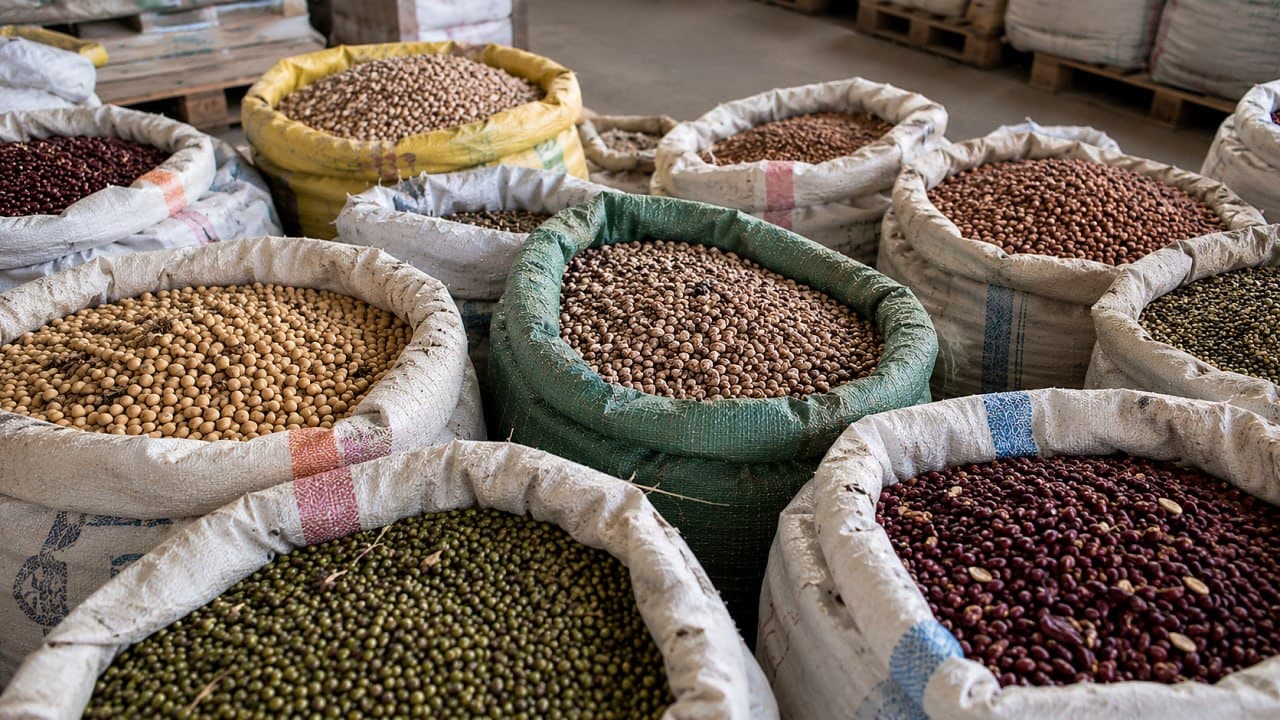
KIMRINES buys mung beans (green grams), cowpeas and pigeon peas from farmer groups, cooperatives and local aggregators, mainly in Kitui and Eastern Kenya. It cleans, grades and calibrates the produce before selling it to exporters, packers, wholesalers and food manufacturers in Kenya and Tanzania.
In 2026, the company commissioned its own cleaning and calibration line, reducing its dependence on third-party processors.
What the Company Does
KIMRINES handles several stages of the pulse supply chain:
Buying pulses from farmers, cooperatives and local aggregators.
Cleaning and calibrating grain to meet buyer specifications.
Grading and packing produce into 25 kg, 50 kg and 90 kg bags.
Storing prepared stock for sales between harvest periods.
Supplying exporters, packers, wholesalers and food manufacturers.
Delivering export lots to trading companies in Tanzania.
The company mainly sources produce in Kitui County and other parts of Eastern Kenya. Its processing line has a capacity of around 2–4 tonnes of raw grain per hour.
How the Company Works
KIMRINES works between smallholder farmers and commercial buyers who need consistent volumes and quality.
The company buys pulses during harvest periods, processes them into standard grades and sells them throughout the year. This helps buyers avoid sourcing and cleaning small lots from multiple farmers themselves.
Its three main sales channels are:
Domestic buyers: The company supplies exporters, packers, wholesalers and food manufacturers in Kenya.
Framework agreements: Buyers place monthly call-off orders under agreed supply terms. KIMRINES purchases and prepares the required stock for scheduled deliveries.
Export lots: The company supplies graded mung beans to trading companies in Tanzania, with deliveries made in full truckloads.
The company also sells surplus stock that is not allocated to contract deliveries.
KIMRINES supports selected farmer groups by providing tarpaulins and hermetic storage bags in exchange for priority access to their produce. This helps secure supply during harvest periods.
Team and Hiring Plans
The company is managed by its founder and sole shareholder, Wilberforce Kayugira Luvai. He oversees procurement, supplier relationships, pricing, stock management and quality control.
Processing workers are engaged on a casual basis depending on the volume of grain handled. Transport and accounting are outsourced, while specialist commercial and procurement support is provided on a project basis.
The source does not specify a current employee headcount or a separate hiring plan. The company expects to use its existing operating structure to handle increased volumes.
Products and Revenue Streams
KIMRINES has three main product lines.
Mung beans — the core business
Mung beans, also known as green grams, are the company's main product by procurement and sales volume. They are supplied to domestic buyers and exporters, including customers in Tanzania.
Cowpeas
The company buys and sells cowpeas, including red cowpeas, mainly for domestic buyers.
Pigeon peas
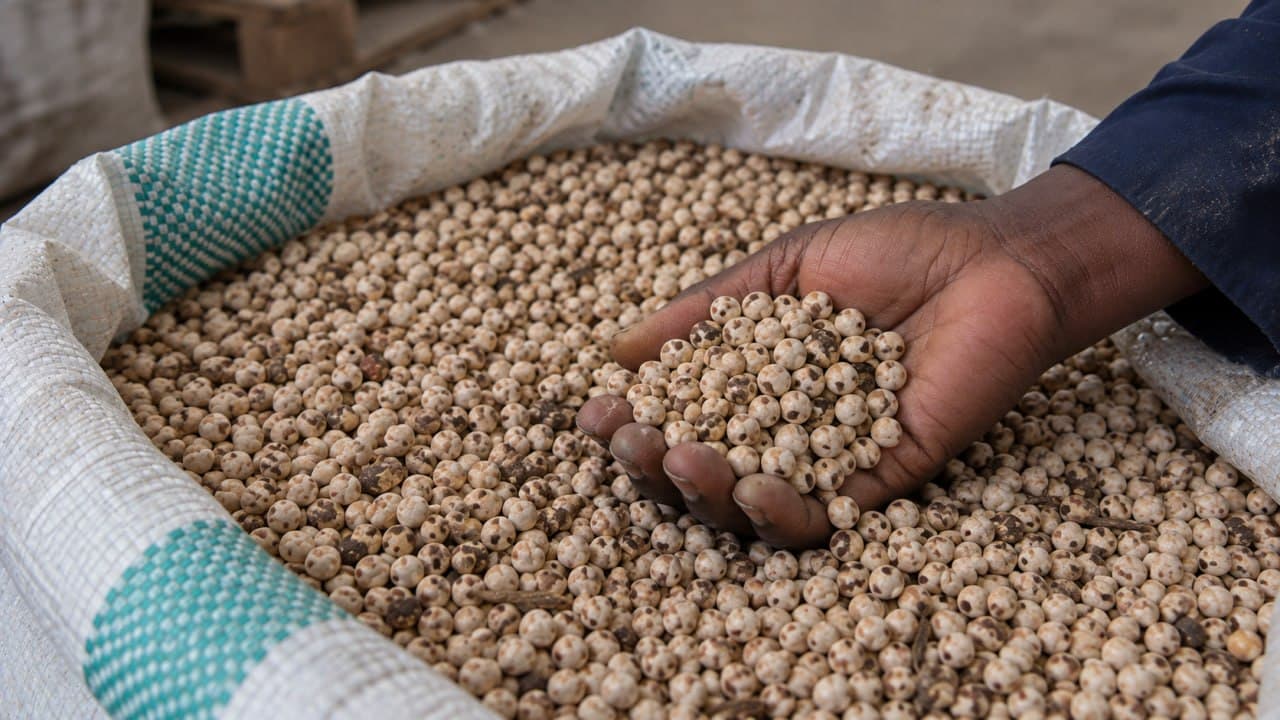
Whole pigeon peas are supplied to both domestic and export markets.
The company earns money from the difference between the purchase price of raw pulses and the selling price of cleaned and graded produce, after processing, packaging, storage and delivery costs.
It buys mung beans and cowpeas during two annual harvest periods, January–February and June–August. Pigeon peas are mainly harvested from July to October.
Growth Plan
The company plans to grow by increasing its supply volumes under framework agreements and expanding its sourcing and export activities.
Its main priorities are:
Fulfil two signed framework agreements: Supply 1,378 tonnes of finished pulses to two Kenyan buyers between November 2026 and July 2027.
Increase seasonal procurement: Purchase larger volumes during harvest periods and hold stock for scheduled deliveries.
Expand farmer relationships: Source from additional farmer groups and neighbouring counties.
Develop export markets: Target Uganda, DRC, South Sudan, India and Thailand over the next two to three years.
Expand product and packing options: Offer additional pulse grades and packaging formats to meet buyer requirements.
The company's own processing line will support larger volumes and reduce the cost of outsourced cleaning and calibration.
Loan Request
Item | Details |
Total loan | EUR 500,000 |
Drawdown structure | One disbursement |
Stage 1 | EUR 288,247 |
Stage 2 | EUR 211,753 |
Interest rate | 21.3% per annum, fixed |
Loan term | 11 months |
Interest payments | Monthly |
Monthly interest | EUR 8,875 |
Total interest over the term | EUR 97,625 |
Principal repayment | Full bullet repayment at maturity |
Total repayment | EUR 597,625 |
Use of funds | Working capital for two signed framework agreements |
Stage 1 will finance the agreement with a pulse exporter, valued at EUR 576,649. Stage 2 will finance the agreement with a pulse and cereals packer, valued at EUR 401,227.
The combined contract value is EUR 977,876. The loan will finance pulse purchases and related working capital. It will not fund equipment purchases or general company expenses.
The peak working capital requirement is EUR 556,365 in February 2027. The company expects to cover the remaining EUR 56,365 through its own resources and customer receipts.
Risk scoring
The BBB rating reflects the company's growing revenue, positive operating results, established farmer relationships and investment in its own processing line. The company has also secured two signed framework agreements to support the proposed financing.
However, both framework buyers are new customers, and the company must manage substantial seasonal purchases before receiving payment for deliveries.
Keep in mind:
The company depends heavily on its founder for procurement, pricing and commercial decisions.
The two framework buyers are new customers, so payment performance has not yet been established.
The agreements require 1,378 tonnes of finished product over nine months.
Buyers have payment terms of up to 60 days after delivery.
Peak working capital requirements of EUR 556,365 exceed the loan amount.
Pulse supply depends on harvest conditions, rainfall and seasonal availability.
Commodity price movements and export restrictions could affect sales and margins.
The company earns revenue mainly in Kenyan shillings but must repay the loan in euros.
Financials
* 2026–2027 are the company's forecast.
Financial Performance
KIMRINES has grown its revenue steadily since starting commercial operations in 2023. Revenue increased from EUR 665,689 in 2023 to EUR 1,184,780 in 2025.
In January–October 2026, revenue reached EUR 1,210,751, already exceeding the full-year 2025 result. Net profit also increased to EUR 69,748, compared with EUR 56,184 for the whole of 2025.
The company's gross margin improved from 9.8% in 2025 to 12.5% in January–October 2026. This improvement was supported by the commissioning of its own cleaning and calibration line.
Historical performance
Actual performance (EUR) | 2023 | 2024 | 2025 | Jan–Oct 2026 |
Revenue | 665,689 | 961,549 | 1,184,780 | 1,210,751 |
Cost of goods sold | 611,162 | 871,769 | 1,068,716 | 1,059,014 |
Gross profit | 54,527 | 89,780 | 116,064 | 151,737 |
Operating expenses | 16,815 | 25,185 | 32,340 | 43,285 |
EBITDA | 37,712 | 64,595 | 83,724 | 108,452 |
Net profit | 26,065 | 42,892 | 56,184 | 69,748 |
The company has been profitable in every reporting period since it started trading. Its January–October 2026 net profit was already higher than its full-year 2025 result.
Forecast (EUR) | 2026 | 2027 |
Revenue | 1,681,615 | 2,369,581 |
Cost of goods sold | 1,455,457 | 1,991,475 |
Gross profit | 226,158 | 378,106 |
Operating expenses | 56,514 | 79,380 |
EBITDA | 169,644 | 298,726 |
Net profit | 98,630 | 144,033 |
EBITDA margin | 10.1% | 12.6% |
The forecast expects revenue to grow by 40.9% in 2027. The two financed agreements are expected to contribute EUR 760,570, or 32.1% of forecast 2027 revenue.
Track record in 2026
Revenue from January to October: EUR 1,210,751.
EBITDA: EUR 108,452.
Net profit: EUR 69,748.
Gross margin: 12.5%.
EBITDA margin: 9.0%.
No interest expense recorded in the historical periods.
Commercial Pipeline
KIMRINES has five documented customer engagements with a combined stated value of EUR 1,199,464.
Buyer | Products | Commercial status | Value (EUR) |
Kenyan pulse exporter | Pulses | Signed, nine-month agreement | 576,649 |
Kenyan pulse and cereals packer | Pulses and cereals | Signed, nine-month agreement | 401,227 |
Kenyan food company | Pulses | Existing, self-funded engagement | 101,605 |
Tanzanian pulse exporter | Pulses | Existing, self-funded engagement | 79,989 |
Tanzanian pulse exporter | Pulses | Existing, self-funded engagement | 39,994 |
Total | 1,199,464 |
The two signed agreements account for EUR 977,876 and cover 1,378 tonnes of finished product. Deliveries are scheduled monthly from November 2026 to July 2027.
The three self-funded engagements have a combined indicative annual value of EUR 221,588. These activities continue separately from the proposed loan.
The total pipeline combines nine-month contract values with indicative annual sales, so the figures do not cover the same period.
Pulses
Pulses are an important food and agricultural trading category in Kenya and international markets. The global pulses market was valued at approximately EUR 91.9 billion in 2025 and is forecast to reach EUR 122.8 billion by 2034.
Kenya is a significant producer of mung beans, pigeon peas and cowpeas. In 2025, production reached approximately:
106,000 tonnes of mung beans.
88,000 tonnes of pigeon peas.
87,500 tonnes of cowpeas.
Around 90% of Kenya's green gram production comes from the Eastern region. Kitui County is an important production area, giving KIMRINES access to local farmer supply.
Export markets
Kenyan pulses are traded in regional and international markets. Tanzania is an important regional trading destination, while India, Pakistan, the UAE and China are among the wider markets for pulses.
KIMRINES began supplying export lots to Tanzania in February 2026. It plans to expand into additional African and Asian markets over the next two to three years.
Competition
KIMRINES competes with international agricultural traders such as ETG, AGT Food and Ingredients and Olam Agri, as well as local aggregators, cooperatives and informal brokers.
Its advantage is its combination of direct sourcing relationships, in-house cleaning and calibration, and the ability to hold standard grades for delivery between harvest periods.
The main market risks include seasonal supply, weather conditions, commodity price changes, storage quality and export restrictions.
Collateral breakdown
Collateral | Base value (EUR) | Liquidation value (EUR) |
Existing operational assets | 68,448 | 50,367 |
Contract goods and receivables | 352,410 | 299,549 |
Cash in pledged account | 155,913 | 155,913 |
Total collateral | 576,771 | 505,829 |
Valuation and Coverage
Coverage metric | Value |
Loan principal | EUR 500,000 |
Total repayment | EUR 597,625 |
Total collateral — base value | EUR 576,771 |
Total collateral — liquidation value | EUR 505,829 |
Base collateral coverage of principal | 115.4% |
Liquidation collateral coverage of principal | 101.2% |
LTV at base value | 0.87 |
LTV at liquidation value | 0.99 |
The liquidation value covers 101.2% of the loan principal. This includes EUR 155,913 in pledged cash, valued at 100%.
Collateral coverage is expected to improve as the financed stock is purchased and delivered. Liquidation coverage of principal is forecast at 102.4% in December 2026, 110.4% at the February 2027 procurement peak and 129.3% in August 2027.
- Existing operational assets — EUR 68,448 base value
This includes the company's existing processing and handling equipment. The liquidation value is EUR 50,367. Installation, wiring and commissioning costs are excluded because they do not have separate resale value.
- Contract goods and receivables — EUR 352,410 base value
This covers stock purchased for the framework agreements and receivables arising from financed deliveries.
The stock is kept separate, tagged and reported monthly, and is available for inspection. Once goods are delivered, the security transfers from stock to the buyer's receivable.
- Cash in pledged account — EUR 155,913
The pledged cash is valued at 100%. The lender controls the account until the funds are used for approved purchases.
As the company uses the cash to buy stock, the collateral shifts to goods and receivables. Buyer payments then return to the pledged account.
Additional security
The company also provides:
Assignment of current and future claims under both framework agreements, with a combined contract value of EUR 977,876.
A personal guarantee from the owner.
The main source of repayment is expected to be collections from the two framework agreements. The collateral provides additional protection if the business performs below expectations.
How the loan pays out
Your USDC investment behaves like a 11-month bond: monthly interest payments, then principal back at month .
| Date | Interest | Principal | Total |
|---|
Borrower
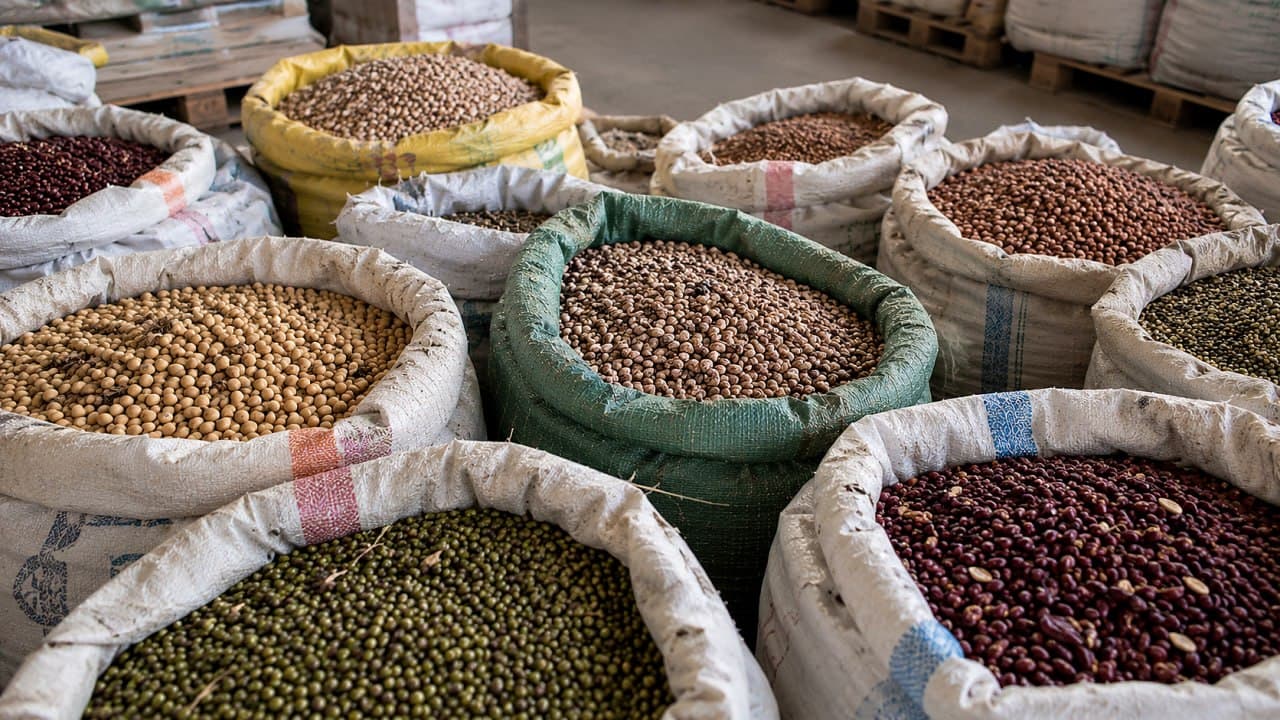
KIMRINES SUPPLIERS LIMITED is a Kenyan agricultural trading and processing company. It buys mung beans, cowpeas and pigeon peas from farmers and local aggregators, then cleans, grades and supplies the produce to exporters, packers, wholesalers and food manufacturers.
The company is owned and managed by Wilberforce Kayugira Luvai, who holds 100% of its shares. It commissioned its own cleaning and calibration line in 2026 and began supplying export lots to Tanzania in February 2026.
KIMRINES generated EUR 1,184,780 in revenue in 2025 and EUR 1,210,751 in the first ten months of 2026. It plans to use the proposed EUR 500,000 loan to finance purchases and deliveries under two signed framework agreements with Kenyan buyers.