Fruit Supply
ADICIUM LIMITED is a Kenyan fruit supplier that buys, processes and distributes fresh produce to wholesalers, retailers and HoReCa customers. The €625,000 loan will fund refrigerated trucks, cold storage, grading equipment and working capital to support the company's growth.
Company Background
ADICIUM LIMITED is a Kenyan fresh-fruit trading and processing company based in Embakasi, Nairobi. It was registered on 21 August 2023 and started trading in September 2023. The company is registered with the Kenya Revenue Authority and has been VAT-registered since February 2026.
The company is owned and managed by Dominic Mahaya Mwangi, who holds 100% of its shares and serves as its director. He comes from Vihiga County in Western Kenya, an important banana- and avocado-growing area. His relationships with farmers in the region help the company source produce.
ADICIUM buys fruit from farmers and wholesale markets. It prepares the produce at its facility in Embakasi and sells it to wholesale traders, retail outlets and restaurants and hotels.
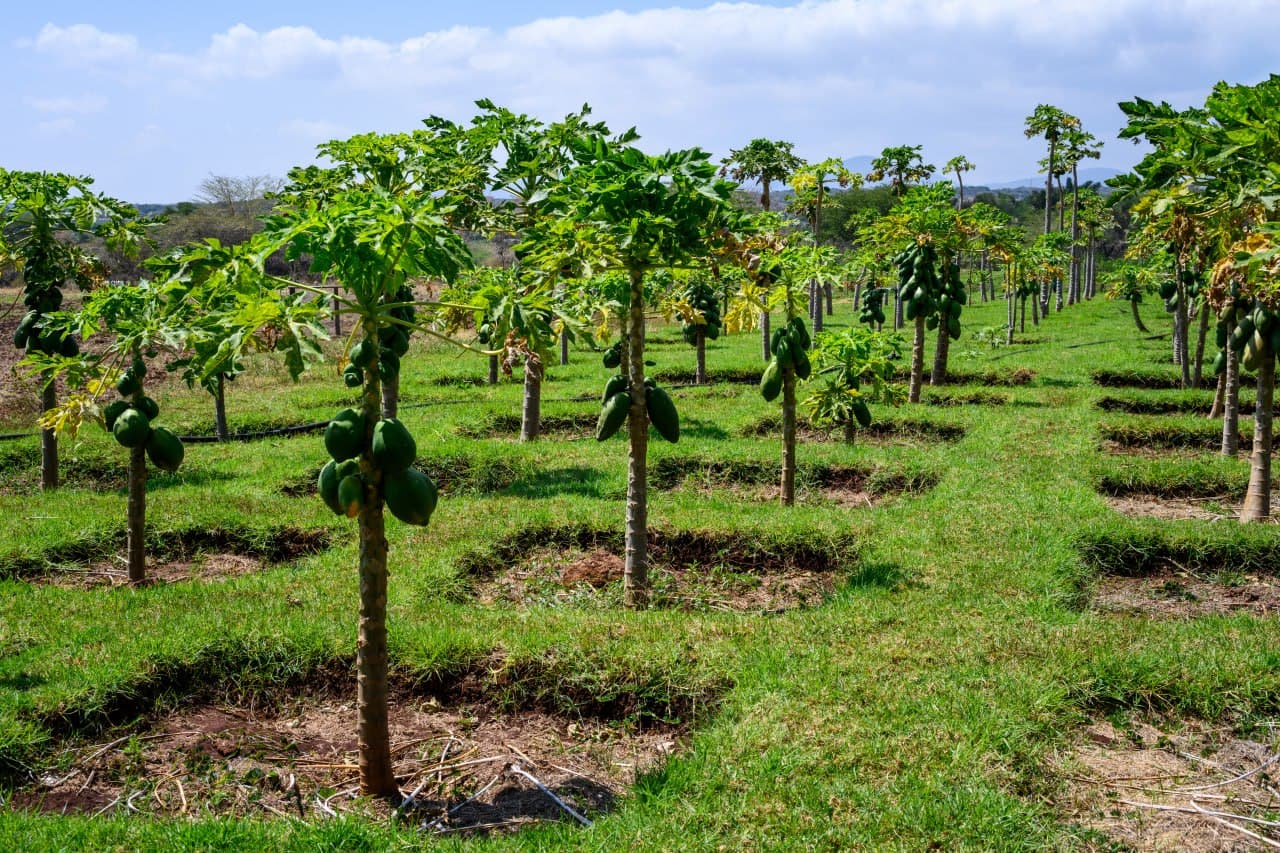
Its main products are bananas, avocados, mangoes, oranges, passion fruit and papaya. Bananas are available throughout the year, while other fruits are seasonal.
The company also buys green grams from farmers in Eastern Kenya and sells them in larger lots to packers and exporters.
What the Company Does
ADICIUM handles several stages of the fruit supply chain:
Buying fruit from farmers and wholesale markets.
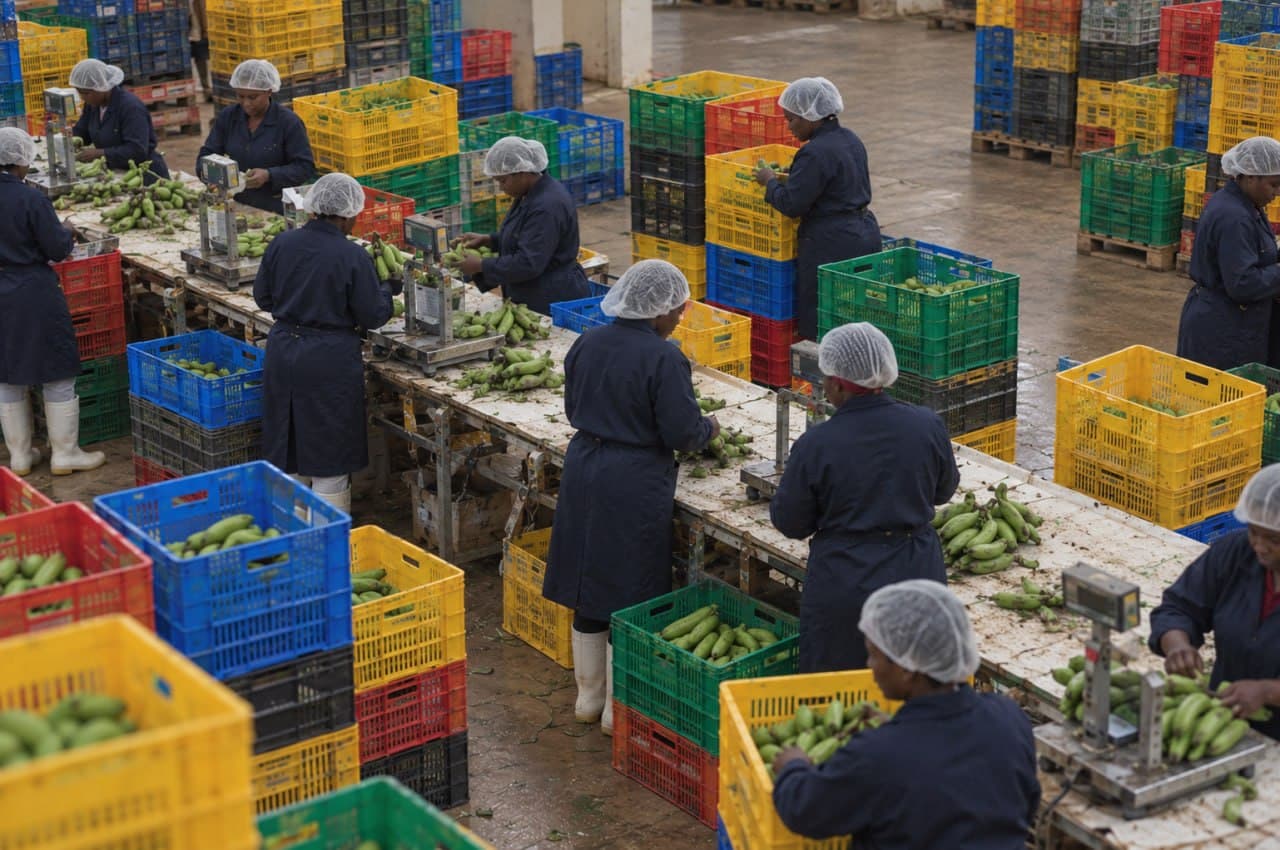
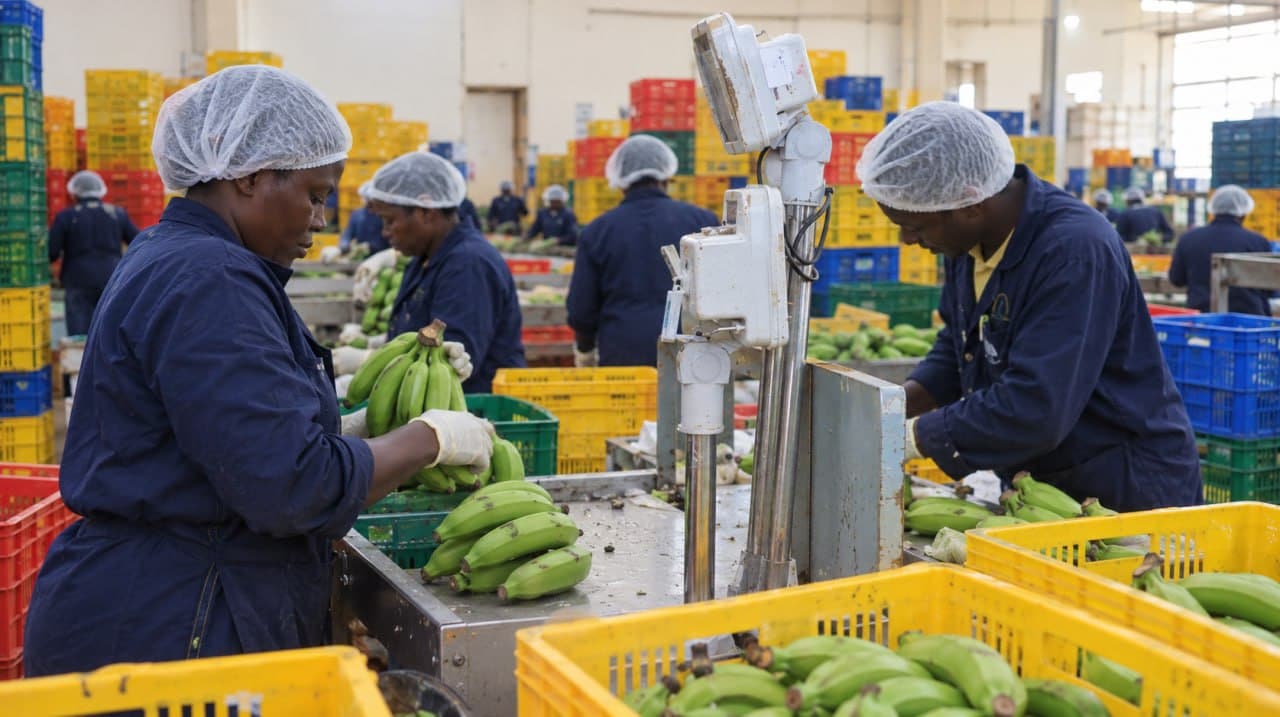
Washing and sorting fruit by size and quality.
Ripening bananas to the stage requested by each buyer.
Packing fruit in crates, bags or trays to meet customer requirements.
Selling and delivering produce to wholesalers, retail outlets and HoReCa customers.
Buying green grams from farmers, checking their moisture and purity, and selling them to packers and exporters.
The company sells its produce in Nairobi. It mainly sources bananas and avocados from Vihiga County, mangoes from coastal and eastern areas, and green grams from Eastern Kenya.
How the Company Works
ADICIUM works as an intermediary between farmers and buyers who need produce that is ready to sell or use.
The company buys fruit in bulk, prepares it at its facility and supplies different customers according to their needs.
Its three main sales channels are:
Wholesale traders: The largest channel by volume. ADICIUM sells fruit after basic sorting, often on the same day it receives it. Buyers usually pay when the company dispatches the produce.
Retail outlets: The company supplies sorted, graded and packed fruit. Retail customers usually place weekly orders and pay within 14–30 days.
HoReCa customers: Hotels, restaurants and catering businesses order two or three times a week and usually pay within 7–14 days.
The wholesale channel gives the company a short cash cycle of around one to two days. These payments help cover the longer payment terms offered to retail and HoReCa customers.
ADICIUM's main advantage is that it supplies produce in a form that buyers can use immediately. It sorts fruit by size, ripens bananas to the requested stage and packs products according to each buyer's requirements. This helps customers save time and reduce waste.
The company also operates as a registered supplier and uses Kenya's electronic invoicing system, eTIMS. This matters when it supplies larger retail chains, which require formal supplier registration.
Team and Hiring Plans
ADICIUM currently employs 31 people across management, purchasing, sales, fruit preparation, wholesale resale, ripening, storage, transport and support.
The director, Dominic Mahaya Mwangi, manages purchasing, buyer negotiations, pricing and finance. The company uses external support for bookkeeping.
As the business grows, ADICIUM plans to hire 34 additional employees, including:
An account manager to support customer relationships and take over some commercial duties from the director.
More facility workers for washing, sorting and packing, including a second shift.
Drivers and delivery assistants for three refrigerated trucks and two sourcing trucks.
Operators for the new washing, drying and grading line.
Warehouse staff and buying agents for the green-gram business.
These hires will help the company handle larger volumes and reduce its dependence on the director for day-to-day commercial work.
Products and Revenue Streams
ADICIUM has two main business lines.
Fresh fruit — the core business
The company buys, prepares and sells fresh fruit to wholesalers, retail outlets and HoReCa customers.
Its main products include:
Bananas, including Cavendish and local varieties.
Avocados, mainly available from March to September.
Mangoes, mainly available from November to March.
Oranges and other citrus.
Passion fruit and papaya.
Bananas are the company's main year-round product. The company sells them green to wholesale traders and ripens them to customer specifications for retail and HoReCa buyers.
Green grams — the seasonal business
ADICIUM buys green grams from farmers in Eastern Kenya during harvest periods. It checks each lot for moisture and purity, stores the stock and sells it to pulse packers and exporters.
The company plans to trade two lots during the loan term, each of around 280 tonnes. It expects to buy the produce at harvest and sell it later, when supply is lower.
The company earns money from the difference between its purchase and selling prices, after handling costs.
Growth Plan
The loan will help ADICIUM remove several limits on its current operations: a lack of refrigerated delivery vehicles, limited cold storage and grading capacity, insufficient banana-ripening space and limited ability to buy directly from farmers.
The investment programme includes:
Three refrigerated trucks: To deliver bananas and other fruit to distributors and retail chains while keeping them at the required temperature.
Two sourcing trucks: To buy avocados, mangoes and citrus directly from farmers in growing areas.
Two cold rooms: To store around 50 tonnes of fruit in total at temperatures of 5–13°C.
A washing, drying and grading line: To sort fruit into six sizes instead of relying on manual sorting.
One additional banana-ripening room: To increase capacity beyond the company's three existing rooms.
Other equipment: Including a stacker, racking, temperature monitoring equipment and green-gram intake equipment.
The company also plans to work with two producer cooperatives. Under this agency model, ADICIUM will store, transport and sell their bananas and avocados to supermarket chains and an in-flight caterer. It expects to earn a fee of around 10% of sales value without having to buy the produce itself.
The new activities will start in stages and should reach full volume by the fifth or sixth month.
Loan Request
Item | Details |
Total loan | EUR 625,000 |
Drawdown structure | One stage |
Interest rate | 21% per annum, fixed |
Loan term | 11 months from drawdown |
Interest payments | Monthly |
Principal repayment | Full bullet repayment at maturity |
Monthly interest | EUR 10,937.50 |
Total interest over the term | EUR 120,312.50 |
Total repayment | EUR 745,312.50 |
Equipment financing | EUR 542,122 |
Working capital | EUR 82,878 |
Company's own contribution | EUR 181,347 |
Use of funds | €542,122 for equipment. €82,878 for working capital. |
The total investment programme costs €806,347. ADICIUM will contribute €181,347 from its own funds, mainly to finance green-gram stock and other working-capital needs.
The loan will not refinance existing debt or fund payments to the shareholder.
Risk scoring
The BBB rating reflects a growing business with positive operating results, rising revenue and no existing interest-bearing debt. The company also has an established processing facility, equipment and relationships with farmers and buyers.
However, ADICIUM has a relatively short operating history and depends heavily on its founder. Its growth forecast also relies on converting letters of intent into regular orders and successfully launching several new activities.
Keep in mind:
The company has traded for around three years, so its operating history is still relatively short.
The director handles most key commercial and financial decisions. This creates key-person risk.
The forecast assumes a significant increase in revenue, from €1.48 million in 2026 to €3.95 million in 2027.
The company earns revenue in Kenyan shillings but must repay the loan in euros, creating exchange-rate risk.
Green-gram trading depends on seasonal supply, quality and market prices. Export restrictions and weather conditions could affect sales.
The collateral's liquidation value covers 90.7% of the principal and 76.1% of total repayment, so it does not fully cover the loan.
Financials
Financial Performance
ADICIUM has grown its revenue steadily since it started trading in September 2023. Revenue reached €857,389 in 2025. In the first nine months of 2026, the company generated €1,068,274, already exceeding its full-year 2025 revenue.
The company has also improved its profitability. Its EBITDA margin increased from 2.0% in its first four months of trading to 15.2% in January–September 2026.
Historical performance
Actual performance (EUR) | 2023 (Sep–Dec) | 2024 | 2025 | Jan–Sep 2026 |
Revenue | 24,970 | 288,485 | 857,389 | 1,068,274 |
Cost of sales | 16,900 | 208,309 | 635,181 | 789,490 |
Gross profit | 8,070 | 80,176 | 222,208 | 278,784 |
Operating expenses | 7,569 | 46,745 | 99,686 | 115,974 |
EBITDA | 501 | 33,431 | 122,522 | 162,810 |
Net profit | -1,527 | 15,606 | 72,005 | 102,560 |
The company made a net profit of €102,560 in the first nine months of 2026, compared with €72,005 for the whole of 2025.
Its gross margin stood at 26.1% and its EBITDA margin at 15.2% in January–September 2026. The company recorded no finance costs during this period and has no existing interest-bearing debt.
Forecast
The company's financial model expects further growth as it adds refrigerated deliveries, storage and grading services, and larger green-gram trades.
Forecast (EUR) | 2026 | 2027 | 2028 |
Revenue | 1,475,893 | 3,950,033 | 3,980,345 |
Gross profit | 384,630 | 1,063,835 | 1,140,435 |
EBITDA | 224,588 | 647,077 | 714,039 |
Net profit | 130,402 | 315,097 | 438,532 |
EBITDA margin | 15.2% | 16.4% | 17.9% |
The forecast expects revenue to rise by 167.6% in 2027. This growth depends mainly on the new buyer relationships and services.
Track record in 2026
Revenue from January to September: €1,068,274.
EBITDA: €162,810.
Net profit: €102,560.
Gross margin: 26.1%.
EBITDA margin: 15.2%.
No existing interest-bearing debt.
Commercial Pipeline
ADICIUM has letters of intent from four buyers with a combined stated annual value of €2,572,181.
Buyer | Products | Annual volume | Annual value (EUR) |
Fruit importer and distributor, Limuru | Bananas, mangoes, passion fruit, oranges and papaya | ~1,954 tonnes | 890,881 |
Premium fruit and vegetable store chain, Nairobi | Bananas, avocados, mangoes, passion fruit, papaya and oranges | ~1,030 tonnes | 639,826 |
Discount store chain, eastern Nairobi | Bananas, oranges, mangoes and avocados | ~1,150 tonnes | 525,099 |
Pulse exporter, Mombasa | Green grams | ~565 tonnes | 516,375 |
Total | 2,572,181 |
The three fruit buyers account for €2,055,806 in annual potential sales. The green-gram exporter accounts for another €516,375.
The fruit buyers plan to pay on delivery. The green-gram buyer plans to pay on delivery or within seven days.
These letters support the company's growth plan, but they are letters of intent rather than binding sales contracts. If a new buyer delays signing a contract, ADICIUM says it can redirect some fruit to its existing wholesale customers.
Fresh fruit
Kenya produced around 4.4 million tonnes of fruit in 2024, worth approximately €708 million. Bananas are the country's largest fruit crop by volume, with production of around 2.06 million tonnes.
The market offers opportunities for businesses that can improve the way fruit reaches customers. Kenya loses up to 40% of the food it produces, partly because of poor storage and transport. Cold rooms, grading and refrigerated delivery can help reduce these losses.
Modern retail and HoReCa also create opportunities for suppliers that can provide consistent quality and regular volumes. Large supermarket chains are expanding, and the largest chain has identified fruit as one of its fastest-growing fresh-produce categories.
Green grams
Green grams are an important food crop in Kenya and an export product. The country produced around 106,000 tonnes in 2025, with approximately 90% of production coming from Eastern Kenya.
The company plans to buy green grams during harvest periods, store them and sell them later to packers and exporters. This gives ADICIUM a way to use its existing farmer relationships and earn additional income outside its main fruit business.
However, green-gram trading carries risks linked to seasonal supply, changing prices, product quality and export-market rules.
Competition
ADICIUM competes with informal fruit traders, wholesale market intermediaries and other produce aggregators and packers.
Its main advantage is that it does more than buy and resell fruit. It can wash, sort, grade, ripen and pack produce to match buyer requirements. Its formal registration also helps it work with larger retail chains that require registered suppliers.
Collateral breakdown
Collateral | Base value (EUR) | Liquidation value (EUR) |
Existing operational assets | 104,415 | 68,946 |
New equipment financed by the loan | 410,424 | 290,577 |
Director's personal vehicle | 48,466 | 33,926 |
Hard collateral total | 563,305 | 393,449 |
Green-gram stock | 210,000 | 168,000 |
Receivables | 10,000 | 5,500 |
Total collateral | 783,305 | 566,949 |
Valuation and Coverage
Coverage metric | Value |
Loan principal | €625,000 |
Total repayment | €745,312.50 |
Total collateral — base value | €783,305 |
Total collateral — liquidation value | €566,949 |
Base collateral coverage of principal | 125.3% |
Liquidation collateral coverage of principal | 90.7% |
Liquidation collateral coverage of total repayment | 76.1% |
LTV at base value | 0.80 |
LTV at liquidation value | 1.10 |
The liquidation value of the collateral does not fully cover the principal and interest due under the loan.
The main source of repayment is expected to be the company's operating cash flow and the proceeds from selling its second green-gram lot. The collateral provides additional protection if the business performs below expectations.
How the loan pays out
Your USDC investment behaves like a 11-month bond: monthly interest payments, then principal back at month .
| Date | Interest | Principal | Total |
|---|
Borrower
ADICIUM LIMITED is a Kenyan fresh-fruit aggregator, processor and distributor. It buys fruit from farmers and wholesale markets, then prepares and supplies it to wholesalers, retail outlets and HoReCa customers.
The company also trades green grams, buying seasonal lots from farmers in Eastern Kenya and selling them to packers and exporters.
ADICIUM was incorporated on 21 August 2023 and started trading in September 2023. It is owned and managed by Dominic Mahaya Mwangi, who holds 100% of the company's shares.
The company generated €857,389 in revenue in 2025 and €1,068,274 in the first nine months of 2026. It currently employs 31 people and plans to create another 34 jobs.
ADICIUM plans to use the proposed €625,000 loan to buy refrigerated trucks, sourcing trucks, cold rooms, grading and ripening equipment, and to fund part of its working capital.