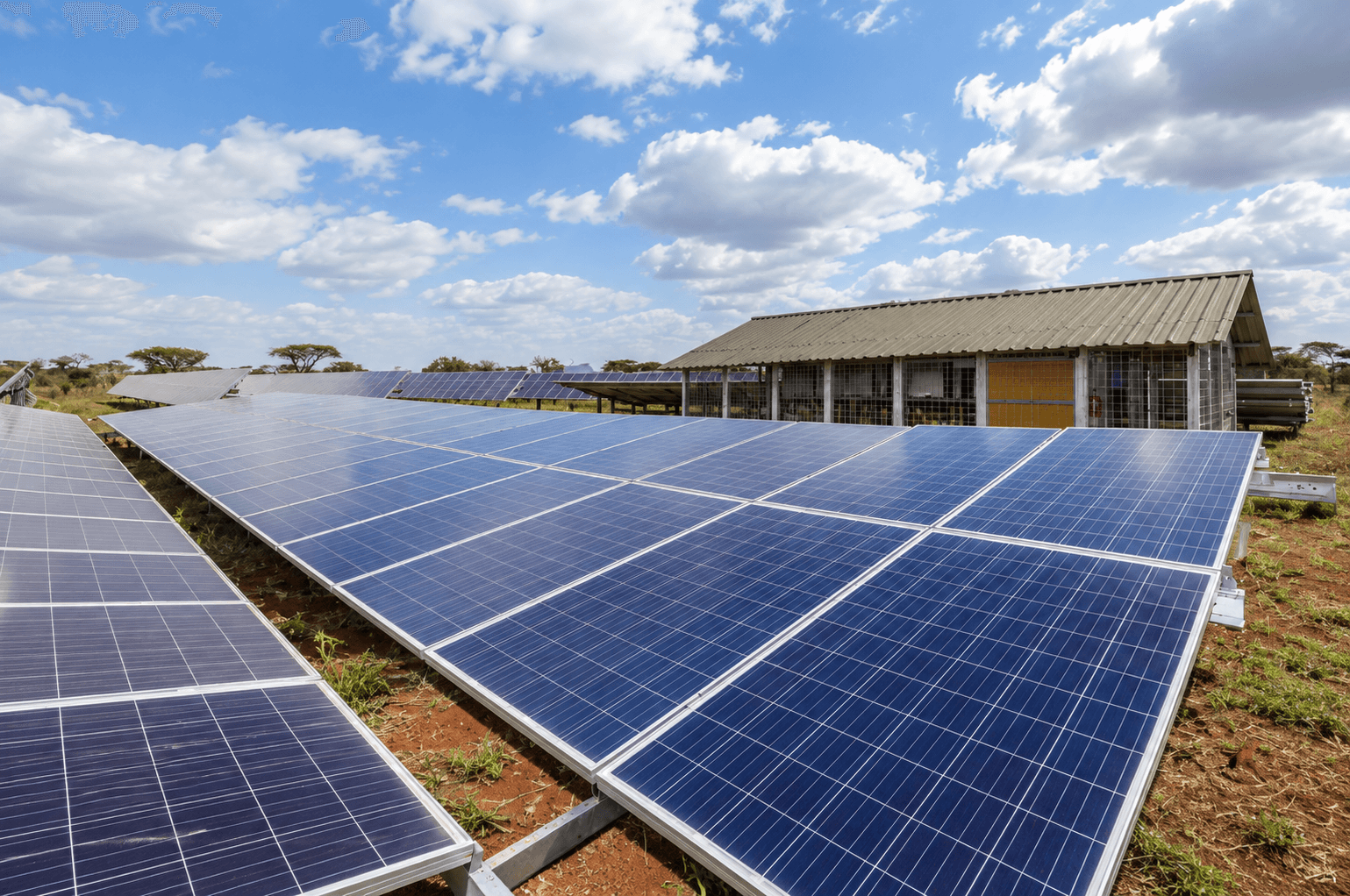

太阳系
2,683.60USDC
开放
7.67% of 35,000 USDC
- 贷款期限11 个月
- 借贷 APR22.80 %
- 到期
最大目标
35,000 USDC
最小目标
17,500 USDC
投资者
5
利息支付
11 个月
本金偿还
一次性还本付息 (Bullet)
付款总额
按月
关于AI Translated
Zhekou Investment Limited 是一家肯尼亚的太阳能 EPC(工程、采购和建设)集成商,专注于商业和工业 (C&I) 客户。该公司提供交钥匙光伏解决方案以及光伏加电池储能系统 (PV + BESS) 混合解决方案。它管理整个交付周期——从现场评估、负荷分析和工程设计到工程量清单编制、采购协调、项目管理、调试和保修支持。物理安装和受监管的电气工程由肯尼亚能源和石油监管局 (EPRA) 许可的分包商执行,而 Zhekou 则对质量、进度纪律、健康与安全合规性以及安装后服务承担合同责任。
- 轻资产运营模式:核心工程、采购协调和项目治理均由内部负责,安装能力通过合作伙伴扩展。
- 地理范围:业务集中在肯尼亚的主要商业中心——内罗毕、蒙巴萨、纳库鲁和基苏木。
领导和管理
该公司由创始人领导。首席执行官 Celine Adhiambo Okelo 拥有 100% 的股本,她具有工程背景和肯尼亚太阳能 EPC 行业的经验。她的管理方法强调设计完整性、严谨的采购和严格的现场执行控制,以此作为交付可靠性和风险控制的杠杆。
决策目前集中由一位高管负责,这有助于战略一致性,同时也凸显了继任计划的重要性。
销售和客户获取
Zhekou 通过技术资格、关系驱动的外联和行业聚焦直接与客户互动。该业务服务于三个 B2B 客户细分市场,并根据负荷分析和现场条件量身定制提案。
- 中小型企业/零售:寻求现场能源成本降低的小型商业企业和零售商。
- 商业和机构:需要可靠日间电力的办公室、学校和机构。
- 工业和大型商业:具有高能源负荷和可靠性需求的制造商和大型商业用户。
典型项目规模介于 30 kW 到 100 kW 之间,并选择性地承接更大的项目。客户获取依赖于直接关系、重复合作以及现有客户群的推荐。
产品和服务组合
公司设计并交付并网光伏系统和混合光伏+电池储能系统解决方案,采用来自以下制造商的一线组件:隆基、晶科能源和天合光能的组件;华为、SMA、Fronius、古瑞瓦特和 Victron 的逆变器;以及宁德时代和国轩高科的电池系统。服务范围涵盖现场勘测、负荷分析、工程和设计、工程量清单编制、预算和进度制定、采购协调、现场项目管理、调试以及保修和保修期后支持。
- 并网光伏系统:旨在通过现场太阳能发电抵消日间用电量。
- 混合光伏+电池储能系统:集成的光伏和电池储能解决方案,提供可靠性和负荷管理。
- 交钥匙交付:从现场评估到调试和保修的全周期项目管理。
主要客户和市场案例
已完成的安装项目展示了在各种 C&I 应用领域的专业知识。按行业划分,客户群包括:
- 塑料和聚合物产品制造 – 客户 A 和 D(包括包装生产,内罗毕)。
- 饮料和水果加工 – 客户 B。
- 磨坊和农产品加工 – 客户 C。
总结
Zhekou 将明确界定的 EPC 集成商角色——对工程、采购协调、交付治理和保修义务的合同责任——与轻资产结构相结合,从而限制固定开销并通过 EPRA 许可的分包商扩展安装。在四个商业中心和三个 B2B 细分市场的运营,加上涵盖一线组件、逆变器和电池制造商的供应关系,减少了对单一市场或供应商的依赖。主要限制与集中度相关:战略和运营控制权归首席执行官所有,安装质量和进度表现依赖于外部合作伙伴,而客户责任仍由公司承担,项目利润对设备定价、物流可变性和货币波动敏感。
贷款抵押品
该贷款由现有固定资产、新购置项目设备以及合同支持的现金流提供的动态担保组合提供担保。对实物资产应用保守的 30% 折扣来估算清算价值。这种分层结构旨在全额覆盖贷款本金并保护贷方的头寸。
现有固定资产抵押品
公司已有的资产被抵押作为担保。账面价值和折现价值如下所示。
资产类别 | 价值 (欧元) |
车辆 | 90,130 |
安装和测试设备 | 85,000 |
IT 设备 | 35,000 |
仓库设备 | 30,000 |
办公家具和固定装置 | 20,000 |
现有运营资产总额 (PPE) | 260,130 |
折现价值 (–30%) | 182,091 |
融资设备抵押品
为四个项目购置的设备也已抵押。抵押涵盖总价值 787,540 欧元的全套设备,包括由客户预付款资助的部分(78,754 欧元),因为设备所有权在最终结算前仍归公司所有。购买价值和折现价值如下所示。
抵押品组成 | 购买价值 (欧元) | 折现价值 (–30%) (欧元) |
四个 EPC 合同下的项目设备 | 787,540 | 551,278 |
新设备折现总值 | — | 551,278 |
根据 EPC 合同,项目设备的所有权仅在最终结算后转移给客户。在收到最终付款之前,设备仍为公司财产,并构成抵押品的一部分。随着项目完成,抵押品层级不会解除,而是由客户即将支付的款项取代,这些款项构成债务偿还的主要来源。
动态担保和覆盖率
除了实物资产,已签订合同产生的现金流也提供了动态担保。这四个项目的总价值为 1,463,194 欧元,超过了 858,666.67 欧元的总偿还义务(本金加利息)。
已抵押资产(现有厂房设备和项目设备)的总折现价值为 733,369 欧元,导致抵押品与贷款比率约为 104.8% (LTV 0.95),在保守的估值假设下,这笔贷款的本金得到了充分担保。
结论
抵押品组合包括车辆、安装和测试设备、IT和仓库设备、办公家具和固定装置以及新购置的光伏和电池储能设备。这些资产具有活跃的二级市场并保持稳定的转售价值。结合超过总偿还义务的合同支持现金流,抵押品结构为贷方提供了流动覆盖,并且抵押品在资产类别中的多样化支持了对该设施的积极风险评估。
风险评分
- 抵押品公司设备
- 总风险评分BBB
- 债务股本比2.12
- 贷款价值比 (LTV)95 %
- 信用记录8/10
详情

Financial Performance
Between 2023 and 2025 the company recorded steady revenue growth and maintained positive profitability at all levels. Revenue increased from EUR 2,316,495 in 2023 to EUR 2,846,159 in 2024 (+22.9%) and EUR 3,129,593 in 2025 (+10.0%). Gross profit grew from EUR 360,058 to EUR 446,612 over the period, while net profit rose from EUR 91,869 to EUR 132,392. The gross margin declined in 2024 as equipment costs rose, then improved in 2025 as procurement efficiency increased. Net margin moved from ~4.0% in 2023 to ~4.2% in 2025.
Key financial indicators
Indicator | 2023 (EUR) | 2024 (EUR) | 2025 (EUR) |
Revenue | 2,316,495 | 2,846,159 | 3,129,593 |
Total COGS | 1,956,437 | 2,453,360 | 2,682,981 |
Gross Profit | 360,058 | 392,799 | 446,612 |
Total OPEX | 216,570 | 227,897 | 235,528 |
D&A | 12,247 | 15,067 | 21,953 |
EBITDA | 143,488 | 164,902 | 211,084 |
EBIT | 131,241 | 149,835 | 189,131 |
Interest | 0 | 0 | 0 |
Net Profit | 91,869 | 104,885 | 132,392 |
Revenue and profitability analysis
Revenue increased in each year of the period. Growth accelerated in 2024 and slowed in 2025; however, profitability increased faster than revenue in 2025, indicating improved execution economics. Net margin declined in 2024 due to gross margin compression but recovered in 2025.
Cost and efficiency drivers
Cost of goods sold (COGS) is dominated by equipment procurement, reflecting the equipment-intensive nature of EPC projects. Installation and licensed subcontractor costs scale with project volume. Operating expenses remained controlled, with payroll, rent, transport, professional services and other categories rising modestly.
Financial resilience and sensitivities
The financial profile combines steady growth with consistent profitability. Revenue rose in each year of 2023–2025, all profitability levels remained positive, and operating expenses grew more slowly than revenue, improving operating leverage. No interest expense was recorded during the period, reflecting conservative financing and advance payment arrangements. The main sensitivities sit in the margin structure: net margins of ~4% leave a limited buffer against adverse cost movements, gross margin is exposed to equipment pricing, logistics costs and currency fluctuations, and revenue and cash inflows depend on the timing of contract execution and milestone acceptance in an equipment-intensive cost structure.
Growth Plan of Zhekou Investment Limited
The company’s growth strategy is to move upmarket within the C&I segment by increasing project scale and technical complexity, emphasising hybrid PV + BESS solutions and targeting larger industrial and commercial clients. It intends to maintain the asset-light EPC-integrator model while strengthening internal capabilities.
- Expand the share of industrial and large commercial projects to improve margins and scale.
- Increase the proportion of hybrid PV + battery projects relative to PV-only installations.
- Maintain an asset-light approach by partnering with licensed subcontractors for installation and commissioning.
- Strengthen internal engineering, project management and financial control functions to support higher project complexity.
Expansion initiatives
To implement the strategic vision, Zhekou will invest in additional human resources and organisational capacity:
Role | Change | Intended effect |
Project Engineer / Project Manager | 1.0 FTE | Increased delivery throughput; schedule, subcontractor and quality control; reduction of rework and margin leakage |
Finance Coordinator | 0.5 FTE → 1.0 FTE | Strengthened cash-cycle control (advances, milestones, reconciliations); reduced cash gaps under higher procurement volume |
Lead Electrical / Design Engineer | 1.0 FTE | Increased design and commissioning capacity and technical validation; reduced risk of design errors and non-compliance; support for PV + BESS expansion |
Projected financial impact
Management forecasts measured growth following these initiatives. Revenue is projected to increase from EUR 3,129,593 in 2025 to EUR 3,488,271 in 2026 and EUR 4,026,805 in 2027. Gross profit and margins are expected to improve as the project mix shifts toward higher-value hybrid PV + BESS systems, with the gross margin rising from 14.3% in 2025 to 16.3% in 2026 and 17.8% in 2027. 2026 is a transition year: with interest expense incurred from September and operating expenses scaled up ahead of growth, net profit temporarily declines to EUR 123,992 (net margin 3.6%), before recovering to EUR 163,317 in 2027, with the net margin reaching ~4.1% on a larger revenue base.
Indicator | 2025 (A) | 2026 (A) Jan–Aug | 2026 (F) Sep–Dec | 2026 (F) FY | 2027 (F) |
Revenue, EUR | 3,129,593 | 2,138,555 | 1,349,716 | 3,488,271 | 4,026,805 |
Gross Profit, EUR | 446,612 | 316,506 | 253,292 | 569,798 | 714,758 |
Gross Margin | 14.3% | 14.8% | 18.8% | 16.3% | 17.8% |
EBIT, EUR | 189,131 | 141,468 | 75,330 | 216,798 | 352,310 |
Net Profit, EUR | 132,392 | 99,028 | 24,964 | 123,992 | 163,317 |
Net Margin | 4.2% | 4.6% | 1.8% | 3.6% | 4.1% |
Operational impact and client pipeline
The growth plan is anchored in a pipeline of four signed EPC contracts worth EUR 1,463,194 and additional letters of intent. These projects demonstrate demand from larger industrial and commercial customers and provide a revenue base for expansion.
Client | Contract value (EUR) |
Client A | 351,718 |
Client B | 306,696 |
Client C | 371,963 |
Client D | 432,817 |
Total (4 projects) | 1,463,194 |
- Contracts cover installations for manufacturers and processors requiring on-site PV + BESS solutions.
- Project scope includes PV modules, string inverters, battery inverters, battery energy storage, hybrid controllers and ancillary equipment.
- Letters of intent from additional clients indicate an expanding pipeline beyond the four signed contracts.
Financing and implementation
Execution of the growth plan relies on a EUR 700,000 facility structured in four tranches. The financing bridges working-capital requirements between equipment procurement and milestone receipts. The tranches are drawn concurrently in September 2026, when procurement under all four contracts begins, and interest payments are integrated into the financial forecasts.
- The equipment tranches are aligned with the procurement schedules of the signed contracts, complemented by a dedicated working-capital tranche; each tranche can be repaid independently upon receipt of the corresponding client settlements.
- Client payment terms vary by contract and project scope, combining upfront advances with milestone-based settlements tied to delivery, installation and commissioning stages; advances and interim milestone inflows reduce the financed portion of procurement.
- Cash-flow management and monitoring are intended to keep debt service aligned with project inflows.
Description of the Loan
Zhekou Investment Limited requests a EUR 700,000 facility to finance procurement and delivery of PV modules, inverters, battery energy storage systems, controllers and ancillary equipment, together with associated working capital, required to execute four signed EPC contracts worth EUR 1,463,194. The facility is dedicated to the delivery of the signed contracts and does not fund speculative initiatives.
- Total loan amount: EUR 700,000, structured as four tranches.
- Objective: finance equipment procurement for four confirmed contracts and bridge working-capital needs.
- Aligned with contract values: signed contracts provide visibility on revenue generation directly linked to the financed assets.
Planned asset acquisition
Loan proceeds will be used to procure a comprehensive package of equipment across four projects. Equipment categories and aggregated cost estimates are summarised below.
Client A — equipment procurement (PV plus hybrid integration)
Item | Cost (EUR) |
PV modules Mono 550W | 36,036 |
PV string inverters 50 kW AC | 48,000 |
PCS / battery inverter bi-directional 150 kW | 27,000 |
BESS LFP 200 kWh incl. racks + BMS | 38,000 |
EMS / hybrid controller (PV + BESS + Grid + DG) | 15,000 |
Bi-directional meter + CT (zero-export) | 5,000 |
DG synchronisation / ATS panel | 8,000 |
Spare critical parts kit | 5,000 |
Total equipment (net) | 182,036 |
Client B — equipment procurement
Item | Cost (EUR) |
PV modules Mono 550W | 30,030 |
PV string inverters 50 kW AC | 40,000 |
PCS / battery inverter bi-directional 125 kW | 23,000 |
BESS LFP 200 kWh incl. racks + BMS | 38,000 |
EMS / hybrid controller (PV + BESS + Grid + DG) | 15,000 |
Bi-directional meter + CT (zero-export) | 5,000 |
DG synchronisation / ATS panel | 8,000 |
Total equipment (net) | 159,030 |
Client C — equipment procurement
Item | Cost (EUR) |
PV modules Mono 550W | 24,024 |
PV string inverters 50 kW AC | 32,000 |
PCS / battery inverter bi-directional 150 kW | 27,000 |
BESS LFP 400 kWh incl. racks + BMS | 76,000 |
EMS / hybrid controller (PV + BESS + Grid + DG) | 15,000 |
Bi-directional meter + CT (zero-export) | 5,000 |
DG synchronisation / ATS panel | 8,000 |
Total equipment (net) | 187,024 |
Client D — equipment procurement (250 kWp PV plus 500 kWh BESS)
Item | Cost (EUR) |
PV modules Tier-1 Mono 550W | 34,125 |
PV string inverter 50 kW AC | 43,245 |
PCS / battery inverter bi-directional 250 kW | 51,210 |
BESS LFP 500 kWh incl. racks + BMS | 108,110 |
EMS / hybrid controller (PV + BESS + Grid) | 17,070 |
Bi-directional meter + CT (industrial) | 5,690 |
Total equipment (net) | 259,450 |
The aggregated cost of principal equipment across the four projects, at net supplier quotations, is approximately EUR 787,540. Equipment procurement net of 10% client advances (EUR 78,754) amounts to EUR 708,786, of which EUR 590,000 is financed by Tranches 1–3, with the balance covered by the working-capital tranche, interim milestone receipts under the signed contracts and the company's own resources. Procurement is supported by validated supplier quotations for PV modules, inverters, power-conditioning systems, battery storage and control equipment. Subcontractor installation works of EUR 104,000 across the four projects are funded from the dedicated working-capital tranche and interim milestone receipts rather than from the equipment tranches. Equipment and installation works do not represent the full direct cost of the contracts: total project costs additionally include balance-of-system materials (mounting structures, cabling and protection equipment), delivery, import and logistics charges, engineering, project management, commissioning and warranty provisions, consistent with the gross margins presented in the financial forecasts.
Repayment structure and schedule
The loan is disbursed in four tranches with a 11-month term for each tranche. Interest accrues at 22.8% per annum and is payable monthly, while the principal is repaid in full at the end of each tranche. Tranches 1–3 (EUR 590,000) finance equipment procurement across the four signed contracts, while Tranche 4 (EUR 110,000) covers working capital across the four projects, including subcontractor installation works. Interest costs are included in the financial forecasts, with the facility’s total repayment schedule presented below.
The company retains the right to repay any tranche ahead of schedule, upon receipt of the corresponding client settlements, without prepayment penalties. The financial forecasts conservatively assume full 11-month utilisation of each tranche; early repayment would reduce the total interest cost below the scheduled
Justification and cash-flow impact
The structure of monthly interest payments and bullet principal is designed to preserve working capital during equipment-intensive project phases. By aligning debt service with milestone payments, the company avoids liquidity strain and ensures that loan capital is applied to revenue-generating assets. The tranche structure mirrors the four procurement packages and allows each tranche to be retired independently as the corresponding contract settles, while client advances reduce the financed volume. The repayment profile has been integrated into the financial model, providing visibility over debt service obligations and mitigating the risk of understating borrowing costs.
- Monthly interest plus bullet principal aligns repayments with project milestones and cash inflows.
- Per-tranche early repayment without penalties allows debt to be retired as individual contracts settle.
- The loan supports delivery of signed contracts and is not used for unconfirmed projects or speculative expansion.
关键事实
- Zhekou Investment Limited 成立于Sep 03, 2018
- 开始活跃工作/生产Oct 01, 2018
借款人信息
Zhekou Investment Limited
Zhekou Investment Limited 是一家位于肯尼亚的太阳能 EPC(工程、采购和施工)集成商,专注于商业和工业 (C&I) 客户。该公司提供交钥匙光伏解决方案以及混合光伏加电池储能系统 (PV + BESS)。它管理整个交付周期——从现场评估、负荷分析和工程设计,到工程量清单准备、采购协调、项目管理、调试和保修支持。物理安装和受监管的电气工程由能源和石油监管局 (EPRA) 许可的分包商执行,而 Zhekou 则保留对质量、进度纪律、健康和安全合规性以及安装后服务的合同责任。
市场描述与规模AI Translated
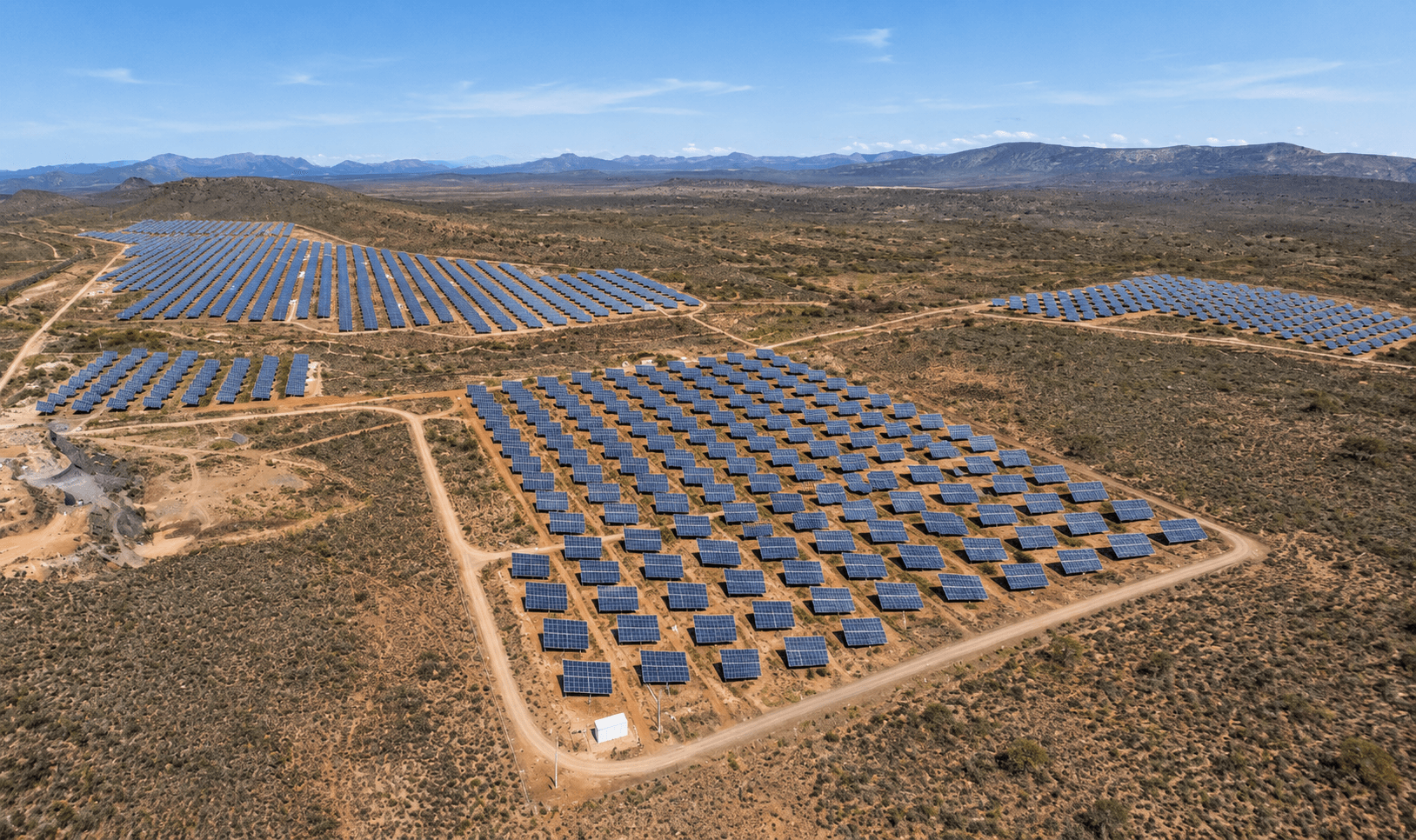
非洲太阳能光伏市场正从较低的安装基础中扩张。2023年底,太阳能总装机容量约为13.5 GW,到2025年底达到约23.4 GW。增长由结构性电力供应限制、工业扩张和分散式发电需求驱动。
- 结构性电力短缺和高昂的电价支撑着对自用光伏解决方案的需求。
- 许多非洲国家的政策支持鼓励可再生能源的部署。
- 商业和工业客户越来越多地采用混合光伏+BESS解决方案以提高可靠性。
国别市场概况 – 肯尼亚
肯尼亚在EPRA下拥有规范的监管环境。太阳能总装机容量为442.9兆瓦,其中包括229.2兆瓦的自用光伏、210.3兆瓦的并网光伏和3.4兆瓦的离网光伏。因此,自用太阳能项目占全国容量的一半以上。
- 2024年引入的开放获取法规扩大了市场参与度,并支持企业购电协议(PPAs)。
- EPRA许可要求确保电气工程由合格的分包商执行。
- 市场分散,以EPC为主的承包商和资产支持的开发商并行运营。
- 对光伏和BESS设备的进口依赖使市场面临外汇和物流风险。
市场细分和需求驱动因素
肯尼亚的工商业(C&I)太阳能市场由三个客户群体和共同的需求驱动因素定义:
- 中小企业/零售:通过自用寻求成本降低。
- 商业和机构:需要可靠的日间电力供应,用于办公室、学校和机构。
- 工业和大型商业:专注于高负载率、能源成本稳定性和电网可靠性。
需求驱动因素包括高昂的电网电价、不可靠的电网供应以及利用混合光伏+BESS系统稳定运营成本的机会。
竞争格局和供应链
市场竞争激烈且分散。EPC集成商和IPP/PPA(独立电力生产商/购电协议)提供商竞标项目。Zhekou的供应链依赖于一级设备制造商和当地经销商。
- 一级光伏组件供应商包括晶澳太阳能、隆基、晶科能源和天合。
- 逆变器供应商包括华为、SMA、Fronius、古瑞瓦特和Victron。
- 电池供应商包括宁德时代和国轩高科。
- 当地经销商如PNS Solar Solutions和Taico Power Kenya进口设备并作为备案进口商。
- 来自融资PPA解决方案的竞争可能会影响工业客户的转换率和定价权。
公司市场地位
Zhekou Investment Limited在中型自用太阳能领域运营,为工商业客户提供现场光伏和混合光伏+BESS系统。公司将自身定位为轻资产EPC集成商,提供工程和项目管理专业知识,同时利用许可合作伙伴进行安装和调试。
- 典型项目规模为30千瓦至100千瓦,并有选择性地进行更大规模的安装。
- 已完成的项目涵盖制造业、食品加工、塑料和磨坊行业。
- 公司专注于直接关系和回头客,而不是大规模营销。
- 轻资产执行无需对设备或劳动力进行大量资本投资即可实现可扩展性。
市场挑战
市场挑战反映了外部依赖和不断变化的竞争动态:
- 对进口设备的高度依赖使项目面临外汇和物流风险。
- 来自提供融资PPA的开发商的竞争压力。
- 新法规的实施可能会影响许可要求和项目时间表。
- 客户资本支出周期和支付行为影响现金流时间。