Waste Management

🧰Serviços
ID: 388
400USDC
Aberto
2.67% of 15,000 USDC
- Período do empréstimo9 meses
- APR de Empréstimo21 %
- Expira em26 days, 08:25:38
Sobre
SIA Ramotti is a Latvian e-waste collection, brokerage and trading company incorporated on 30 January 2019 (reģ. nr. 42103088650). The company has operated in the Baltic electronic waste market since inception, initially testing several commercial models within the e-waste value chain before consolidating around the collector–broker–trader model that has defined its operations from 2023 onward. Over seven years of continuous activity, SIA Ramotti has built a sourcing network spanning Latvia, Lithuania and Estonia, established commercial relationships with downstream recycling processors and metallurgical facilities across the EU, and developed a practical understanding of every link in the e-waste value chain — from the composition and pricing dynamics of mixed electronic waste at the collection stage, through the economics of sorting and fraction preparation, to the specification requirements and pay-rate structures of industrial buyers at the refining end. The company is now executing a defined transition from pure brokerage to an integrated collector–sorter–trader model, with plans to launch its own licenced sorting facility in Q2 2026.
The company operates with a compact team of four permanent employees — the owner-manager (CEO), a business development manager, a dedicated sorting line engineer, and an administrative assistant — with plans to recruit 4–6 sorting operators upon facility commissioning. SIA Ramotti positions itself not as a general scrap dealer but as a specialist e-waste intermediary with fraction-level expertise: the commercial model is built on the ability to source metal-rich electronic waste at competitive procurement cost, accurately classify material by recoverable metal content, and place specification-grade output lots with the downstream buyer type — precious-metals recycler, industrial smelter, secondary alloy producer or specialist PCB processor — where each fraction commands the strongest commercial terms. This fraction-routing capability distinguishes the company from undifferentiated scrap collectors and provides the commercial foundation for the transition to in-house sorting.
Corporate identifiers: Reģistrācijas Nr. 42103088650. PVN Nr. LV42103088650. Registered address: Baltā iela 24 – 49, Rīga, LV-1055, Latvia. Legal form: Sabiedrība ar ierobežotu atbildību (SIA). Share capital: EUR 2,800. Website: ramotti.com.
Ownership, leadership and governance
SIA Ramotti operates as an owner-managed enterprise with centralised leadership and clear accountability for execution. Natālija Kuzmiča-Poliščuka serves as CEO and sole shareholder (100%), under whose direction the company has grown from a market-entry-stage operation testing business models in 2019 to a commercially active e-waste brokerage generating EUR 1.0m in annual revenue with a contracted buyer pipeline spanning five countries. Commercial and operational control is anchored in the CEO, who holds all principal supplier and buyer relationships and directs procurement, pricing and strategic decisions — a governance structure that provides decision-making speed in a transactional market where procurement timing and price negotiation require fast response, but creates key-person concentration that is characteristic of early-stage, owner-managed micro-enterprises.
Business model and revenue mechanics
SIA Ramotti’s business is single-line but dual-channel. The company earns revenue through the procurement of mixed electronic waste from Baltic-region sourcing partners and the sale of specification-grade output fractions to downstream industrial recycling and metallurgical processors. Under the current brokerage model, the physical sorting is outsourced to licenced third-party processing partners; SIA Ramotti controls the commercial chain from procurement to sale, capturing the intermediation spread between mixed-input cost and sorted-output value. From Q2 2026, the company is transitioning to in-house sorting — performing the physical transformation at its own licenced facility and retaining the full sorting spread that is currently shared with processing partners.
Revenue is transactional: each consignment is weighed, classified by fraction type and invoiced at the agreed price per tonne. There is no subscription or retainer component; repeatability is driven by established buyer relationships and the structural demand of downstream processors for consistent, specification-grade feedstock. Two output categories drive revenue: (1) high-value precious-metal-bearing fractions — PCBs, connector assemblies and component-dense boards containing recoverable gold, silver and palladium, sold to specialist precious-metals recyclers at the highest per-tonne prices in the output mix; and (2) base metal fractions — copper windings, aluminium chassis, steel casings and other ferrous and non-ferrous components, sold to base metal recyclers at LME-referenced prices. The margin formation logic is straightforward: mixed e-waste procured at approximately EUR 300–500 per tonne yields blended sorted output worth approximately EUR 1,200–1,800 per tonne; under the brokerage model, a material portion of this spread is transferred to the processing partner as a sorting fee (gross margin 14–18%), whereas in-house sorting enables SIA Ramotti to retain the full spread (target gross margin 30–35%).
Product portfolio and geographic footprint
SIA Ramotti’s output portfolio consists of sorted electronic waste fractions classified by material composition and metal-content profile, derived from the processing of discarded household appliances, consumer electronics and industrial equipment. The principal saleable fractions are: PCBs and connector-rich assemblies (EUR 1,000–6,000 per tonne depending on grade and precious metal density), copper-bearing fractions from motors, windings and cables (EUR 4,500–5,500 per tonne for clean stripped copper), aluminium fractions from chassis and heat sinks (EUR 900–1,200 per tonne), and steel and ferrous fractions (EUR 150–250 per tonne). Sourcing covers the Baltic countries — Latvia, Lithuania and Estonia. Output is sold to industrial recycling and metallurgical processors across the EU, with the destination markets determined by the location of the relevant buyer: precious-metals recyclers in Lithuania and Finland, an industrial smelter in Sweden, secondary alloy producers in Latvia, and specialist PCB processors in the Netherlands.
Key clients, target audience and go-to-market
SIA Ramotti sells B2B into the industrial secondary raw materials market. Go-to-market is direct and relationship-driven: the company sources material through its Baltic supplier network and places sorted output with downstream buyers through established commercial relationships, with pricing determined by lot composition, fraction purity and prevailing market benchmarks. The 2026 buyer pipeline comprises 3 executed contracts and 5 formalised letters of intent (EUR 1,110,000–1,310,000 total annualised off-take potential) spanning 5 countries and 5 buyer types: precious-metals recovery (NOVITERA UAB, Kat-Metal Oy), regional secondary materials trading (Metruna UAB, Baltic Recycling UAB), industrial smelter-grade processing (Boliden Group / Rönnskär), secondary aluminium alloy production (ALL Recycling SIA), and specialist PCB recycling (Holland Recycling B.V.). The contracted base alone (EUR 730,000–810,000 from NOVITERA, Metruna and Boliden) provides a structural demand floor for the sorting facility’s output.
Procurement, suppliers and execution partners
The company’s execution model is “source, arrange, place” under the current brokerage structure, transitioning to “source, sort, place” upon facility commissioning. On the procurement side, mixed electronic waste is sourced from a network of Baltic-region supply partners — companies possessing equipment recycling and disposal capabilities, consolidators of end-of-life electronics, and institutional disposal programmes — developed since 2019. The aggregate supply capacity of the partner base is reported as sufficient to sustain the planned sorting facility’s throughput requirements (300–400 tonnes per annum at capacity) without requiring simultaneous expansion of procurement activity. On the processing side, sorting is currently outsourced to licenced third-party partners; upon facility launch, the core value-creation step moves in-house, with the company performing manual disassembly and mechanical separation at its own premises. Outbound transport is outsourced to external logistics service providers.
Organisational structure and operational readiness
SIA Ramotti currently operates with a four-person team: the CEO (commercial relationships, procurement, strategy), a business development manager (supplier and buyer development), a dedicated engineer (sorting line design, equipment specification, facility commissioning), and an administrative assistant. The planned investment programme expands the team to 8–10 persons through the recruitment of 4–6 trained sorting operators, and introduces the formalised operational processes, delegation structures and environmental compliance procedures required for a licenced sorting facility. The engineer — already on staff and responsible for the sorting line design — will serve as the facility’s operational manager during the initial phase.
Summary
SIA Ramotti is a seven-year-old Latvian e-waste brokerage operation that has built a commercially functional position in the Baltic secondary metals value chain: an established multi-country sourcing network, relationships with downstream recycling processors and industrial-scale metallurgical facilities across the EU, and a demonstrated capacity to generate EUR 1.0m in annual revenue with improving margins (8.1% to 17.8% over 2023–2025) and uninterrupted operating profitability — all achieved within a capital-light, owner-managed structure with zero financial debt. The company’s core strengths are its seven years of material-level expertise, the established Baltic sourcing base that can sustain the planned sorting facility without parallel procurement expansion, and a diversified buyer pipeline of EUR 1.1–1.3m across 8 counterparties in 5 countries that provides the demand-side foundation for the transition. The material constraints are equally clear: a thin equity base (EUR 142,345), key-person concentration in the sole shareholder-CEO, no demonstrated sorting facility operating history (the projected 30–35% gross margins are industry-benchmarked rather than facility-proven), and a limited three-year financial track record. The investment case rests on the company’s ability to convert seven years of brokerage experience and a documented buyer pipeline into operational performance at its own licenced sorting facility — a transition that is operationally grounded and commercially coherent, but that represents the company’s first step into facility-based industrial operations.
Loan Collateral
The EUR 575,000 facility is supported by a consolidated collateral package combining the company’s existing fixed asset base (machinery, equipment and other fixed assets as reported on the 2025 balance sheet, totalling EUR 219,520) with newly acquired loan-financed sorting, separation and quality control equipment (EUR 530,000 of the EUR 575,000 facility). Collateral is presented at base value (balance sheet carrying amount for existing assets; purchase/invoice cost for new equipment) and at a conservative liquidation value reflecting defined haircuts (55–75% recovery depending on asset category and secondary-market characteristics) to approximate an orderly forced-sale recovery basis. Working capital (EUR 30,000, representing 5.2% of the facility) and licensing costs (EUR 15,000, representing 2.6%) are excluded from the pledgeable base, as these funds are consumed into operational costs with no separable tangible residual.
Collateral source | Base value (EUR) | Liquidation value (EUR) | Coverage vs EUR 575,000 (liquidation) |
Loan-financed equipment (major sorting at 70%; QC/analytical at 75%; remaining infrastructure at 55%) | 530,000 | 349,915 |
|
Existing operational assets (machinery and equipment at 70%; other fixed assets at 60%) | 219,520 | 149,712 |
|
TOTAL (hard collateral) | 749,520 | 499,627 |
|
Coverage metrics
Metric | Base value | Liquidation value |
|
Total collateral | EUR 749,520 | EUR 499,627 |
|
Coverage vs EUR 575,000 principal |
|
|
|
Coverage vs EUR 665,563 total repayment |
|
|
|
On a conservative liquidation basis, the hard collateral package provides approximately 86.9% coverage of the EUR 575,000 principal and 75.1% coverage of total repayment including interest, with the gap attributable to the non-pledgeable working capital and licensing components (EUR 45,000) and conservative haircuts on heterogeneous small-infrastructure items (55% on the remaining sorting infrastructure category). On a base-value basis, coverage exceeds 130% of principal and 112% of total repayment. The package is primarily secured by identifiable industrial equipment — shredders, eddy current separators, cable granulators, XRF analysers, weighbridges and material handling machinery — from established manufacturers with active European secondary markets, which is consistent with the purpose of the loan and straightforward to evidence and monitor. The company’s existing machinery and equipment (EUR 180,000 carrying value, EUR 126,000 liquidation value) adds a pre-existing asset layer that is independent of the loan’s execution. As the sorting facility is commissioned and production begins, the collateral base is supplemented by the revenue-generating capacity of the installed equipment and by the contracted buyer pipeline (EUR 1,110,000–1,310,000 across 8 counterparties) — a progression that transitions downside protection from asset liquidation value to operating cash-flow coverage over the loan tenor.
Destaques
Alvo máx.
15,000 USDC
Alvo mín.
7,500 USDC
Investidores
2
Pagamentos de juros
9 meses
Reembolsos de capital
bullet
Pagamentos totais
mensal
Classificação de risco
- GarantiaCompany Assets
- Pontuação de risco totalBBB
- Dívida sobre capital próprio4
- LTV115 %
- Histórico de crédito8/10
Details
Financial Performance
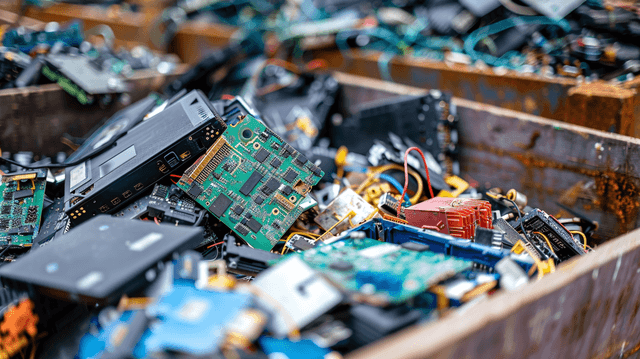
On the numbers provided, SIA Ramotti shows a brokerage operation building commercial scale from EUR 656,329 (2023) to EUR 1,001,592 (2025), driven by an expanding Baltic sourcing network and a deliberate shift towards higher-value PCB-rich and copper-bearing fractions. The 2024 revenue dip (−20.9%) was a volume-for-quality trade — gross margin improved from 8.1% to 13.7% in the same year — followed by a sharp 2025 recovery (+93.0%) that confirmed the underlying commercial trajectory. The 2026–2027 forecast introduces the structural transition: the brokerage channel continues at approximately EUR 948,000 (2026) and EUR 684,000 (2027) while the new in-house sorting operation enters the income statement with EUR 1,200,000 (2026F) and EUR 2,736,000 (2027F), bringing combined revenue to EUR 2,148,000 (2026F) and EUR 3,420,000 (2027F). Profitability is positive throughout the historical period, with a material step-up in 2025 (EUR 93,949 net profit, 9.4% margin) as the brokerage model reaches commercial maturity, and a further improvement forecast for 2026–2027 as the higher-margin sorting line contributes to the blended mix.
Revenue growth by year is: −20.9% (2024), +93.0% (2025), +114.5% (2026F), +59.2% (2027F).
Income statement highlights in EUR (2023–2027)
Indicator | 2023 | 2024 | 2025 | 2026 (A) | 2026 (F) | 2027 (F) |
Revenue | 656,329 | 519,066 | 1,001,592 | 85,969 | 2,148,000 | 3,420,000 |
Revenue — brokerage | 656,329 | 519,066 | 1,001,592 | 85,969 | 948,000 | 684,000 |
Revenue — own sorting | — | — | — | — | 1,200,000 | 2,736,000 |
COGS | 603,019 | 448,193 | 823,149 | 69,019 | 1,546,200 | 2,325,600 |
Gross profit | 53,310 | 70,873 | 178,443 | 16,950 | 601,800 | 1,094,400 |
OPEX | 10,209 | 24,209 | 51,032 | 4,860 | 168,000 | 252,000 |
Profit before tax | 43,101 | 46,664 | 127,411 | 12,090 | 433,800 | 842,400 |
Interest expenses | — | — | — | — | 90,563 | 34,500 |
Other expenses | — | 43,435 | 33,462 | — | — | — |
Income tax | — | — | — | — | — | — |
Net profit | 43,101 | 3,229 | 93,949 | 12,090 | 343,238 | 807,900 |
Growth and margin indicators
Indicator | 2023 | 2024 | 2025 | 2026F | 2027F |
Gross profit margin |
|
|
|
|
|
Net profit margin |
|
|
|
|
|
OPEX as % of revenue |
|
|
|
|
|
Interest coverage (EBIT/Int.) | — | — | — |
|
|
Revenue and gross margin trends
Revenue growth over 2023–2025 follows a non-linear trajectory characteristic of early-stage brokerage operations building a supply base. The 2024 contraction (−20.9% to EUR 519,066) reflects supply stream variability and a deliberate shift towards higher-quality, higher-margin procurement, not structural demand deterioration; the sharp rebound in 2025 (+93.0% to EUR 1,001,592) confirms this. The 2026–2027 forecast assumes the brokerage channel continues at approximately its current run-rate (declining modestly as highest-value fractions are redirected to own sorting), with the sorting line adding EUR 1.2–2.7m from a buyer pipeline backed by 3 executed contracts and 5 formalised letters of intent.
Gross margins show steady improvement from 8.1% (2023) to 13.7% (2024) to 17.8% (2025), reflecting progressive procurement optimisation and a shift in output mix towards PCB-rich and copper-bearing fractions where per-tonne spreads are widest. The 2026–2027 forecast projects a further step-change to 28.0% and 32.0% as the sorting operation contributes higher-margin revenue (32–35% gross margin on own sorting) to the blended mix. The margin improvement is structural — driven by the elimination of third-party processing fees that currently compress brokerage margins to 14–18% — rather than by aggressive pricing assumptions on either channel.
Cost structure and operating expenses
OPEX behaviour reflects a lean, owner-managed brokerage operation gradually building operational capacity. Over 2023–2025, operating expenses rose from EUR 10,209 (1.6% of revenue) to EUR 51,032 (5.1%), incorporating the cost of the dedicated engineer recruited in 2025 to prepare the sorting line transition. The 2026–2027 forecast projects a material step-up to EUR 168–252K, representing 7.8–7.4% of revenue — reflecting the costs of operating a licenced sorting facility (facility rent, sorting team of 4–6 operators, environmental compliance, insurance, equipment depreciation). The declining OPEX-to-revenue ratio from 2026 to 2027 demonstrates operating leverage as the largely fixed-cost facility overhead is spread across a growing revenue base.
A structural note: the line item “Other expenses” in 2024 (EUR 43,435) and 2025 (EUR 33,462) represents capital expenditure on preparatory equipment for the planned sorting facility, recorded as current-period expenses in the management accounts rather than capitalised. This treatment compressed reported net profit in both years — profit before tax of EUR 46,664 (2024) and EUR 127,411 (2025) more accurately reflects the brokerage model’s underlying profitability before one-time investment outlays.
Below-EBIT charges and net profit dynamics
Net profit follows a clear two-phase pattern. Over 2023–2025, bottom-line profitability was positive but compressed: EUR 43,101 (2023), EUR 3,229 (2024, after EUR 43,435 in equipment purchases), and EUR 93,949 (2025, after EUR 33,462 in equipment purchases). The thin 2024 result reflects the deliberate investment of operating surplus into preparatory equipment, not commercial deterioration — profit before tax actually improved from EUR 43,101 to EUR 46,664. The 2025 breakout (EUR 93,949, 9.4% net margin) confirms the operating leverage once the brokerage model reaches scale. The 2026–2027 forecast projects further expansion to EUR 343,238 (16.0%) and EUR 807,900 (23.6%), driven by the sorting operation’s contribution to the blended margin. Two items in the below-EBIT line require attention:
Interest expense steps up from zero historical levels to EUR 90,563 in 2026F, reflecting the proposed EUR 575,000 facility at 21.0% per annum over 9 months. This is consistent with the loan terms described in this memorandum. The interest load is comfortably covered: combined EBIT covers interest by 5.8×. The brokerage business alone provides baseline interest coverage of 1.4× (2025 PBT of EUR 127,411 vs annual interest of EUR 90,563), ensuring that interest can be serviced even if sorting ramp-up is delayed; comfortable debt service including principal repayment requires the sorting operation to perform broadly in line with projections.
Interest then falls to EUR 34,500 in 2027F as partial principal repayment from 2026 operating cash flow reduces the outstanding balance. Coverage rises to 25.4×. This pattern is consistent with the six-tranche disbursement and bullet repayment schedule described in the loan terms and assumes partial repayment from operating cash flow rather than refinancing.
Growth Plan of SIA Ramotti
SIA Ramotti has operated in the Baltic e-waste market since 2019, building a sourcing network across Latvia, Lithuania and Estonia and establishing commercial relationships with downstream recycling processors and metallurgical facilities across the EU. The 2025 financial results — revenue of EUR 1,001,592, gross margin of 17.8%, profit before tax of EUR 127,411 — confirm that the brokerage model works and that the company has reached a scale where the next stage of development is operationally grounded. The growth plan is not a pivot into unfamiliar territory; it is a vertical integration within the same value chain, the same supplier relationships and the same buyer channels in which the company has operated since inception — taking direct control of the sorting step that it currently outsources to third-party processing partners.
The rationale for the 2026–2027 transition is structurally driven. Under the current brokerage model, SIA Ramotti captures a commercial intermediation spread of approximately 14–18% gross margin; a material portion of the sorting spread — approximately EUR 350–500 per tonne in processing fees — is transferred to third-party partners. When sorting is performed in-house, this fee is eliminated and replaced by directly controllable operational costs of approximately EUR 200–280 per tonne, expanding per-tonne gross margins from approximately EUR 150–300 (brokerage) to EUR 520–820 (own sorting). At the current resource base, the company cannot execute this transition: the sorting facility requires EUR 575,000 in equipment, quality control infrastructure, licensing and working capital that exceeds accumulated cash reserves. The brokerage business continues to operate in parallel throughout the transition and beyond, providing a self-sustaining revenue base that independently covers interest obligations.
Management therefore frames 2026–2027 as a controlled transition from collector–broker–trader to collector–sorter–trader — funded by an equipment-first investment programme that removes the capacity constraint — combined with the continued operation of the brokerage channel on lower-value fractions. The demand-side foundation is documented: a buyer pipeline of EUR 1,110,000–1,310,000 in annualised off-take potential across 8 named counterparties in 5 countries, comprising 3 executed contracts (EUR 730,000–810,000) and 5 formalised letters of intent (EUR 380,000–500,000). The plan reflects a measured, pipeline-backed vertical integration rather than a speculative market bet.
Core growth initiatives and implementation sequence
SIA Ramotti’s growth plan is built around a single operational transition: establishing a licenced sorting facility in the Riga area and commencing in-house sorting of high-value e-waste fractions from Q2 2026. The transition requires the company to build four capabilities it does not currently possess: a licenced facility (premises identified, lease contingent on financing), processing equipment (EUR 445,000 in sorting, separation and material handling machinery), a sorting workforce (4–6 trained operators to be recruited upon commissioning), and direct quality control infrastructure (XRF analyser, weighbridge, scales, lot-tracking systems). The company’s engineer — already on staff since 2025 — is responsible for sorting line design, equipment specification and operational preparation; the Category B environmental permit application is in preparation, with standard processing timelines of 3–6 months.
The sorting facility is designed for an initial annual capacity of approximately 300–400 tonnes of e-waste input, calibrated against the company’s existing supply base. The fraction routing strategy directs the highest-value material (PCBs, connector assemblies, copper windings) to the company’s own sorting line, where per-tonne margins are widest, while lower-value fractions (ferrous scrap, aluminium, residual waste) continue through the brokerage channel to third-party partners. The ramp-up trajectory follows the commissioning timeline: 30–50 tonnes in Q2 2026 (commissioning), 60–90 tonnes in Q3, 70–100 tonnes in Q4, reaching full-year throughput of 300–400 tonnes in 2027. Projected sorting revenue is EUR 1,200,000 in 2026 (partial year) and EUR 2,736,000 in 2027 (full year), with blended gross margins of 28.0% and 32.0% respectively.
The buyer pipeline validates the demand-side case. Three executed contracts — NOVITERA UAB (precious-metals recovery, ~EUR 360,000/year), Metruna UAB (secondary materials trading, EUR 120,000–150,000/year), and Boliden Group / Rönnskär (industrial smelter, EUR 250,000–300,000/year) — provide a contracted base of EUR 730,000–810,000. Five additional LOIs with Baltic Recycling UAB, ALL Recycling SIA, Kat-Metal Oy (Finland), Holland Recycling B.V. (Netherlands) and an incremental NOVITERA expansion add EUR 380,000–500,000, with conversion mechanisms tied to operational readiness by 1 July 2026. All purchase commitments are quality-conditional, consistent with standard practice in the secondary raw materials market.
Financing request and use of proceeds
SIA Ramotti is seeking a EUR 575,000 loan facility to finance the sorting and separation equipment, quality control infrastructure, environmental licensing and initial working capital required to transition from brokerage to in-house sorting. The investment is equipment-intensive by nature: approximately 92% of the facility (EUR 530,000) is directed to tangible, identifiable physical assets with specific models, quantities and market-verifiable pricing. The company’s own operating cash flow covers personnel costs, facility rent and ongoing operational expenses — the loan proceeds are concentrated on capital assets that create lasting productive capacity and serve as a tangible collateral base.
Investment Category | Amount (EUR) | % of Total | Growth Constraint Removed |
Sorting and separation equipment | 445,000 |
| Production capacity: manual disassembly, mechanical separation, material handling, facility infrastructure |
Weighing, analytical and storage equipment | 85,000 |
| Quality control, fraction classification, lot assembly and certification |
Licensing and compliance | 15,000 |
| Category B environmental permit, regulatory documentation, monitoring |
Working capital | 30,000 |
| Initial e-waste procurement before first sorted output revenue |
TOTAL | 575,000 |
|
|
All equipment specifications are independently verifiable against European industrial equipment catalogues. Pricing has been confirmed within standard commercial ranges. The equipment-first allocation ensures that the bulk of the facility creates tangible, pledgeable assets with defined secondary-market recovery values.
Buyer pipeline — 2026
Engagement | Segment | Annualised value (EUR) | Status |
NOVITERA, UAB (Lithuania) | PCBs, precious metals | ~360,000 | Executed contract |
Metruna, UAB (Lithuania) | Electronic scrap, non-ferrous | 120,000–150,000 | Executed contract |
Boliden / Rönnskär (Sweden) | Smelter-grade PCBs | 250,000–300,000 | Executed contract |
Contracted subtotal |
| 730,000–810,000 |
|
NOVITERA — incremental (Lithuania) | Specification-grade sorted | 90,000–120,000 | LOI executed |
Baltic Recycling UAB (Lithuania) | Electronic scrap, non-ferrous | 75,000–95,000 | LOI executed |
ALL Recycling SIA (Latvia) | Aluminium, non-ferrous | 75,000–95,000 | LOI executed |
Kat-Metal Oy (Finland) | Precious-metal electronics | 60,000–90,000 | LOI executed |
Holland Recycling B.V. (Netherlands) | PCBs, classified boards | 80,000–100,000 | LOI executed |
LOI subtotal |
| 380,000–500,000 |
|
Total pipeline |
| 1,110,000–1,310,000 |
|
Conclusion
SIA Ramotti’s 2026–2027 growth plan is best described as a vertical integration step within a business that has operated in the Baltic e-waste value chain since 2019 and has demonstrated commercial viability through seven years of brokerage activity. The company is not changing its market focus, sourcing logic or buyer base. It is internalising the sorting step that it currently outsources to third-party processing partners — capturing the processing spread (approximately EUR 350–500 per tonne) that is currently transferred, and replacing it with directly controllable operational costs that are structurally lower than the margin ceded.
The plan is commercially grounded in an identified, pipeline-backed demand base and is operationally specific. It translates buyer commitments into a single, measurable execution path: build the sorting facility, obtain the Category B permit, install the equipment, recruit and train the sorting team, and begin producing specification-grade output lots for the 8 contracted and LOI-backed buyers across 5 countries. The pipeline is quantified (EUR 1,110,000–1,310,000 across 8 counterparties, 5 countries, 5 buyer types), and each engagement includes a defined material scope, quality-conditional purchase parameters and an identified capacity blocker that the loan facility addresses. The contracted base alone (EUR 730,000–810,000 from NOVITERA, Metruna and Boliden) provides a structural demand floor.
The financing request follows the same disciplined logic. The EUR 575,000 facility is ring-fenced to the four categories that matter for this transition: sorting equipment (77.4%), quality control infrastructure (14.8%), licensing (2.6%) and working capital (5.2%). Approximately 92% is directed to tangible, verifiable assets. The key execution conditions are clear: commission the sorting facility on schedule (Q2 2026), obtain the Category B permit, and demonstrate to buyers that the company can produce specification-grade lots at the quality level required for premium pricing. The principal risks — commissioning timeline dependency, absence of demonstrated sorting performance, LOI conversion contingency, key-person concentration and commodity price exposure — are characteristic of a micro-enterprise undertaking its first vertical integration step and are partially mitigated by the company’s zero-debt starting position, the continued cash generation of the brokerage business, and the structural nature of the margin improvement.
Description of the Loan
To execute the planned transition from e-waste brokerage to in-house sorting operations and remove the current equipment and facility constraint, SIA Ramotti intends to obtain a EUR 575,000 term loan facility. The facility is designed as a targeted equipment procurement and facility build-out instrument: it finances the sorting and separation machinery, quality control and analytical infrastructure, environmental licensing, and working capital needed to establish and commission the sorting facility. The draw structure mirrors the operational sequence of the investment programme, so funding is available when each category of spending becomes operationally necessary and is not held idle. The loan is not intended to refinance historical obligations, fund general corporate overhead, or support the brokerage business, which is self-sustaining from its own cash flow.
Indicative facility terms
Parameter | Value |
Total loan amount | EUR 575,000 |
Number of tranches | 6 |
Interest rate |
|
Loan term per tranche | 9 months |
Servicing | Monthly interest payments on drawn amounts |
Principal repayment | Bullet repayment at maturity per tranche |
Total interest cost | EUR 90,563 |
Total repayment (principal + interest) | EUR 665,563 |
Tranche schedule and allocation
Tranche | Amount (EUR) | Allocation |
1 | 100,000 | Core sorting and separation equipment: double-shaft shredder, cable granulator, PCB dismantling machine, magnetic drum separator; drawdown upon facility lease agreement signed and Category B permit application submitted to VVD |
2 | 100,000 | Mechanical separation and processing equipment: eddy current separator, vibrating screen, belt conveyors, wire stripping machine, dust collection system; drawdown upon Tranche 1 equipment ordered and facility preparation commenced |
3 | 100,000 | Manual disassembly infrastructure: 6 equipped workstations with ESD protection and pneumatic tools, hand tools, PPE, storage containers, fraction bins, hazardous material containment, compressed air system; drawdown upon Tranche 2 equipment delivered and electrical installation commenced |
4 | 90,000 | Material handling and facility infrastructure: electric forklift, pallet trucks, electrical installation and power distribution, ventilation, lighting, loading dock equipment, CCTV, tool cabinets; drawdown upon sorting line equipment installed and infrastructure scope confirmed |
5 | 85,000 | Weighing, analytical and quality control equipment: XRF handheld analyser, portable weighbridge, platform and bench scales, industrial racking, IT infrastructure, label system, QC workstation, testing consumables; drawdown upon sorting line commissioned and first test lots processed |
6 | 100,000 | Licensing and compliance (Category B permit fees, environmental documentation, monitoring setup) + 12-month spare parts and consumable stock + working capital for initial feedstock procurement (EUR 30,000); drawdown upon permit documentation ready and sorting facility operationally ready for commercial throughput |
Total | 575,000 |
|
The facility is structured to match how the sorting facility build-out is actually executed. The six tranches correspond to the operational sequence: core sorting machinery first (Tranche 1), mechanical separation completion (Tranche 2), manual disassembly and storage infrastructure (Tranche 3), material handling and facility systems (Tranche 4), quality control and analytical suite (Tranche 5), and licensing, spare parts and working capital last (Tranche 6). This design links each draw to a defined project step — ordering, delivering, installing, commissioning, and launching — so the funding is used directly for the sorting facility build-out and its practical activation, without mixing purposes or leaving material amounts undrawn or idle. Interest accrues only on disbursed amounts, reducing the effective cost during the ramp-up phase, and each drawdown is supported by documentary evidence (supplier invoices, proformas, purchase orders, delivery confirmations, permit documentation) linking the disbursement to a specific procurement or investment activity.
Factos principais
- SIA Ramotti foi fundado(a)Jan 30, 2019
- Início do trabalho ativo/produçãoJun 01, 2019
Informação do mutuário
SIA Ramotti
Riga, Baltā iela 24 - 49, LV-1055
SIA Ramotti is a Latvian e-waste collection, brokerage and trading company incorporated on 30 January 2019 (reģ. nr. 42103088650). The company has operated in the Baltic electronic waste market since inception, initially testing several commercial models within the e-waste value chain before consolidating around the collector–broker–trader model that has defined its operations from 2023 onward. Over seven years of continuous activity, SIA Ramotti has built a sourcing network spanning Latvia, Lithuania and Estonia, established commercial relationships with downstream recycling processors and metallurgical facilities across the EU, and developed a practical understanding of every link in the e-waste value chain — from the composition and pricing dynamics of mixed electronic waste at the collection stage, through the economics of sorting and fraction preparation, to the specification requirements and pay-rate structures of industrial buyers at the refining end.
- N.º Reg.42103088650
Descrição e tamanho do mercado
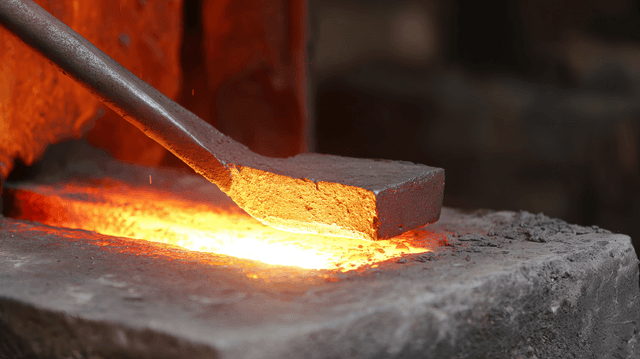
Regional market overview — European e-waste management and precious metals recovery
SIA Ramotti operates within a single market segment — waste electrical and electronic equipment (WEEE) collection, brokerage and trading — but is exposed to two distinct layers of that market with different demand dynamics and growth trajectories. At the broadest level, the European e-waste management market provides the commercial context for the company’s sourcing, sorting and trading activities. At a more specific level, the precious metals recovery sub-segment — PCB-rich fractions containing gold, silver and palladium — represents the highest-margin portion of the output mix and the primary driver of per-tonne profitability. Both layers benefit from structural EU-level tailwinds: the WEEE Directive revision tightening treatment quality standards, the Critical Raw Materials Act creating institutional demand for EU-compliant secondary material suppliers, and growing electronic waste volumes driven by consumer electronics proliferation and institutional digitalisation.
Core end-market: European e-waste management
Market size and growth trajectory. The European e-waste management market encompasses the collection, sorting, processing and trading of WEEE across the full value chain. Mordor Intelligence values the market at approximately EUR 27.9bn (2024), growing at a CAGR of 5.0% to approximately EUR 37.5bn by 2030. A narrower definition focused on electronics recycling and processing is valued at approximately EUR 7.9bn (2024) by Market Research Future, with a CAGR of approximately 13.4% through 2035. Metals account for approximately 47–52% of market revenue by value, with precious metals representing the highest-margin fraction. Europe leads all global regions in formal e-waste recycling rates (approximately 42.5% in 2024), but this remains well below the WEEE Directive target of 65% — the EU-wide collection rate was 40.6% in 2022 (European Environment Agency).
Regulatory escalation as a structural demand driver. The WEEE Directive (2012/19/EU) mandates 65% collection by weight. The European Commission published its evaluation on 2 July 2025 and is expected to present a legislative revision by December 2026, with tighter EPR enforcement and mandatory treatment quality standards as priority areas. The EU Critical Raw Materials Act (in force 23 May 2024, amended March 2026) establishes a 25% domestic recycling target for strategic raw materials by 2030 — palladium, gold and copper are directly implicated. China’s export restrictions on gallium, germanium, graphite and antimony (2023–2024) have reinforced commercial demand for EU-compliant secondary material suppliers. Global e-waste generation reached 62 million tonnes in 2022, with formal recovery capturing approximately EUR 25.7bn against a theoretical potential of EUR 83.4bn — a structural gap that regulatory escalation is specifically designed to close.
Sub-segment: precious metals recovery from PCBs
Market and value dynamics. The global precious metals e-waste recovery market is valued at approximately EUR 6.2bn (2024, Data Bridge Market Research), growing to approximately EUR 9.7bn by 2032 at a CAGR of 5.8%. Gold accounts for more than 70% of global market revenue, driven by its use in PCB connectors, plating and semiconductor devices. Consumer electronics represent 46.3% of market share — the source category most directly aligned with SIA Ramotti’s output stream. Mixed consumer electronics PCBs contain approximately 90–200 grams of gold per tonne, 150–200 kilogrammes of copper per tonne and approximately 400 grams of silver per tonne, with combined precious metal value of EUR 10,000–18,000 per tonne at 2025 spot prices. PCB fractions trade at a material discount to contained value (typically EUR 2,000–6,000 per tonne), reflecting refining costs; the upstream collector’s commercial logic is to narrow this gap through better lot quality and accurate classification.
Brokerage economics within the sub-segment. E-waste brokers in the European market typically achieve gross margins of 8–18%, depending on fraction mix and the ability to place output with premium-paying downstream buyers. Brokers focused on PCB-rich and copper-bearing fractions consistently achieve margins at the upper end (14–18%), while those in ferrous and low-value non-ferrous scrap operate at 8–12%. Vertically integrated collector–sorter–traders achieve gross margins of 25–40% on sorted output — a structural margin advantage of 10–20 percentage points that reflects the capture of the sorting spread. SIA Ramotti’s focus on the Baltic WEEE stream, which includes a meaningful share of PCB-rich and non-ferrous material from institutional and commercial sources, positions the company towards the upper portion of the brokerage margin range.
Latvia / Baltic positioning — functional regulatory environment, fragmented mid-tier
Latvia is one of only three EU member states — alongside Bulgaria and Slovakia — to have achieved the WEEE Directive collection target of 65% in both 2022 and 2023 (Eurostat). Above-target performance reflects a functional formal collection infrastructure and increases feedstock quality for compliant collectors, though it also intensifies competition for supply. Eurozone membership (since January 2014) eliminates currency conversion costs on export transactions with buyers in Germany, Sweden and the Netherlands, and Schengen area membership facilitates cross-border logistics. The Baltic geography positions Latvia as a feeder market to Nordic and Northern European processing infrastructure: Boliden (Sweden) and Aurubis (Germany) are the primary European destinations for PCB-rich concentrate from Baltic collectors.
The competitive landscape is structured across three tiers: Tier 1 regional integrators (CRONIMET Nordic: EUR 144.5m turnover, 251,000+ tonnes processed in 2024; Metruna: Baltic-wide WEEE specialist); Tier 2 mid-size Latvian processors (TM Recycling, E-collect, ALL Recycling); and Tier 3 general scrap dealers (Euro Lom, ELECO, Jumets, Refonda). SIA Ramotti is positioned at the entry point of Tier 2 — licensed for trading but not yet for processing, with a focused WEEE specialism and an established Baltic sourcing network. Competition operates across four axes: feedstock pricing, logistics accessibility, regulatory compliance assurance and output quality relative to buyer specifications. The critical competitive challenge is transitioning from a brokerage model to a licenced integrated operator capable of capturing the full sorting spread and competing on equal footing with established Tier 2 processors.
Opportunities and challenges for SIA Ramotti in this market context
WEEE regulatory escalation expanding formal feedstock volumes: higher mandatory collection rates and treatment quality standards will increase material entering the formal recycling chain, directly expanding feedstock availability for licensed collectors. Latvia’s above-target performance positions its operators to benefit from volume growth rather than absorbing compliance-driven cost increases.
CRMA creating institutional demand for upstream WEEE aggregators: the 25% domestic recycling target for strategic raw materials by 2030, combined with China’s CRM export restrictions, has increased the strategic value of EU-based WEEE collectors with PCB-rich output. Large downstream refiners (Umicore, Boliden, Aurubis) are expanding European feedstock sourcing.
PCB-rich fraction price premium over general non-ferrous scrap: one tonne of mixed consumer electronics PCBs contains precious metals with an estimated contained value of EUR 10,000–18,000 at 2025 spot prices. Operators who deliver higher-purity, more consistently specified lots narrow the refinery’s risk discount and capture a larger share of contained value.
Baltic geographic positioning as a logistics hub for Northern European refiners: Latvia’s location between major secondary refiners (Sweden, Germany, the Netherlands) and growing Central and Eastern European e-waste volumes creates a commercially relevant aggregation geography, with eurozone membership eliminating currency conversion costs on export transactions.
Challenges / constraints
Commodity price volatility directly affecting output realisation: copper prices experienced an approximately 12% decline between May and September 2024; palladium spot prices fell more than 40% between January 2023 and January 2025. These fluctuations directly affect the value of inventory held between procurement and sale.
Scale asymmetry relative to established regional competitors: CRONIMET Nordic’s EUR 144.5m turnover represents a scale several orders of magnitude above SIA Ramotti’s current operations, directly affecting feedstock acquisition pricing and buyer relationship depth.
Buyer concentration at the downstream refining level: Umicore, Boliden and Aurubis collectively account for the majority of PCB-rich WEEE processing capacity in Northern and Western Europe. Upstream aggregators are price-takers relative to these refiners.
Informal and non-compliant competition compressing feedstock supply margins: the mixing of WEEE with general metal scrap allows informal handlers to offer higher input prices to suppliers by avoiding licensing costs and EPR contributions — a persistent competitive distortion across most EU member states.