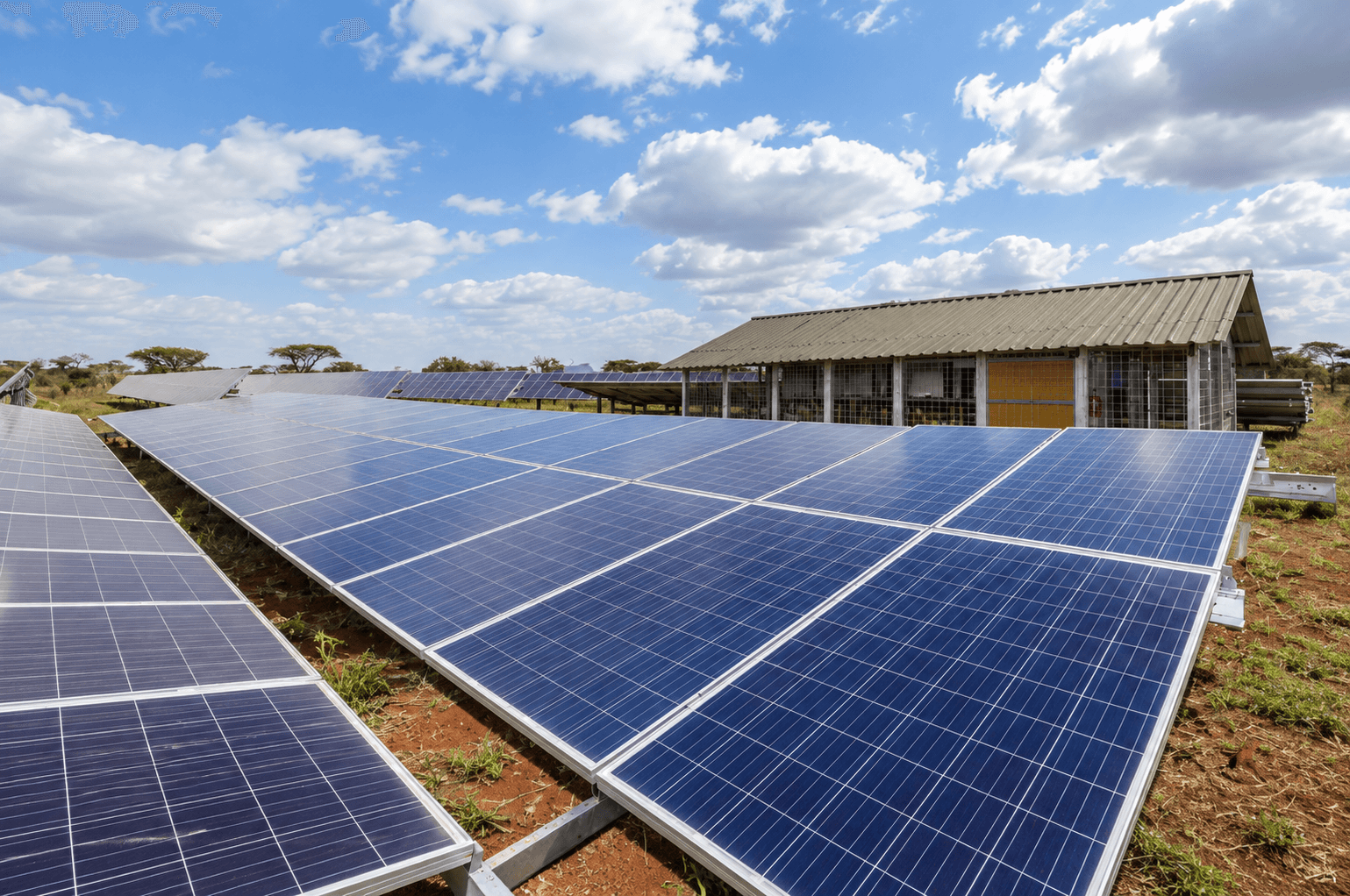

Solar Systems
7,020.20USDC
Open
20.06% of 35,000 USDC
- Loan period11 months
- Lending APR22.80 %
- Expires
Max target
35,000 USDC
Min target
17,500 USDC
Investors
14
Interest payments
11 months
Principal repayments
bullet
Total payments
monthly
About
Zhekou Investment Limited is a Kenya-based solar EPC (engineering, procurement and construction) integrator focused on commercial and industrial (C&I) clients. The company delivers turnkey photovoltaic solutions and hybrid photovoltaic plus battery energy storage systems (PV + BESS). It manages the entire delivery cycle — from site assessment, load profiling and engineering design to bill of quantities preparation, procurement coordination, project management, commissioning and warranty support. Physical installation and regulated electrical works are performed by subcontractors licensed by the Energy and Petroleum Regulatory Authority (EPRA), while Zhekou retains contractual accountability for quality, schedule discipline, health and safety compliance and post-installation service.
- Asset-light operating model: core engineering, procurement coordination and project governance are kept in-house, with installation capacity scaled through partners.
- Geographic scope: operations are concentrated in Kenya’s main commercial hubs — Nairobi, Mombasa, Nakuru and Kisumu.
Leadership and management
The company is founder-led. Chief Executive Officer Celine Adhiambo Okelo, who holds 100% of the share capital, has an engineering background and experience in Kenya’s solar EPC sector. Her management approach emphasises design integrity, disciplined procurement and rigorous site-level execution control as levers for delivery reliability and risk containment.
Decision-making is currently centralised under one executive, which supports strategic consistency while also highlighting the importance of succession planning.
Sales and customer acquisition
Zhekou engages clients directly through technical qualification, relationship-driven outreach and sector focus. The business serves three B2B customer segments and tailors proposals based on load analysis and site conditions.
- SMEs / retail: small commercial enterprises and retailers seeking on-site energy cost reduction.
- Commercial and institutional: offices, schools and institutions requiring reliable daytime power.
- Industrial and large commercial: manufacturers and large commercial users with high energy loads and reliability needs.
Typical project size ranges from 30 kW to 100 kW, with selective larger projects undertaken. Client acquisition relies on direct relationships, repeat engagements and referrals from the installed client base.
Product and service portfolio
The company designs and delivers grid-tied photovoltaic systems and hybrid PV + BESS solutions using tier-one components from manufacturers such as JA Solar, LONGi, JinkoSolar and Trina for modules; Huawei, SMA, Fronius, Growatt and Victron for inverters; and CATL and Gotion for battery systems. Services encompass site surveys, load profiling, engineering and design, bill of quantities preparation, budget and schedule development, procurement coordination, on-site project management, commissioning and warranty and post-warranty support.
- Grid-tied PV systems: designed to offset daytime electricity consumption with on-site solar generation.
- Hybrid PV + BESS systems: integrated photovoltaic and battery storage solutions that provide reliability and load management.
- Turnkey delivery: full-cycle project management from site assessment to commissioning and warranty.
Key clients and market examples
Completed installations demonstrate expertise across diverse C&I applications. By industry, the client base comprises:
- Plastics and polymer products manufacturing – Clients A and D (including packaging production, Nairobi).
- Beverage and fruit processing – Client B.
- Milling and agro-processing – Client C.
Summary
Zhekou combines a defined EPC-integrator role — contractual accountability for engineering, procurement coordination, delivery governance and warranty obligations — with an asset-light structure that limits fixed overhead and scales installation through EPRA-licensed subcontractors. Operations across four commercial hubs and three B2B segments, together with supply relationships covering tier-one module, inverter and battery manufacturers, reduce reliance on any single market or supplier. The principal constraints are concentration-related: strategic and operational control resides with the CEO, installation quality and schedule performance depend on external partners while client accountability remains with the company, and project margins are sensitive to equipment pricing, logistics variability and currency movements.
Loan Collateral
The facility is secured by a combination of existing fixed assets, newly acquired project equipment and dynamic security from contract-backed cash flows. A conservative 30% discount is applied to physical assets to estimate liquidation values. This layered structure is designed to cover the loan principal in full and to protect the lender's position.
Existing fixed asset collateral
Assets already owned by the company are pledged as security. Book values and discounted values are presented below.
Asset category | Value (EUR) |
Vehicles | 90,130 |
Installation and Testing Equipment | 85,000 |
IT Equipment | 35,000 |
Warehouse Equipment | 30,000 |
Office Furniture and Fixtures | 20,000 |
Total existing operational assets (PPE) | 260,130 |
Discounted value (–30%) | 182,091 |
Financed equipment collateral
Equipment acquired for the four projects is also pledged. The pledge covers the full equipment package of EUR 787,540, including the portion funded by client advances (EUR 78,754), as title to the equipment remains with the company until final settlement. Purchase value and discounted value are shown below.
Collateral component | Purchase value (EUR) | Discounted value (–30%) (EUR) |
Project equipment under the four EPC contracts | 787,540 | 551,278 |
Total discounted new equipment | — | 551,278 |
Under the EPC contracts, title to the project equipment passes to the client only upon final settlement. Until final payment is received, the equipment remains the property of the company and forms part of the pledged collateral. As projects reach completion, the collateral layer is not released but replaced by incoming client payments, which constitute the primary source of debt repayment.
Dynamic security and coverage ratio
In addition to physical assets, dynamic security is provided by the cash flow from signed contracts. The four projects have a combined value of EUR 1,463,194, which exceeds the total repayment obligation (principal plus interest) of EUR 858,666.67.
The total discounted value of pledged assets — existing PPE and project equipment — is EUR 733,369, resulting in a collateral-to-loan ratio of ~104.8% (LTV 0.95), which secures the loan principal in full under conservative valuation assumptions.
Conclusion
The collateral package combines vehicles, installation and testing equipment, IT and warehouse equipment, office fixtures and newly acquired PV and BESS equipment. These assets have active secondary markets and retain stable resale values. Coupled with contract-backed cash flows that exceed the total repayment obligation, the collateral structure provides liquid coverage for the lender, and the diversification of collateral across asset categories supports a positive risk assessment for the facility.
Risk scoring
- CollateralCompany Equipment
- Total risk scoreBBB
- Debt to equity2.12
- LTV95 %
- Credit history8/10
Details

Financial Performance
Between 2023 and 2025 the company recorded steady revenue growth and maintained positive profitability at all levels. Revenue increased from EUR 2,316,495 in 2023 to EUR 2,846,159 in 2024 (+22.9%) and EUR 3,129,593 in 2025 (+10.0%). Gross profit grew from EUR 360,058 to EUR 446,612 over the period, while net profit rose from EUR 91,869 to EUR 132,392. The gross margin declined in 2024 as equipment costs rose, then improved in 2025 as procurement efficiency increased. Net margin moved from ~4.0% in 2023 to ~4.2% in 2025.
Key financial indicators
Indicator | 2023 (EUR) | 2024 (EUR) | 2025 (EUR) |
Revenue | 2,316,495 | 2,846,159 | 3,129,593 |
Total COGS | 1,956,437 | 2,453,360 | 2,682,981 |
Gross Profit | 360,058 | 392,799 | 446,612 |
Total OPEX | 216,570 | 227,897 | 235,528 |
D&A | 12,247 | 15,067 | 21,953 |
EBITDA | 143,488 | 164,902 | 211,084 |
EBIT | 131,241 | 149,835 | 189,131 |
Interest | 0 | 0 | 0 |
Net Profit | 91,869 | 104,885 | 132,392 |
Revenue and profitability analysis
Revenue increased in each year of the period. Growth accelerated in 2024 and slowed in 2025; however, profitability increased faster than revenue in 2025, indicating improved execution economics. Net margin declined in 2024 due to gross margin compression but recovered in 2025.
Cost and efficiency drivers
Cost of goods sold (COGS) is dominated by equipment procurement, reflecting the equipment-intensive nature of EPC projects. Installation and licensed subcontractor costs scale with project volume. Operating expenses remained controlled, with payroll, rent, transport, professional services and other categories rising modestly.
Financial resilience and sensitivities
The financial profile combines steady growth with consistent profitability. Revenue rose in each year of 2023–2025, all profitability levels remained positive, and operating expenses grew more slowly than revenue, improving operating leverage. No interest expense was recorded during the period, reflecting conservative financing and advance payment arrangements. The main sensitivities sit in the margin structure: net margins of ~4% leave a limited buffer against adverse cost movements, gross margin is exposed to equipment pricing, logistics costs and currency fluctuations, and revenue and cash inflows depend on the timing of contract execution and milestone acceptance in an equipment-intensive cost structure.
Growth Plan of Zhekou Investment Limited
The company’s growth strategy is to move upmarket within the C&I segment by increasing project scale and technical complexity, emphasising hybrid PV + BESS solutions and targeting larger industrial and commercial clients. It intends to maintain the asset-light EPC-integrator model while strengthening internal capabilities.
- Expand the share of industrial and large commercial projects to improve margins and scale.
- Increase the proportion of hybrid PV + battery projects relative to PV-only installations.
- Maintain an asset-light approach by partnering with licensed subcontractors for installation and commissioning.
- Strengthen internal engineering, project management and financial control functions to support higher project complexity.
Expansion initiatives
To implement the strategic vision, Zhekou will invest in additional human resources and organisational capacity:
Role | Change | Intended effect |
Project Engineer / Project Manager | 1.0 FTE | Increased delivery throughput; schedule, subcontractor and quality control; reduction of rework and margin leakage |
Finance Coordinator | 0.5 FTE → 1.0 FTE | Strengthened cash-cycle control (advances, milestones, reconciliations); reduced cash gaps under higher procurement volume |
Lead Electrical / Design Engineer | 1.0 FTE | Increased design and commissioning capacity and technical validation; reduced risk of design errors and non-compliance; support for PV + BESS expansion |
Projected financial impact
Management forecasts measured growth following these initiatives. Revenue is projected to increase from EUR 3,129,593 in 2025 to EUR 3,488,271 in 2026 and EUR 4,026,805 in 2027. Gross profit and margins are expected to improve as the project mix shifts toward higher-value hybrid PV + BESS systems, with the gross margin rising from 14.3% in 2025 to 16.3% in 2026 and 17.8% in 2027. 2026 is a transition year: with interest expense incurred from September and operating expenses scaled up ahead of growth, net profit temporarily declines to EUR 123,992 (net margin 3.6%), before recovering to EUR 163,317 in 2027, with the net margin reaching ~4.1% on a larger revenue base.
Indicator | 2025 (A) | 2026 (A) Jan–Aug | 2026 (F) Sep–Dec | 2026 (F) FY | 2027 (F) |
Revenue, EUR | 3,129,593 | 2,138,555 | 1,349,716 | 3,488,271 | 4,026,805 |
Gross Profit, EUR | 446,612 | 316,506 | 253,292 | 569,798 | 714,758 |
Gross Margin | 14.3% | 14.8% | 18.8% | 16.3% | 17.8% |
EBIT, EUR | 189,131 | 141,468 | 75,330 | 216,798 | 352,310 |
Net Profit, EUR | 132,392 | 99,028 | 24,964 | 123,992 | 163,317 |
Net Margin | 4.2% | 4.6% | 1.8% | 3.6% | 4.1% |
Operational impact and client pipeline
The growth plan is anchored in a pipeline of four signed EPC contracts worth EUR 1,463,194 and additional letters of intent. These projects demonstrate demand from larger industrial and commercial customers and provide a revenue base for expansion.
Client | Contract value (EUR) |
Client A | 351,718 |
Client B | 306,696 |
Client C | 371,963 |
Client D | 432,817 |
Total (4 projects) | 1,463,194 |
- Contracts cover installations for manufacturers and processors requiring on-site PV + BESS solutions.
- Project scope includes PV modules, string inverters, battery inverters, battery energy storage, hybrid controllers and ancillary equipment.
- Letters of intent from additional clients indicate an expanding pipeline beyond the four signed contracts.
Financing and implementation
Execution of the growth plan relies on a EUR 700,000 facility structured in four tranches. The financing bridges working-capital requirements between equipment procurement and milestone receipts. The tranches are drawn concurrently in September 2026, when procurement under all four contracts begins, and interest payments are integrated into the financial forecasts.
- The equipment tranches are aligned with the procurement schedules of the signed contracts, complemented by a dedicated working-capital tranche; each tranche can be repaid independently upon receipt of the corresponding client settlements.
- Client payment terms vary by contract and project scope, combining upfront advances with milestone-based settlements tied to delivery, installation and commissioning stages; advances and interim milestone inflows reduce the financed portion of procurement.
- Cash-flow management and monitoring are intended to keep debt service aligned with project inflows.
Description of the Loan
Zhekou Investment Limited requests a EUR 700,000 facility to finance procurement and delivery of PV modules, inverters, battery energy storage systems, controllers and ancillary equipment, together with associated working capital, required to execute four signed EPC contracts worth EUR 1,463,194. The facility is dedicated to the delivery of the signed contracts and does not fund speculative initiatives.
- Total loan amount: EUR 700,000, structured as four tranches.
- Objective: finance equipment procurement for four confirmed contracts and bridge working-capital needs.
- Aligned with contract values: signed contracts provide visibility on revenue generation directly linked to the financed assets.
Planned asset acquisition
Loan proceeds will be used to procure a comprehensive package of equipment across four projects. Equipment categories and aggregated cost estimates are summarised below.
Client A — equipment procurement (PV plus hybrid integration)
Item | Cost (EUR) |
PV modules Mono 550W | 36,036 |
PV string inverters 50 kW AC | 48,000 |
PCS / battery inverter bi-directional 150 kW | 27,000 |
BESS LFP 200 kWh incl. racks + BMS | 38,000 |
EMS / hybrid controller (PV + BESS + Grid + DG) | 15,000 |
Bi-directional meter + CT (zero-export) | 5,000 |
DG synchronisation / ATS panel | 8,000 |
Spare critical parts kit | 5,000 |
Total equipment (net) | 182,036 |
Client B — equipment procurement
Item | Cost (EUR) |
PV modules Mono 550W | 30,030 |
PV string inverters 50 kW AC | 40,000 |
PCS / battery inverter bi-directional 125 kW | 23,000 |
BESS LFP 200 kWh incl. racks + BMS | 38,000 |
EMS / hybrid controller (PV + BESS + Grid + DG) | 15,000 |
Bi-directional meter + CT (zero-export) | 5,000 |
DG synchronisation / ATS panel | 8,000 |
Total equipment (net) | 159,030 |
Client C — equipment procurement
Item | Cost (EUR) |
PV modules Mono 550W | 24,024 |
PV string inverters 50 kW AC | 32,000 |
PCS / battery inverter bi-directional 150 kW | 27,000 |
BESS LFP 400 kWh incl. racks + BMS | 76,000 |
EMS / hybrid controller (PV + BESS + Grid + DG) | 15,000 |
Bi-directional meter + CT (zero-export) | 5,000 |
DG synchronisation / ATS panel | 8,000 |
Total equipment (net) | 187,024 |
Client D — equipment procurement (250 kWp PV plus 500 kWh BESS)
Item | Cost (EUR) |
PV modules Tier-1 Mono 550W | 34,125 |
PV string inverter 50 kW AC | 43,245 |
PCS / battery inverter bi-directional 250 kW | 51,210 |
BESS LFP 500 kWh incl. racks + BMS | 108,110 |
EMS / hybrid controller (PV + BESS + Grid) | 17,070 |
Bi-directional meter + CT (industrial) | 5,690 |
Total equipment (net) | 259,450 |
The aggregated cost of principal equipment across the four projects, at net supplier quotations, is approximately EUR 787,540. Equipment procurement net of 10% client advances (EUR 78,754) amounts to EUR 708,786, of which EUR 590,000 is financed by Tranches 1–3, with the balance covered by the working-capital tranche, interim milestone receipts under the signed contracts and the company's own resources. Procurement is supported by validated supplier quotations for PV modules, inverters, power-conditioning systems, battery storage and control equipment. Subcontractor installation works of EUR 104,000 across the four projects are funded from the dedicated working-capital tranche and interim milestone receipts rather than from the equipment tranches. Equipment and installation works do not represent the full direct cost of the contracts: total project costs additionally include balance-of-system materials (mounting structures, cabling and protection equipment), delivery, import and logistics charges, engineering, project management, commissioning and warranty provisions, consistent with the gross margins presented in the financial forecasts.
Repayment structure and schedule
The loan is disbursed in four tranches with a 11-month term for each tranche. Interest accrues at 22.8% per annum and is payable monthly, while the principal is repaid in full at the end of each tranche. Tranches 1–3 (EUR 590,000) finance equipment procurement across the four signed contracts, while Tranche 4 (EUR 110,000) covers working capital across the four projects, including subcontractor installation works. Interest costs are included in the financial forecasts, with the facility’s total repayment schedule presented below.
The company retains the right to repay any tranche ahead of schedule, upon receipt of the corresponding client settlements, without prepayment penalties. The financial forecasts conservatively assume full 11-month utilisation of each tranche; early repayment would reduce the total interest cost below the scheduled
Justification and cash-flow impact
The structure of monthly interest payments and bullet principal is designed to preserve working capital during equipment-intensive project phases. By aligning debt service with milestone payments, the company avoids liquidity strain and ensures that loan capital is applied to revenue-generating assets. The tranche structure mirrors the four procurement packages and allows each tranche to be retired independently as the corresponding contract settles, while client advances reduce the financed volume. The repayment profile has been integrated into the financial model, providing visibility over debt service obligations and mitigating the risk of understating borrowing costs.
- Monthly interest plus bullet principal aligns repayments with project milestones and cash inflows.
- Per-tranche early repayment without penalties allows debt to be retired as individual contracts settle.
- The loan supports delivery of signed contracts and is not used for unconfirmed projects or speculative expansion.
Key facts
- Zhekou Investment Limited was foundedSep 03, 2018
- Start of active work/productionOct 01, 2018
Borrower info
Zhekou Investment Limited
Zhekou Investment Limited is a Kenya-based solar EPC (engineering, procurement and construction) integrator focused on commercial and industrial (C&I) clients. The company delivers turnkey photovoltaic solutions and hybrid photovoltaic plus battery energy storage systems (PV + BESS). It manages the entire delivery cycle — from site assessment, load profiling and engineering design to bill of quantities preparation, procurement coordination, project management, commissioning and warranty support. Physical installation and regulated electrical works are performed by subcontractors licensed by the Energy and Petroleum Regulatory Authority (EPRA), while Zhekou retains contractual accountability for quality, schedule discipline, health and safety compliance and post-installation service.
Market description & size
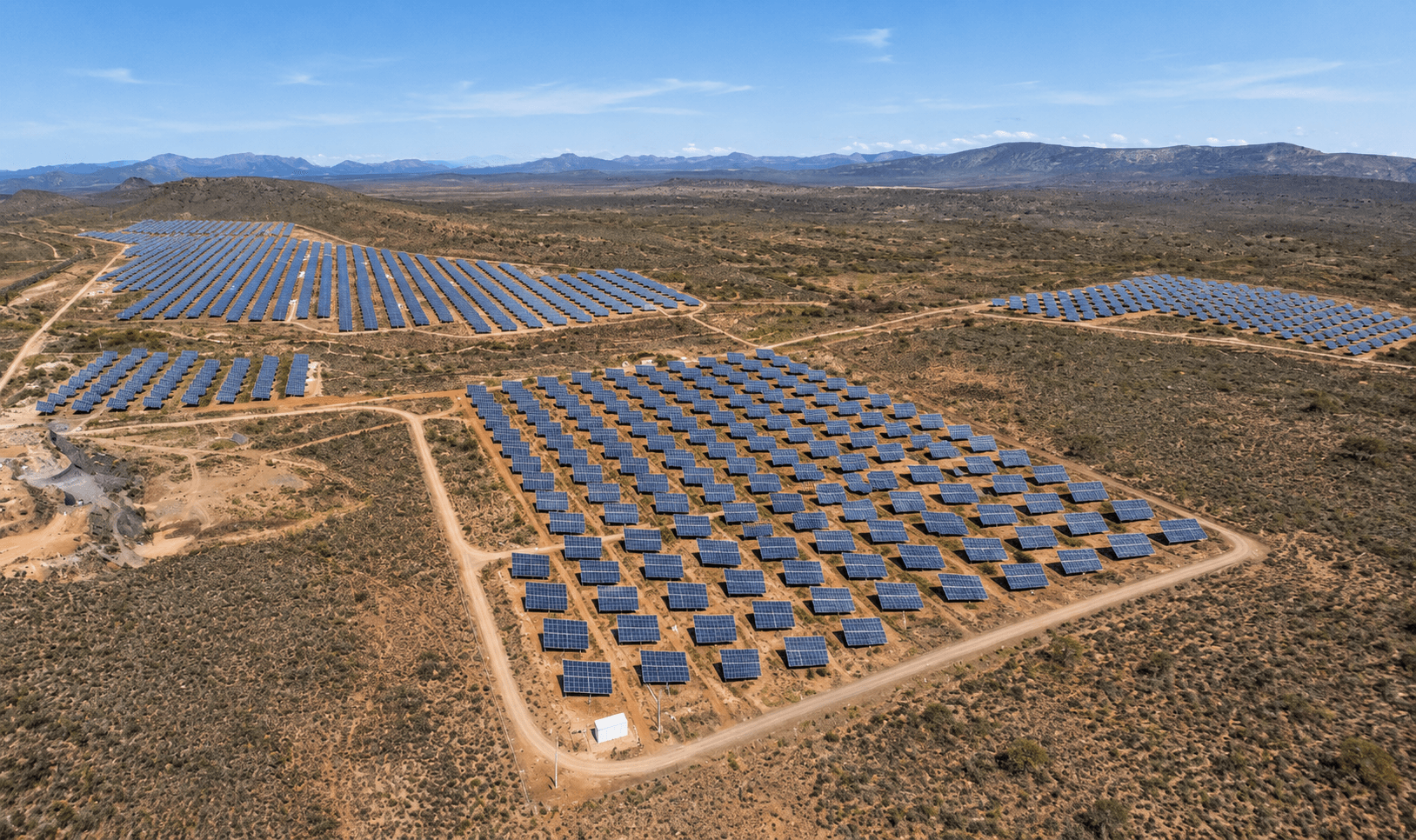
The African solar PV market is expanding from a low installed base. Total installed solar capacity was approximately 13.5 GW at the end of 2023 and reached approximately 23.4 GW by the end of 2025. Growth is driven by structural electricity supply constraints, industrial expansion and demand for decentralised generation.
- Structural electricity shortages and high tariffs underpin demand for captive PV solutions.
- Policy support in many African countries encourages renewable energy deployment.
- Commercial and industrial customers increasingly adopt hybrid PV + BESS solutions for reliability.
Country-specific market overview – Kenya
Kenya has a formalised regulatory environment under EPRA. Total installed solar capacity stands at 442.9 MW, comprising 229.2 MW of captive self-consumption PV, 210.3 MW of grid-connected PV and 3.4 MW of off-grid PV. Captive solar projects therefore represent more than half of national capacity.
- Open-access regulations introduced in 2024 broaden market participation and support corporate PPAs (power-purchase agreements).
- EPRA licensing requirements ensure that electrical works are performed by qualified subcontractors.
- The market is fragmented, with EPC-focused contractors and asset-backed developers operating in parallel.
- Import dependency for PV and BESS equipment exposes the market to foreign exchange and logistics risks.
Market segmentation and demand drivers
The C&I solar market in Kenya is defined by three customer groups and by common demand drivers:
- SMEs / retail: seeking cost reduction through self-consumption.
- Commercial and institutional: requiring reliable daytime power for offices, schools and institutions.
- Industrial and large commercial: focusing on high load factors, energy cost stability and grid reliability.
Demand drivers include high grid tariffs, unreliable grid supply and the opportunity to stabilise operating costs with hybrid PV + BESS systems.
Competitive landscape and supply chains
The market is competitive and fragmented. EPC integrators and IPP/PPA (independent power producer / power-purchase agreement) providers compete for projects. Zhekou’s supply chain relies on tier-one equipment manufacturers and local distributors.
- Tier-one PV module suppliers include JA Solar, LONGi, JinkoSolar and Trina.
- Inverter suppliers include Huawei, SMA, Fronius, Growatt and Victron.
- Battery suppliers include CATL and Gotion.
- Local distributors such as PNS Solar Solutions and Taico Power Kenya import equipment and act as the importer of record.
- Competition from financed PPA solutions may affect conversion and pricing power among industrial clients.
Company’s market position
Zhekou Investment Limited operates in the mid-scale captive solar segment, delivering on-site PV and hybrid PV + BESS systems for C&I customers. It positions itself as an asset-light EPC integrator, providing engineering and project management expertise while leveraging licensed partners for installation and commissioning.
- Typical project size is 30 kW to 100 kW with selective larger installations.
- Completed projects span manufacturing, food processing, plastics and milling.
- The company focuses on direct relationships and repeat clients rather than mass marketing.
- Asset-light execution enables scalability without large capital investments in equipment or labour.
Market challenges
Challenges in the market reflect external dependencies and evolving competitive dynamics:
- High reliance on imported equipment exposes projects to foreign exchange and logistics risks.
- Competitive pressure from developers offering financed PPAs.
- Implementation of new regulations may affect licensing requirements and project timelines.
- Customer capital expenditure cycles and payment behaviour impact cash-flow timing.