Commercial Construction

🧰Services
ID: 390
10,504.80USDC
Open
52.52% of 20,000 USDC
- Loan period9 months
- Lending APR23.40 %
- Expires26 days, 10:03:37
About
Lutrina Construction And General Supplies Limited is a privately owned Kenyan construction company incorporated on 14 March 2018. The company operates primarily in Nairobi and its surrounding metropolitan areas, focusing on small- to mid-scale residential and commercial construction projects.
The company functions as an asset-light general contractor, assuming full responsibility for project coordination, subcontractor management, procurement of construction materials, cost control, quality supervision, and client communication. Physical construction works are executed through a network of specialised subcontractors, while Lutrina retains contractual and execution risk under fixed-price or hybrid (fixed price with approved variations) contracts.
In addition to general contracting services, Lutrina independently procures and supplies construction materials to its project sites. Material sourcing and delivery represent a distinct margin component alongside the general contracting fee, contributing to overall project profitability.
The company is led by its CEO and sole shareholder, Doreen Kendi Mukami, an engineer by training with prior professional experience in large contracting and real estate development organisations in Kenya. Strategic decision-making, pricing discipline, contractor selection, and execution oversight are centralised at management level, reflecting a management-driven operating model rather than asset- or technology-led execution.
Lutrina does not maintain permanent in-house construction crews or heavy equipment. As part of its confirmed development strategy, the company plans to selectively introduce owned construction equipment and transition toward a hybrid execution model, enabling limited self-performance of standardised civil work packages while retaining a subcontractor-led structure.
The company’s target clients include private property developers, landowners, and small commercial investors seeking predictable delivery under a single coordinating contractor. The operating model emphasises flexibility, controlled scaling, and low fixed costs, while relying on disciplined project selection, accurate cost estimation, and effective subcontractor coordination.
Loan Collateral
The €500,000 loan facility is secured by a combination of loan-financed construction equipment, corporate assets, and personal collateral provided by the owner of Lutrina Construction And General Supplies Limited. The collateral structure is asset-based, transparent, and directly linked to the company’s operating activities.
Collateral Composition
Loan-financed equipment (pledged to the lender)
For collateral valuation purposes, the construction equipment acquired under Tranche 1 is valued on a conservative basis, applying a 15% discount to nominal purchase cost to reflect liquidation assumptions.
Asset category | Nominal value (€) | Discount | Collateral value (€) |
Construction machinery and equipment | 415,000 | 15% | 352,750 |
Additional collateral
Asset | Estimated value (€) |
Toyota Land Cruiser Prado J150 (2022) | 41,500 |
Corporate reserves | 150,000 |
Total collateral | 191,500 |
Collateral Coverage
Metric | Value (€) |
Total collateral value | 544,250 |
Loan principal | 500,000 |
Collateral coverage ratio |
|
The pledged assets consist of standard, marketable construction equipment with established secondary-market liquidity, supplemented by liquid corporate reserves and personal collateral. The collateral package fully covers the loan principal and provides an adequate recovery buffer for the lender.
The pledged equipment is integral to the execution of the company’s active and confirmed project portfolio and is expected to remain in continuous operational use throughout the loan term. Upon full repayment of the facility, all collateral encumbrances will be released.
Overall, the collateral structure provides sufficient asset-based security and is proportional to the size, tenor, and risk profile of the facility.
Highlights
Max target
20,000 USDC
Min target
10,000 USDC
Investors
24
Interest payments
9 months
Principal repayments
bullet
Total payments
monthly
Risk scoring
- CollateralCompany Assets
- Total risk scoreBBB
- Debt to equity1.28
- LTV92 %
- Credit history8/10
Details
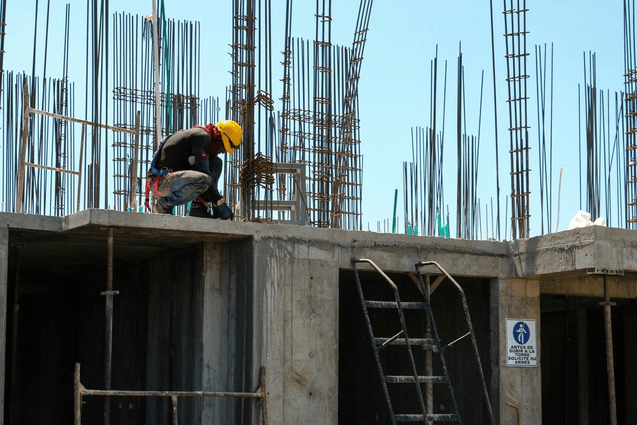
The financial performance of Lutrina Construction And General Supplies Limited reflects a project-based general contracting business operating under an asset-light execution model. Over the historical period, the company demonstrated consistent revenue growth and uninterrupted profitability, while margins remained structurally constrained due to reliance on subcontracted execution.
The table below summarises the Company’s historical and forecast profit and loss performance.
Metric / Year | 2023 | 2024 | 2025 | 2026F | 2027F |
Total revenue | 2,727,464 | 3,063,947 | 3,441,173 | 3,965,375 | 4,542,385 |
Gross profit | 296,503 | 356,945 | 445,755 | 793,076 | 998,327 |
EBIT | 179,457 | 196,926 | 243,741 | 538,053 | 711,220 |
Interest expense | 0 | 0 | 0 | 70,833 | 42,500 |
PBT | 179,457 | 196,926 | 243,741 | 467,220 | 668,720 |
Net profit | 125,620 | 137,848 | 170,619 | 327,054 | 468,104 |
Revenue is generated primarily through fixed-price and hybrid general contracting agreements in the residential and small commercial segments in Nairobi. A material component of revenue and gross profit is derived from the procurement and supply of construction materials, which provides an additional margin layer within the overall contracting model.
During the historical period (2023–2025), gross margins ranged from approximately 11% to 13%, reflecting limited operating leverage under a subcontractor-led structure. EBIT margins remained below 8%, indicating modest downside protection under fixed-price execution.
The forecast period (2026–2027) assumes a structural change in the cost base driven by the introduction of owned construction equipment and limited self-performance of standardised civil works. This transition is expected to reduce subcontractor and equipment rental costs, resulting in material gross margin expansion to approximately 20%–22% and improved EBIT margins, despite higher internal operating costs and the inclusion of financing expenses.
Interest costs related to the planned loan facility are fully incorporated into the forecast results, ensuring that projected profitability is presented on a post-financing basis. Net profit growth in the forecast period is therefore driven by operational margin expansion rather than aggressive revenue assumptions.
Overall, the financial profile demonstrates consistent revenue growth, positive profitability across all periods, and a forecast improvement in margins linked to a clearly defined change in execution model rather than changes in market pricing or demand assumptions.
Margin Analysis
The table below summarises historical and projected margin development, reflecting both the asset-light operating model in the historical period and the expected impact of the planned transition to a hybrid execution model.
Metric / Year | 2023 | 2024 | 2025 | 2026F | 2027F |
Gross profit margin |
|
|
|
|
|
EBIT margin |
|
|
|
|
|
PBT margin |
|
|
|
|
|
Net profit margin |
|
|
|
|
|
Margin expansion in the forecast period is driven by structural changes in execution, including reduced reliance on subcontractors and equipment rentals, while financing costs are fully reflected in net profitability.
Growth plan of Lutrina Construction And General Supplies Limited
The growth plan for Lutrina Construction And General Supplies Limited focuses on a controlled transition from a fully asset-light general contracting model to a hybrid execution model over the 2026–2027 period. The strategy is geographically concentrated in Nairobi and targets small- to mid-scale residential, commercial, and mixed-use developments that fall within the company’s established execution profile.
The primary objectives of the growth strategy are to increase control over critical-path activities, improve cost predictability under fixed-price contracts, and expand gross margins through selective self-performance of standardised civil work packages, while retaining subcontractors for specialised and non-core scopes.
Growth will be supported by an active portfolio of ongoing and advanced-stage contracts with repeat developers, providing contract-backed workload and visibility during the transition phase. The aggregate contract value of the confirmed project portfolio is approximately €2.3 million.
Planned Construction Equipment
No. | Equipment | Qty | Primary use | Unit price (€) | Total (€) |
1 | Excavator 20–22 t | 1 | Excavations, foundations, bulk earthworks | 125,000 | 125,000 |
2 | Backhoe loader | 1 | General earthworks and auxiliary works | 75,000 | 75,000 |
3 | Tipper truck 10–15 t | 1 | Soil removal, material delivery | 85,000 | 85,000 |
4 | Mobile concrete mixer | 1 | On-site concrete production | 39,000 | 39,000 |
5 | Steel formwork system (set) | 1 | Foundations, columns, slabs | 55,000 | 55,000 |
6 | Vibratory plates / rollers | 3 | Soil and base compaction | 12,000 | 36,000 |
Total planned CAPEX | 415,000 | ||||
All equipment will be deployed across active and upcoming projects with Optiven Ltd, Fanaka Real Estate, Centum Real Estate Ltd, Fusion Group, and Username Properties Ltd. Ownership of this equipment reduces reliance on rented machinery and external civil subcontractors and improves scheduling reliability on critical-path activities.
Operational and Financial Impact
The introduction of owned equipment and limited in-house execution capacity is expected to:
- reduce subcontractor and equipment rental costs on standardised scopes;
- improve cost predictability and execution control under fixed-price contracts;
The growth plan does not involve expansion into new geographies or unfamiliar asset classes. All initiatives are confirmed, contract-backed, and aligned with the company’s existing technical competence and client base.
Description of the Loan
Lutrina Construction And General Supplies Limited intends to obtain a secured loan facility in the total amount of €500,000 to support the implementation of its confirmed growth plan and the transition to a hybrid execution model.
The loan is structured in two tranches and is allocated exclusively to clearly defined operational purposes directly linked to revenue-generating activities.
Loan Amount and Structure
Parameter | Description |
Total loan amount | €500,000 |
Number of tranches | 2 |
Interest rate |
|
Loan term | 9 months per each tranche |
Repayment structure | Monthly interest servicing; principal repaid at maturity |
Total interest cost | €87,750 |
Total repayment amount | €587,750 |
Use of Loan Proceeds
Tranche | Amount (€) | Primary purpose |
Tranche 1 | 415,000 | Acquisition of construction machinery and site equipment to support partial self-perform of earthworks and concrete works. |
Tranche 2 | 85,000 | Working-capital buffer to support project execution (materials procurement, subcontractor advances, payroll, fuel and other direct costs) |
The first tranche is designated for capital expenditure on standard, liquid construction equipment that will be retained for long-term operations and deployed across multiple projects. The second tranche provides limited working-capital support to smooth cash-flow timing during periods of peak execution.
The facility is not intended to refinance existing obligations or cover historical losses. All proceeds are directly linked to the execution of signed and advanced-stage contracts within the Nairobi market.
The loan structure is aligned with the company’s operating cycle, enabling execution capacity expansion while limiting cash-flow pressure during active project delivery.
Key facts
- Lutrina Construction And General Supplies Limited was foundedMar 14, 2018
- Start of active work/productionJan 01, 2019
Borrower info
Lutrina Construction And General Supplies Limited
Wangige, Kiambu County, Kabete District, Kinoo, Nakuru-Nairobi Highway, Shamata Building, QPGF+88X
Lutrina Construction And General Supplies Limited is a privately owned Kenyan construction company incorporated on 14 March 2018. The company operates primarily in Nairobi and its surrounding metropolitan areas, focusing on small- to mid-scale residential and commercial construction projects.
The company functions as an asset-light general contractor, assuming full responsibility for project coordination, subcontractor management, procurement of construction materials, cost control, quality supervision, and client communication. Physical construction works are executed through a network of specialised subcontractors, while Lutrina retains contractual and execution risk under fixed-price or hybrid (fixed price with approved variations) contracts.
- Reg No.PVT-Q7UZ6R6
Market description & size

Lutrina Construction And General Supplies Limited operates within the East African construction market, with its activities concentrated in Kenya and primarily in the Nairobi metropolitan area. The regional construction sector is supported by long-term structural drivers, including rapid urbanisation, population growth, and sustained demand for residential and commercial real estate.
At a regional level, the combined construction industry value of core East African markets is estimated at approximately €55 billion (2024), reflecting a multi-year growth trajectory driven by both public infrastructure investment and private-sector development. Within this context, Kenya represents one of the most developed and liquid construction markets in the region.
Kenya’s construction market is estimated at approximately €6.0–6.3 billion annually, with projected growth supported by persistent housing undersupply, urban concentration in Nairobi and its commuter belt, and continued public infrastructure spending that indirectly stimulates private real estate development. Demand is particularly strong in small- to mid-scale residential estates, mid-rise apartment buildings, and mixed-use projects targeted at affordable and mid-income segments.
Lutrina’s addressable market is the segment of small- and mid-scale residential and commercial projects where general contractors compete primarily on execution discipline, cost control, subcontractor coordination, and procurement capability rather than on proprietary construction technologies or balance-sheet scale. This segment is characterised by a high volume of repeatable projects and developer-led demand.
The Kenyan general contracting market is fragmented, with numerous small and mid-sized contractors competing alongside larger firms focused on infrastructure and high-value commercial developments. In this environment, differentiation is achieved through reliability of execution, control of subcontractor performance, and the ability to manage material sourcing and scheduling under fixed-price or hybrid contract structures.
Lutrina has established a track record of delivering comparable residential and commercial projects for SME and institutional developers in Nairobi, supporting its positioning within this repeatable market segment. Repeat engagements and a portfolio of completed projects indicate operational relevance rather than reliance on one-off or atypical contracts.
Overall, the market environment offers sustained demand for Lutrina’s core services, while competitive pressure and working-capital intensity remain structural features of the sector. Future performance is therefore more closely linked to execution discipline, cost management, and cash-flow control than to macro-level demand conditions.