Waste Management
14,719.80USDC
15,000 USDC 중 98.13%펀딩 완료2026년 8월 4일
- 펀딩 일자
- 2026년 8월 4일
- 대여 기간
- 9 개월
- 연 이자
- 21 %
모집이 마감되었습니다. 이 프로젝트의 포지션은 2차 시장에서 다른 투자자로부터 구매할 수 있습니다.
전자폐기물 중개에서 자체 선별로
SIA Ramotti는 리가 지역에 자체 전자폐기물 선별 시설을 갖추고 인허가를 취득하기 위해 €575,000를 조달합니다. 이를 통해 현재 외부 처리 파트너와 나누고 있는 선별 마진 전체를 회사가 확보하게 됩니다.
14,719.80USDC
15,000 USDC 중 98.13%리스크 등급: BBB9 개월21 %펀딩 완료
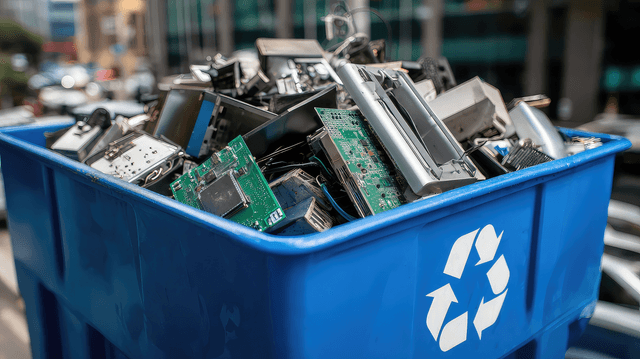
SIA Ramotti is a Latvian e-waste collection, brokerage and trading company incorporated on 30 January 2019 (reģ. nr. 42103088650). The company has operated in the Baltic electronic waste market since inception, initially testing several commercial models within the e-waste value chain before consolidating around the collector–broker–trader model that has defined its operations from 2023 onward. Over seven years of continuous activity, SIA Ramotti has built a sourcing network spanning Latvia, Lithuania and Estonia, established commercial relationships with downstream recycling processors and metallurgical facilities across the EU, and developed a practical understanding of every link in the e-waste value chain — from the composition and pricing dynamics of mixed electronic waste at the collection stage, through the economics of sorting and fraction preparation, to the specification requirements and pay-rate structures of industrial buyers at the refining end. The company is now executing a defined transition from pure brokerage to an integrated collector–sorter–trader model, with plans to launch its own licenced sorting facility in Q2 2026.
The company operates with a compact team of four permanent employees — the owner-manager (CEO), a business development manager, a dedicated sorting line engineer, and an administrative assistant — with plans to recruit 4–6 sorting operators upon facility commissioning. SIA Ramotti positions itself not as a general scrap dealer but as a specialist e-waste intermediary with fraction-level expertise: the commercial model is built on the ability to source metal-rich electronic waste at competitive procurement cost, accurately classify material by recoverable metal content, and place specification-grade output lots with the downstream buyer type — precious-metals recycler, industrial smelter, secondary alloy producer or specialist PCB processor — where each fraction commands the strongest commercial terms. This fraction-routing capability distinguishes the company from undifferentiated scrap collectors and provides the commercial foundation for the transition to in-house sorting.
Corporate identifiers: Reģistrācijas Nr. 42103088650. PVN Nr. LV42103088650. Registered address: Baltā iela 24 – 49, Rīga, LV-1055, Latvia. Legal form: Sabiedrība ar ierobežotu atbildību (SIA). Share capital: EUR 2,800. Website: ramotti.com.
Ownership, leadership and governance
SIA Ramotti operates as an owner-managed enterprise with centralised leadership and clear accountability for execution. Natālija Kuzmiča-Poliščuka serves as CEO and sole shareholder (100%), under whose direction the company has grown from a market-entry-stage operation testing business models in 2019 to a commercially active e-waste brokerage generating EUR 1.0m in annual revenue with a contracted buyer pipeline spanning five countries. Commercial and operational control is anchored in the CEO, who holds all principal supplier and buyer relationships and directs procurement, pricing and strategic decisions — a governance structure that provides decision-making speed in a transactional market where procurement timing and price negotiation require fast response, but creates key-person concentration that is characteristic of early-stage, owner-managed micro-enterprises.
Business model and revenue mechanics
SIA Ramotti’s business is single-line but dual-channel. The company earns revenue through the procurement of mixed electronic waste from Baltic-region sourcing partners and the sale of specification-grade output fractions to downstream industrial recycling and metallurgical processors. Under the current brokerage model, the physical sorting is outsourced to licenced third-party processing partners; SIA Ramotti controls the commercial chain from procurement to sale, capturing the intermediation spread between mixed-input cost and sorted-output value. From Q2 2026, the company is transitioning to in-house sorting — performing the physical transformation at its own licenced facility and retaining the full sorting spread that is currently shared with processing partners.
Revenue is transactional: each consignment is weighed, classified by fraction type and invoiced at the agreed price per tonne. There is no subscription or retainer component; repeatability is driven by established buyer relationships and the structural demand of downstream processors for consistent, specification-grade feedstock. Two output categories drive revenue: (1) high-value precious-metal-bearing fractions — PCBs, connector assemblies and component-dense boards containing recoverable gold, silver and palladium, sold to specialist precious-metals recyclers at the highest per-tonne prices in the output mix; and (2) base metal fractions — copper windings, aluminium chassis, steel casings and other ferrous and non-ferrous components, sold to base metal recyclers at LME-referenced prices. The margin formation logic is straightforward: mixed e-waste procured at approximately EUR 300–500 per tonne yields blended sorted output worth approximately EUR 1,200–1,800 per tonne; under the brokerage model, a material portion of this spread is transferred to the processing partner as a sorting fee (gross margin 14–18%), whereas in-house sorting enables SIA Ramotti to retain the full spread (target gross margin 30–35%).
Product portfolio and geographic footprint
SIA Ramotti’s output portfolio consists of sorted electronic waste fractions classified by material composition and metal-content profile, derived from the processing of discarded household appliances, consumer electronics and industrial equipment. The principal saleable fractions are: PCBs and connector-rich assemblies (EUR 1,000–6,000 per tonne depending on grade and precious metal density), copper-bearing fractions from motors, windings and cables (EUR 4,500–5,500 per tonne for clean stripped copper), aluminium fractions from chassis and heat sinks (EUR 900–1,200 per tonne), and steel and ferrous fractions (EUR 150–250 per tonne). Sourcing covers the Baltic countries — Latvia, Lithuania and Estonia. Output is sold to industrial recycling and metallurgical processors across the EU, with the destination markets determined by the location of the relevant buyer: precious-metals recyclers in Lithuania and Finland, an industrial smelter in Sweden, secondary alloy producers in Latvia, and specialist PCB processors in the Netherlands.
Key clients, target audience and go-to-market
SIA Ramotti sells B2B into the industrial secondary raw materials market. Go-to-market is direct and relationship-driven: the company sources material through its Baltic supplier network and places sorted output with downstream buyers through established commercial relationships, with pricing determined by lot composition, fraction purity and prevailing market benchmarks. The 2026 buyer pipeline comprises 3 executed contracts and 5 formalised letters of intent (EUR 1,110,000–1,310,000 total annualised off-take potential) spanning 5 countries and 5 buyer types: precious-metals recovery (NOVITERA UAB, Kat-Metal Oy), regional secondary materials trading (Metruna UAB, Baltic Recycling UAB), industrial smelter-grade processing (Boliden Group / Rönnskär), secondary aluminium alloy production (ALL Recycling SIA), and specialist PCB recycling (Holland Recycling B.V.). The contracted base alone (EUR 730,000–810,000 from NOVITERA, Metruna and Boliden) provides a structural demand floor for the sorting facility’s output.
Procurement, suppliers and execution partners
The company’s execution model is “source, arrange, place” under the current brokerage structure, transitioning to “source, sort, place” upon facility commissioning. On the procurement side, mixed electronic waste is sourced from a network of Baltic-region supply partners — companies possessing equipment recycling and disposal capabilities, consolidators of end-of-life electronics, and institutional disposal programmes — developed since 2019. The aggregate supply capacity of the partner base is reported as sufficient to sustain the planned sorting facility’s throughput requirements (300–400 tonnes per annum at capacity) without requiring simultaneous expansion of procurement activity. On the processing side, sorting is currently outsourced to licenced third-party partners; upon facility launch, the core value-creation step moves in-house, with the company performing manual disassembly and mechanical separation at its own premises. Outbound transport is outsourced to external logistics service providers.
Organisational structure and operational readiness
SIA Ramotti currently operates with a four-person team: the CEO (commercial relationships, procurement, strategy), a business development manager (supplier and buyer development), a dedicated engineer (sorting line design, equipment specification, facility commissioning), and an administrative assistant. The planned investment programme expands the team to 8–10 persons through the recruitment of 4–6 trained sorting operators, and introduces the formalised operational processes, delegation structures and environmental compliance procedures required for a licenced sorting facility. The engineer — already on staff and responsible for the sorting line design — will serve as the facility’s operational manager during the initial phase.
Summary
SIA Ramotti is a seven-year-old Latvian e-waste brokerage operation that has built a commercially functional position in the Baltic secondary metals value chain: an established multi-country sourcing network, relationships with downstream recycling processors and industrial-scale metallurgical facilities across the EU, and a demonstrated capacity to generate EUR 1.0m in annual revenue with improving margins (8.1% to 17.8% over 2023–2025) and uninterrupted operating profitability — all achieved within a capital-light, owner-managed structure with zero financial debt. The company’s core strengths are its seven years of material-level expertise, the established Baltic sourcing base that can sustain the planned sorting facility without parallel procurement expansion, and a diversified buyer pipeline of EUR 1.1–1.3m across 8 counterparties in 5 countries that provides the demand-side foundation for the transition. The material constraints are equally clear: a thin equity base (EUR 142,345), key-person concentration in the sole shareholder-CEO, no demonstrated sorting facility operating history (the projected 30–35% gross margins are industry-benchmarked rather than facility-proven), and a limited three-year financial track record. The investment case rests on the company’s ability to convert seven years of brokerage experience and a documented buyer pipeline into operational performance at its own licenced sorting facility — a transition that is operationally grounded and commercially coherent, but that represents the company’s first step into facility-based industrial operations.
Loan Collateral
The EUR 575,000 facility is supported by a consolidated collateral package combining the company’s existing fixed asset base (machinery, equipment and other fixed assets as reported on the 2025 balance sheet, totalling EUR 219,520) with newly acquired loan-financed sorting, separation and quality control equipment (EUR 530,000 of the EUR 575,000 facility). Collateral is presented at base value (balance sheet carrying amount for existing assets; purchase/invoice cost for new equipment) and at a conservative liquidation value reflecting defined haircuts (55–75% recovery depending on asset category and secondary-market characteristics) to approximate an orderly forced-sale recovery basis. Working capital (EUR 30,000, representing 5.2% of the facility) and licensing costs (EUR 15,000, representing 2.6%) are excluded from the pledgeable base, as these funds are consumed into operational costs with no separable tangible residual.
Collateral source | Base value (EUR) | Liquidation value (EUR) | Coverage vs EUR 575,000 (liquidation) |
Loan-financed equipment (major sorting at 70%; QC/analytical at 75%; remaining infrastructure at 55%) | 530,000 | 349,915 | 60.9% |
Existing operational assets (machinery and equipment at 70%; other fixed assets at 60%) | 219,520 | 149,712 | 26.0% |
TOTAL (hard collateral) | 749,520 | 499,627 | 86.9% |
Coverage metrics
Metric | Base value | Liquidation value | |
Total collateral | EUR 749,520 | EUR 499,627 | |
Coverage vs EUR 575,000 principal | 130.4% | 86.9% | |
Coverage vs EUR 665,563 total repayment | 112.6% | 75.1% |
On a conservative liquidation basis, the hard collateral package provides approximately 86.9% coverage of the EUR 575,000 principal and 75.1% coverage of total repayment including interest, with the gap attributable to the non-pledgeable working capital and licensing components (EUR 45,000) and conservative haircuts on heterogeneous small-infrastructure items (55% on the remaining sorting infrastructure category). On a base-value basis, coverage exceeds 130% of principal and 112% of total repayment. The package is primarily secured by identifiable industrial equipment — shredders, eddy current separators, cable granulators, XRF analysers, weighbridges and material handling machinery — from established manufacturers with active European secondary markets, which is consistent with the purpose of the loan and straightforward to evidence and monitor. The company’s existing machinery and equipment (EUR 180,000 carrying value, EUR 126,000 liquidation value) adds a pre-existing asset layer that is independent of the loan’s execution. As the sorting facility is commissioned and production begins, the collateral base is supplemented by the revenue-generating capacity of the installed equipment and by the contracted buyer pipeline (EUR 1,110,000–1,310,000 across 8 counterparties) — a progression that transitions downside protection from asset liquidation value to operating cash-flow coverage over the loan tenor.
SIA Ramotti 설립 연도:2019년 1월 30일
영업 및 생산 시작 일자2019년 6월 1일
최소 목표 금액7,500 USDC
참여자28
이자 지급매월 지급
원금 상환만기 일시 상환(Bullet)
총 지급액9 개월
리스크 평가
종합 리스크 점수BBB
부채 비율 (D/E Ratio)4.00
LTV (담보 인정 비율)115%
신용 이력8 / 10
담보 유형Company Assets
BBB 등급(네 번째 단계)은 발트 지역 전자폐기물 시장에서 7년간 이어온 중단 없는 사업 활동, 꾸준한 영업 흑자, 이번 대출 이전 금융 부채가 전혀 없었다는 점을 반영하는 한편, 얇은 자기자본 기반과 회사가 처음으로 시설 기반 선별 사업에 진출한다는 점을 함께 고려한 결과입니다.
- D/E(부채비율) 4는 높은 수준으로, €575,000 대출 대비 자기자본이 €142,345에 불과하다는 점을 반영합니다.
- LTV 115%는 청산 가치 기준 유형 담보가 원금의 86.9%를 커버한다는 의미입니다(기준 가치로는 130.4%).
- 신용 이력 점수는 8/10입니다.
유의할 사항:
- 회사는 자체 선별 시설을 운영한 이력이 없으며, 목표 마진 30–35%는 업계 벤치마크입니다.
- 사업 개시는 카테고리 B 환경 허가 취득과 2026년 2분기 시운전에 달려 있습니다.
- 8개 구매자 거래 중 5건은 의향서이며, 모든 구매는 품질 조건부입니다.
- 산출물 가격은 구리와 귀금속 가격을 따르며, 핵심 거래 관계는 모두 단독 주주인 CEO에게 집중되어 있습니다.
재무
2025년 매출€1.0M
2025년 매출총이익률17.8%
2025년 순이익€93,949
구매자 파이프라인€1.11–1.31M
€ (천)
€656K656
€519K519
€1002K1002
€2148K*2148*
€3420K*3420*
2023202420252026F2027F
* 2026–2027년은 경영진 전망치이며 신규 자체 선별 라인을 포함합니다
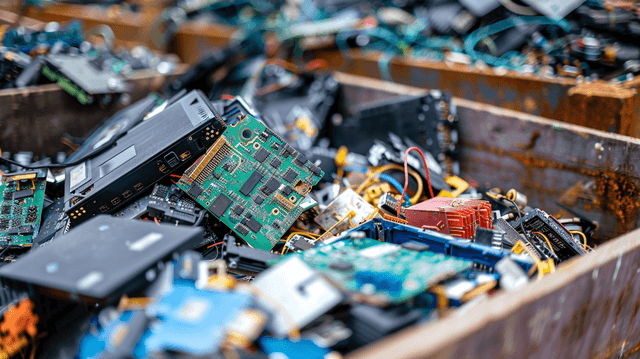
Ramotti는 2023년부터 수익성 있는 중개 사업을 운영해 왔으며, 2026년 2분기부터 자체 선별 라인을 추가합니다. 전망의 근거는 8개 거래 상대방에 걸친 €1.11–1.31M 규모의 구매자 파이프라인이며, 이 중 3곳과는 계약이 체결되어 있습니다.
매출 성장
- 매출은 2023년 €656,329에서 2025년 €1,001,592로 늘었습니다. 2024년에는 물량 대신 원료 품질을 택하면서 일시적으로 감소했습니다.
- 자체 선별이 더해지면서 매출은 2026년 €2,148,000, 2027년 €3,420,000로 전망됩니다.
- 중개 채널도 병행 운영되며, 2026년 매출은 약 €948,000입니다.
마진 개선
- 매출총이익률은 2023년 8.1%에서 2024년 13.7%, 2025년 17.8%로 상승했습니다.
- 자체 선별로 현재 처리 파트너에게 지급하는 수수료를 회사가 확보하게 되어, 전망 마진은 2026년 28.0%, 2027년 32.0%로 높아집니다.
- 2025년 순이익은 €93,949로, 순이익률 9.4%를 기록했습니다.
효율적인 비용 구조
- 2023–2025년 영업비용은 매출의 1.6–5.1% 수준을 유지했습니다.
- 2024년과 2025년 순이익은 자산화하지 않고 비용 처리한 선별 장비 €43,435와 €33,462만큼 줄었습니다.
시장
유럽 전자폐기물 관리 시장 규모는 약 €27.9bn으로 연 5.0% 성장하고 있으며, 전자제품 귀금속 회수 시장은 전 세계 €6.2bn 규모입니다. 라트비아는 WEEE 수거 목표치 65%를 달성한 EU 회원국 3곳 중 하나이며, EU의 핵심 원자재 2030년 재활용 목표는 규정을 준수하는 수거업체에 대한 수요를 높입니다. 주요 리스크는 구리와 팔라듐 가격의 변동성, 그리고 거래 조건을 좌우하는 소수의 대형 정련업체입니다.
담보 구성
대출 자금으로 취득하는 선별 및 분리 장비 · €445K€219.5K
대출 자금으로 취득하는 선별 및 분리 장비€445,000
기존 기계, 장비 및 기타 고정자산€219,520
대출 자금으로 취득하는 계량, 분석 및 보관 장비€85,000
총 담보액€749,520신규 장비의 구매가와 기존 자산의 2025년 대차대조표상 가치를 합산한 금액입니다.
€575,000 대출은 대출금으로 구매하는 장비와 회사의 기존 고정자산으로 뒷받침됩니다.
1. 대출금으로 구매하는 신규 선별 장비 — €530,000
대출금의 약 92%는 식별 가능한 산업 장비 구매에 쓰입니다.
- 파쇄기, 와전류 선별기, 케이블 분쇄기, 자재 운반 기계 — €445,000
- XRF 분석기, 계근대, 저울, 보관 설비 — €85,000
- 활발한 유럽 중고 시장을 갖춘 검증된 제조사 제품입니다.
2. 기존 고정자산 — €219,520
- 2025년 대차대조표상 장부가액 €180,000의 기계 및 장비
- 회사의 기타 고정자산
- 이 담보층은 신규 시설 구축 여부와 무관합니다.
회수율 55–75%의 할인을 적용한 청산 가치 기준으로, 담보는 다음을 커버할 것으로 추정됩니다.
- 원금 €575,000의 86.9%(기준 가치로는 130.4%)
- 총상환액 €665,563의 75.1%
부족분은 담보로 제공할 자산이 남지 않는 운전자본 및 인허가 비용 €45,000에서 비롯됩니다. 시설이 가동되면 보호 근거가 자산 가치에서 설치된 장비가 창출하는 현금흐름으로 옮겨 갑니다.
차입자 정보
SIA Ramotti리가, 라트비아 · 2019년 설립
SIA Ramotti는 2019년 1월 30일에 설립된 라트비아의 전자폐기물 수거, 중개 및 무역 회사입니다(등록번호 42103088650). 회사는 설립 이래 발트 지역 전자폐기물 시장에서 활동해 왔으며, 초기에는 전자폐기물 가치사슬 내에서 여러 사업 모델을 시험한 후 2023년부터 회사 운영의 근간이 된 수거–중개–무역 모델로 사업을 통합했습니다. 7년간의 지속적인 활동을 통해 SIA Ramotti는 라트비아, 리투아니아, 에스토니아에 걸친 조달 네트워크를 구축하고, EU 전역의 하류 재활용 처리업체 및 제련 시설과 거래 관계를 맺었으며, 수거 단계에서의 혼합 전자폐기물의 구성과 가격 변동 요인부터 선별 및 분획 준비의 경제성, 정련 단계에 있는 산업 구매자의 사양 요건과 지급률 구조에 이르기까지 전자폐기물 가치사슬의 모든 단계에 대한 실무적 이해를 쌓아 왔습니다.
사업자 등록 번호: 42103088650www.ramotti.com