Log InSign Up
  • Primary
  • Secondary
  • Cryptolending
  • Token
  • My investments
  • More
    Leagues
    Transactions
    Referral program
    Help & Feedback
    Twitter
    Telegram
    LinkedIn
  • Primary
  • Secondary
  • Cryptolending
  • Token
  • My investments
  • More
Log InSign Up
PrimarySecondaryCryptolendingInvestments
PrimarySecondaryCryptolendingTokenMy investments
LeaguesTransactionsReferral programHelp & Feedback
TwitterTelegramLinkedIn
Trustpilot
  • Terms and Conditions
  • Privacy Policy
  • Help & Feedback
  • WEB2 Platform
🧰 ServicesID: 771

Bitcoin Mining

0USDC
0% of 30,000 USDC
Risk scoreA
Annual interest23.10 %
Term9 months
Expires
Sign up to Invest
Overview
Risk scoring
Financials
Collateral
Borrower
Scaling the Paraguay site from 2 MW to 8 MW

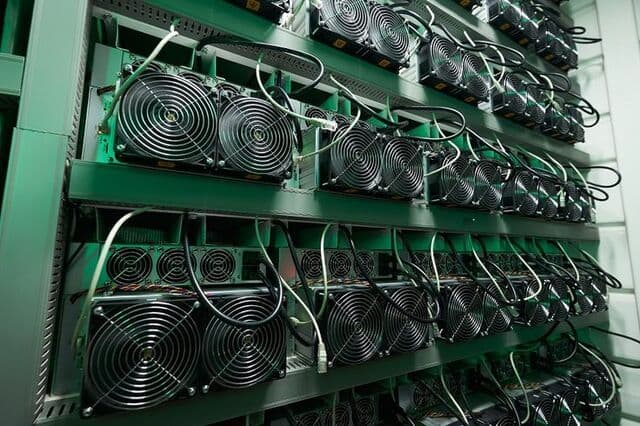
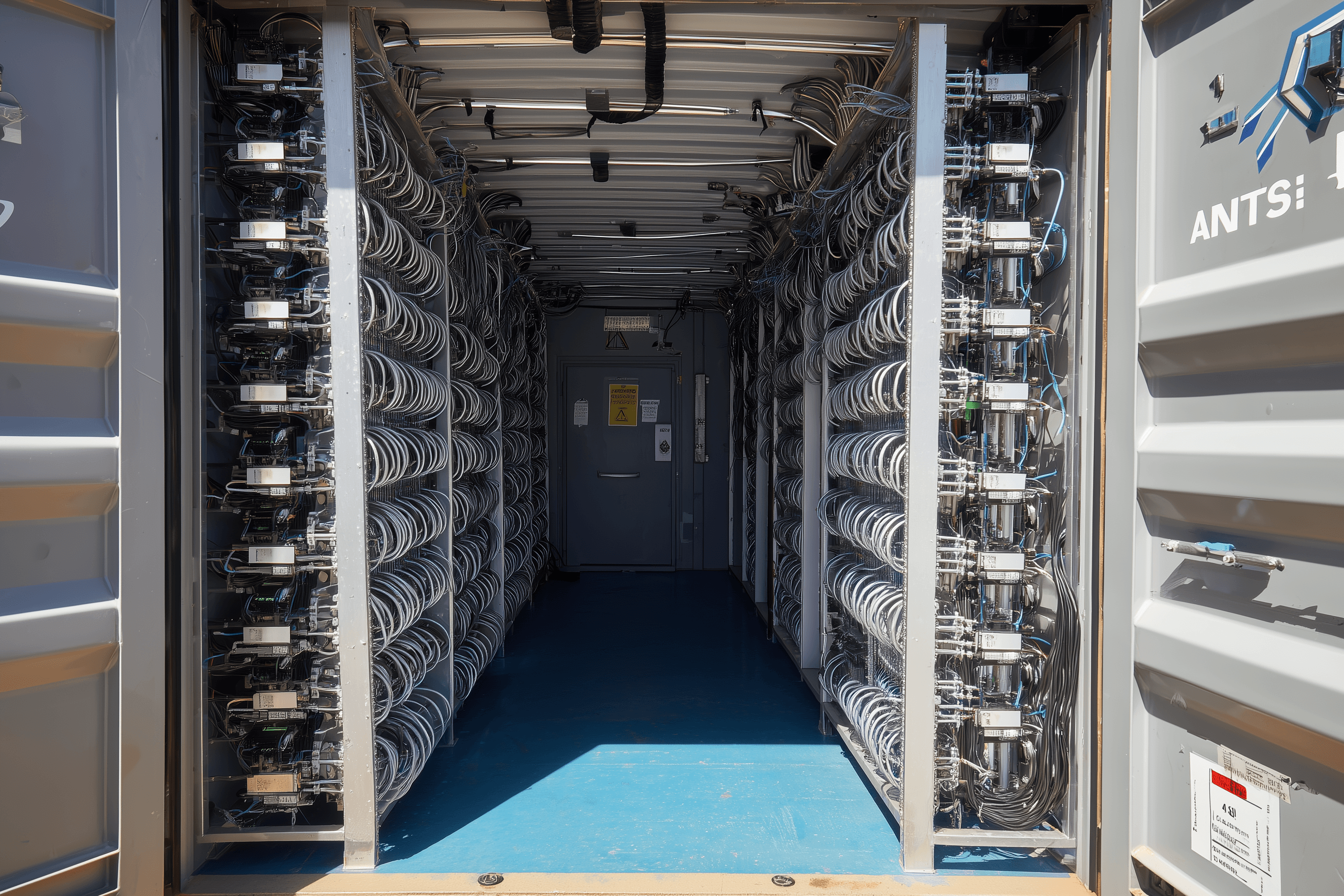
The €3.6M facility buys about 1,710 Antminer S21 Pro units with shipping, customs and installation, adding c. 6 MW of capacity and taking ORAX’s grid-connected site in Paraguay from about 2 MW to 8 MW.

0USDC
0% of 30,000 USDC
Risk score: A9 months23.10 %
Bitcoin Mining

ORAX Assets Management Corp. is a Panama-incorporated international business corporation with operating assets located in Paraguay. The company has been created as a dedicated vehicle for industrial-scale Bitcoin mining, built around a single, expandable site connected to the Paraguayan electricity grid. ORAX’s core activity is the ownership and operation of ASIC-based mining capacity for its own account, with a strategic emphasis on accumulating mined BTC on the balance sheet (“mine-and-hold”) rather than treating it as short-term operating cash flow.

The current site utilises approximately 2 MW of electrical load through installed mining hardware and 24/7 secured operations. Electrical and physical infrastructure have been prepared for a ramp-up to about 8 MW, with contractual potential to reach 8–10 MW under the existing tariff framework. At this stage, the primary bottleneck for growth is hardware and financing, not power or space: the site is conceptually framed as a concentrated, scalable platform for low-cost BTC production using modern, optimised ASIC fleets.

Business model and activities

ORAX operates as a pure-play self-miner rather than a hosting provider or hardware reseller. Its business model is to secure structurally low-cost grid electricity in Paraguay, deploy its own ASIC machines under an optimised air-cooled setup and convert power into BTC at the lowest achievable all-in unit cost. Value accrues entirely to the company’s own balance sheet: there are no third-party clients whose machines are hosted on site, and no fee-based services that would dilute the economic upside from mining.

The platform integrates the full mining value chain for proprietary operations: selection, procurement and import of ASIC hardware; sea freight and customs; pre-deployment preparation (inspection, replacement of selected components, thermal management); installation and configuration in racks; firmware optimisation; continuous monitoring; on-site maintenance and repairs. A key differentiator is the systematic use of customised firmware targeting a 15–20% uplift in computing performance versus stock settings, enabling higher hashrate per unit of invested capital and per kWh consumed.

On the financial side, ORAX’s activities are anchored in a “mine-and-hold” treasury policy. Mined BTC is treated as a strategic treasury asset and is not systematically sold to cover operating expenses. Instead, part of the BTC balance is pledged as collateral for loans (typically up to ~50% loan-to-value), with funding received in USDT at interest rates in the 6–8% p.a. range. These loans are used to finance operating costs, allowing mined coins to be retained and positioning the company to benefit from potential price appreciation, particularly around and after the expected 2028 halving.

Operating structure

Operationally, ORAX combines a lean internal core with extensive use of specialised contractors. The in-house team handles strategic management, key technical decisions and day-to-day operation of the Paraguayan site: hardware selection and procurement, logistics coordination, firmware deployment, performance monitoring, repairs, preventative maintenance and basic administration. Four operators work on site under the supervision of a COO, supported by the founder and a small administrative/PA function that manages documentation flows and coordination with lenders, suppliers and service providers.

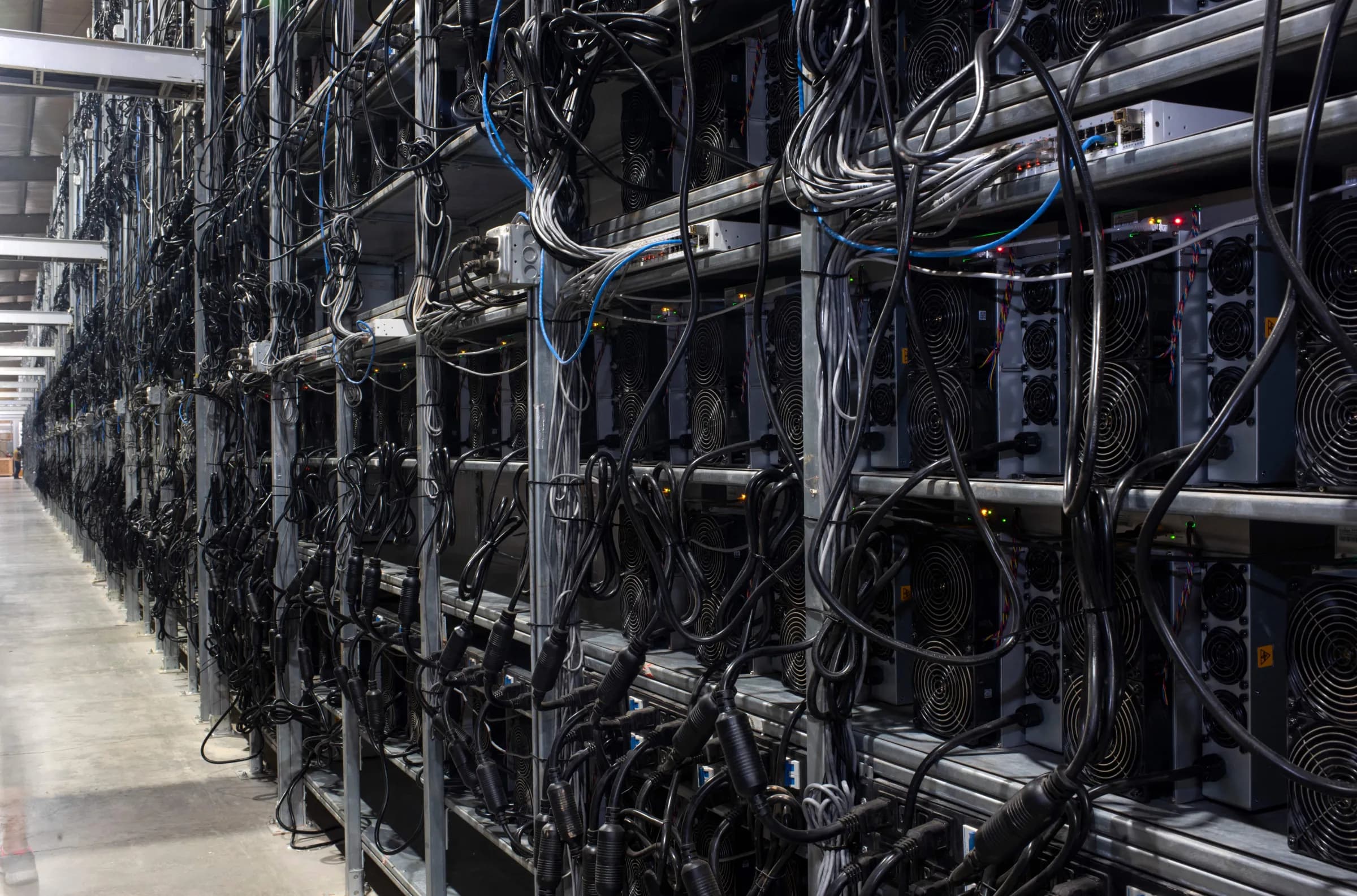
Construction and electrical works for the site build-out, 24/7 physical security, international logistics and customs clearance, as well as accounting, tax and legal support are handled by external partners. The site runs under a three-year fixed-price electricity supply contract with the local grid operator, and its physical layout is optimised for high-density air-cooled ASIC deployments, with an emphasis on airflow management, heat evacuation and uptime. This “light” structure keeps fixed overheads relatively low while allowing the company to scale installed hashrate primarily through additional hardware purchases rather than repeated infrastructure build-outs.

Clients and market position

Unlike many mining companies that combine self-mining with hosting, ORAX deliberately operates without external clients. All hashrate at the site is owned and controlled by the company itself, and there is no sales or marketing function aimed at attracting retail or small institutional miners. Management does not see a strategic rationale for working with small “retail” customers (1–10 machines) and wishes to avoid the complexity of managing numerous small accounts.

In principle, the infrastructure and operating model could be extended to large-scale hosting or joint-venture arrangements with institutional partners, particularly if by March–April 2026 the platform has not been fully populated with ORAX’s own hardware. Any such services would be treated as supplementary to the core self-mining strategy. In the broader market, the company positions itself as a cost-focused, hydro-powered miner in Paraguay, aiming to sit toward the lower end of the global cost curve with an all-in BTC production cost in the mid-30k USD/EUR-equivalent range at 8 MW, under current assumptions.

Leadership and organisation

The strategic concept and current profile of ORAX are closely tied to its founder and sole shareholder, Goran Jovanovic, a Bitcoin enthusiast since 2011 with prior experience as an investor in publicly listed mining companies such as Bitfarms and other sector peers. His long-term engagement with the ecosystem has shaped the company’s focus on cheap power, high uptime, firmware-driven optimisation and disciplined capital allocation.

In 2025 he transitioned from purely financial exposure to building his own physical operation, leading the securing of land and grid connection in Paraguay, the negotiation of the three-year fixed-price power contract and the design and build-out of the initial 2 MW infrastructure. He remains the key decision-maker for strategy, expansion, treasury policy and risk. A small management and administrative team supports him in Panama and on the ground in Paraguay, while non-core functions are outsourced. As a result, ORAX currently presents as a focused, founder-driven mining platform with tangible infrastructure and clear scaling potential, but with typical early-stage characteristics: high key-person dependence, single-site concentration and full exposure to Bitcoin’s long-term price and difficulty trajectory.

Loan Collateral

The EUR 3,600,000 capex facility is secured by hard, productive mining assets at ORAX’s Paraguayan site. The collateral package consists of:

  • existing, fully built-out electricity and site infrastructure and the already installed ASIC fleet at the current 2 MW configuration;

  • all new mining hardware and associated infrastructure purchased with the loan proceeds to add c. 6 MW of capacity (bringing the site to 8 MW).

Given the specific nature of mining assets, collateral is presented at two levels:

  • Base value – book / purchase value in EUR;

  • Conservative liquidation value – 90% of base value (10% haircut), reflecting that installed, operational ASICs and infrastructure typically retain strong resale value, as they can generate cash flow immediately when powered.

On this basis, pledged assets provide collateral coverage of the loan principal of approx. 154% at base value and 139% on a 10% haircut basis.

Collateral summary

Collateral source

Base value (EUR)

Liquidation value, 90% (EUR)

Existing site infrastructure and installed fleet

1,956,039

1,760,435

Loan-financed hardware and infrastructure

3,600,000

3,240,000

Total collateral

5,556,039

5,000,435

Coverage indicators

  • Base value coverage: EUR 5,556,039 vs. EUR 3,600,000 ≈ 154%

  • Liquidation value coverage (90% of base): EUR 5,000,435 vs. EUR 3,600,000 ≈ 139%

Thus, even under a conservative 10% haircut on all pledged assets, the collateral base still exceeds the loan principal by a substantial margin. All pledged items are core, income-generating components of the mining operation. In addition, ORAX plans to build and maintain a BTC treasury under its mine-and-hold strategy; these BTC holdings primarily secure short-term BTC-backed operating loans and are not included in the tables above, but represent an extra economic buffer beyond the hard-asset collateral package.

ORAX ASSETS MANAGEMENT CORPORATION was foundedSep 2, 2025
Start of active work/productionSep 10, 2025
Min target15,000 USDC
Investors0
Interest paymentsmonthly
Principal repaymentsbullet
Total payments9 months

Details

ORAX’s available financial data cover the first three months of commercial operations at its Paraguayan site (September–November 2025). Over this period, the company has demonstrated strong gross and operating margins on a relatively small but growing revenue base, confirming the economic viability of the 2 MW configuration under the current power tariff and network conditions.

All figures below are expressed in EUR, converted from USD at an illustrative rate of 1 USD = 0.86 EUR.

Key financial indicators

(Values in EUR ’000, rounded)

Period

Revenue

Gross profit

Net profit*

Gross margin

Net margin

Sep 2025

51

39

32

75%

63%

Oct 2025

145

103

90

71%

62%

Nov 2025

118

77

61

65%

52%

Sep–Nov 2025

315

219

183

≈69%

≈58%

Revenue recognition follows the company’s mine-and-hold approach: monthly revenue is calculated as the end-of-month BTC price multiplied by the BTC mined in that month, without requiring actual BTC sales. This is a mark-to-market representation of economic value created, rather than realised cash income.

Analysis of revenue and profitability

In September 2025, the first month of the presented period, ORAX generated around EUR 51k of revenue with a gross margin of 75% and an approximate net margin of 63%. This reflects a small but efficient operation at 2 MW, with a lean cost base and limited fixed overhead.

In October 2025, revenue almost tripled to about EUR 145k, driven by higher BTC production and pricing, while gross and net margins remained very strong at roughly 71% and 62% respectively. This indicates that the cost structure scaled well with increased output, and that additional revenue largely fell through to operating profit.

In November 2025, revenue moderated to approximately EUR 118k, broadly reflecting BTC price movements and normal month-to-month volatility. Gross margin eased to around 65% and net margin to roughly 52%, but the operation remained highly profitable on an economic basis.

Across the three months combined, ORAX generated:

  • Revenue of roughly EUR 315k

  • Gross profit of about EUR 219k

  • Net (operating) profit of approximately EUR 183k

This corresponds to an overall gross margin of about 69% and a net margin of about 58% for the period.

Key trends and financial observations

The first three months of data show a profitable early-stage profile with very high percentage margins, consistent with a low direct power cost and a compact organisational structure.

Gross and net margins naturally fluctuate with BTC price and network conditions, but the spread between the all-in cost of production per BTC and the mark-to-market value of mined BTC is substantial in this period. On a unit basis, the internal calculations for September–November indicate an all-in production cost (power + services + overhead) of roughly EUR 36–37k per BTC, compared with an average realised value of around EUR 88k per BTC equivalent, implying an economic margin on the order of 58%.

Operating expenses are modest in absolute terms and remain low relative to revenue, reflecting a lean in-house team and outsourcing of non-core functions. This supports strong operating leverage: as capacity and BTC production increase, ORAX expects a significant portion of additional revenue to translate into incremental operating profit, provided power tariffs and network conditions remain broadly in line with current assumptions.

At the same time, the financial track record under the current model is very short (three months), and results are inherently sensitive to BTC price, difficulty and uptime. The current figures should therefore be viewed as an initial proof of concept for the 2 MW setup and the chosen mine-and-hold approach, rather than as a fully representative sample across different stages of the Bitcoin cycle.

Growth Plan

ORAX is currently in the early phase of scaling its Paraguayan platform. The site is operating at approximately 2 MW of active load, while the underlying electrical and physical infrastructure has been designed and prepared to support a gradual ramp-up to around 8 MW, with technical potential to reach 8–10 MW under the existing power framework. The platform is used exclusively for proprietary mining; no third-party hosting capacity has been commercialised to date.

The core development path for the company is therefore straightforward: first, to fully utilise the existing site up to its 8 MW design capacity, and second, where feasible, to explore further expansion of the available electrical capacity on similar economic terms. In other words, growth is defined primarily as the progressive “filling” of the current location with additional ASIC hardware, rather than as geographic diversification or a shift into client-hosting services.

Strategically, ORAX intends to follow a consistent sequence: mine BTC, hold it on the balance sheet, use part of this BTC as collateral for loans to cover operating expenditure, and build capacity ahead of the expected 2028 halving. The company explicitly does not plan to systematically sell mined coins to finance day-to-day operations. Instead, operating costs are expected to be funded largely through BTC-backed loans disbursed in USDT and, where appropriate, additional mining-oriented financing, allowing BTC holdings to grow through the cycle.

This approach is anchored in management’s view of the next halving cycle. ORAX’s planning assumes that by the time of, and especially after, the 2028 halving, the Bitcoin price will reach at least USD 125,000 per BTC. The company’s objective is to enter that period with a fully built-out 8 MW site, a modern ASIC fleet and a substantial BTC reserve accumulated at a structurally low unit cost. Once the targeted post-halving price levels are reached, ORAX expects to sell only the portion of its BTC necessary to repay outstanding loans and interest, retaining the remaining coins and the physical infrastructure as long-term assets.

Within this context, debt financing – particularly BTC-backed lending – is viewed as the primary growth channel because it allows ORAX to keep all of the mining margin and upside. Hosting large external clients is considered a secondary, optional lever that would be activated only if, by a defined internal deadline, the platform cannot be fully filled with the company’s own equipment. Even in that case, such arrangements would be designed as complementary to, and not a replacement for, the core mine-and-hold growth strategy.

Projected BTC accumulation over the 14-month 8 MW phase

Once ORAX scales its Paraguayan site to 8 MW of active load, management expects the mining operation to stabilise at roughly 6.06 BTC per month under current network conditions. In the base planning case, the company assumes a reference BTC price of USD 90,000 (≈EUR 77,400) for internal mark-to-market of monthly production and structures operating financing around that level.

Monthly BTC production and operating financing at 8 MW

Metric

Value / Assumption

Per month (USD)

Per month (EUR*)

BTC mined

Fixed hashrate at 8 MW

6.0633448 BTC

–

BTC price (for monthly valuation)

Scenario input

90,000

77,400

Value of BTC mined

6.0633448 × 90,000

545,701

469,303

Cash production cost

Power + operating inputs

222,742

191,558

BTC-backed operating loan

Loan in USDT secured by BTC

222,742

191,558

In practical terms, each month at 8 MW ORAX:

  • mines about 6.06 BTC,

  • recognises a production value of about USD 545.7k / EUR 469.3k (at USD 90k/BTC), and

  • requires approximately USD 222.7k / EUR 191.6k of cash to cover direct production and operating costs, funded via a BTC-collateralised loan in USDT.


Consistent with the mine-and-hold strategy, ORAX’s intention is not to liquidate the entire BTC balance to realise this surplus. Instead, the company expects to:

  • sell only as many coins as necessary to repay all loans and interest once the targeted price level (≥USD 125k/BTC) is reached;

  • retain the remaining BTC as a long-term treasury asset; and

  • continue using part of the BTC reserve as collateral for future operating loans, while owning outright both the 8 MW infrastructure and the associated mining hardware fleet.

Alternative financing route and contingency repayment scenario

In parallel to the base-case 14-month facility, ORAX is also evaluating an alternative financing option under tighter terms, namely a shorter-tenor loan with an indicative interest rate of 23.1% p.a. and an 9-month maturity. Under this structure, management expects that during the 9-month operating window the expanded capacity would allow the company to repay approximately 50–55% of the total repayment obligation (principal plus accrued interest) from operating profit generated over the period, while maintaining the mine-and-hold approach as the core treasury framework.

For the remaining balance at maturity, ORAX considers two practical repayment paths.

  • Asset sale scenario. If required, the company can sell a portion of the newly acquired ASIC fleet. Mining hardware of the S21-class is globally traded and remains liquid in secondary markets, particularly when equipment is already installed and operational. Under this scenario, the expected resale value of the purchased equipment is intended to cover the residual repayment amount without relying on future BTC price appreciation.

  • Bank refinancing scenario. As an alternative, ORAX can refinance the short-term loan through a conventional bank facility once the expansion is executed and the asset base is fully reflected on the balance sheet. At that stage, the company expects to have sufficient tangible collateral in the form of mining infrastructure and equipment to support a materially lower-cost facility, with collateral coverage (fixed assets versus new borrowing) exceeding 250%, improving lender comfort and reducing pricing versus the initial short-term instrument.

Description of the Loan

ORAX Assets Management Corp. is seeking a capex facility of EUR 3,600,000 to finance the expansion of its Paraguayan mining site from approximately 2 MW to 8 MW of active electrical load. The loan is intended exclusively for the purchase, import and deployment of additional ASIC mining equipment and related site adaptations, corresponding to roughly 6 MW of incremental capacity. The facility is not designed to refinance historical losses or fund ongoing operating expenses; those are expected to be covered through BTC-backed working-capital loans secured against mined BTC.

Purpose and use of proceeds

Loan proceeds will be used to finance:

  • acquisition of approximately 1,710 Bitmain Antminer S21 PRO units (or machines of similar efficiency class) corresponding to the additional 6 MW;

  • international logistics and customs clearance for these units (sea freight, insurance, brokerage, local transport);

  • installation, racking, power distribution and network integration at the Paraguayan site;

  • initial servicing, spare parts and minor site adaptations needed to operate the expanded 8 MW configuration.

In substance, the facility bridges the capital requirement between ORAX’s existing 2 MW infrastructure and the fully built-out 8 MW setup on which the company’s financial projections and growth plan are based.

Alternative financing option

ORAX is prepared to consider an alternative structure with a shorter maturity and a higher coupon. This option is intended as a pragmatic execution path if the lender prefers faster capital turnover and earlier de-risking through shorter duration.

Alternative option – indicative terms

Parameter

Base-case facility

Alternative facility

Total facility amount

EUR 3,600,000

EUR 3,600,000

Purpose

6 MW expansion to reach ~8 MW total load

Same

Tenor

14 months

9 months

Interest rate

14% fixed p.a.

23.1% fixed p.a.

Interest payments

Monthly

Monthly

Principal repayment

Bullet at maturity

Bullet at maturity

Tranches

6 × EUR 600,000

6 × EUR 600,000 (or as agreed)

Under the alternative 9-month, 23.1% p.a. structure, management expects that the expanded capacity would allow ORAX to cover a material portion of the overall repayment obligation during the operating window through operating profit, reducing end-of-term dependence on BTC price appreciation. Any remaining balance at maturity can be addressed via the company’s contingency paths described in the growth-plan section, including partial resale of newly acquired ASIC equipment (highly liquid secondary market) or refinancing through a conventional bank facility once the expanded asset base is fully reflected on the balance sheet.


Risk scoring

Total risk scoreA
Debt to equity1.60
LTV72%
Credit history8 / 10
Collateral typeCompany Assets

Rating A (the third tier) reflects strong unit economics and hard-asset cover, tempered by a very short track record: three months of reported operations at 2 MW, from September to November 2025, with gross margins of 65–75%.

  • D/E (Debt-to-equity) of 1.6 sits below the moderate 2.5 mark;
  • LTV of 72% means pledged assets cover the €3.6M facility about 1.39 times even after a 10% haircut;
  • Credit history score of 8/10.

Keep in mind:

  • revenue is BTC mined times the month-end price, so it moves with the BTC price and network difficulty;
  • all operations sit at a single site in Paraguay;
  • strategy, treasury and risk decisions rest with the founder and sole shareholder;
  • the reported track record covers three months only.

Risks and contingency repayment paths

ORAX presents as a focused, founder-driven mining platform with tangible infrastructure and clear scaling potential, but with typical early-stage characteristics: high key-person dependence, single-site concentration and full exposure to Bitcoin’s long-term price and difficulty trajectory. The financial track record under the current model is very short (three months), and results are inherently sensitive to BTC price, difficulty and uptime; the reported figures are an initial proof of concept for the 2 MW setup and the mine-and-hold approach rather than a representative sample across the Bitcoin cycle.

Under the 9-month, 23.1% p.a. structure, management expects the expanded capacity to repay approximately 50–55% of the total repayment obligation (principal plus accrued interest) from operating profit generated over the period, while keeping mine-and-hold as the core treasury framework. For the remaining balance at maturity, ORAX considers two practical paths:

  • Asset sale. If required, the company can sell a portion of the newly acquired ASIC fleet. S21-class hardware is globally traded and remains liquid in secondary markets, particularly when already installed and operational; the expected resale value is intended to cover the residual repayment amount without relying on future BTC price appreciation.
  • Bank refinancing. ORAX can refinance the short-term loan through a conventional bank facility once the expansion is executed and the asset base is fully reflected on the balance sheet, with collateral coverage (fixed assets versus new borrowing) expected to exceed 250%, supporting a materially lower-cost facility.

Financials

Bitcoin Mining

ORAX has three months of reported operations at its 2 MW configuration. The monthly figures below are marked to market: BTC mined times the month-end price, without selling coins.

Profitable from the first month

  • Revenue of about €315k and net profit of about €183k in September–November 2025.
  • Revenue almost tripled from €51k in September to €145k in October, then eased to €118k in November with the BTC price.
  • Gross margin of about 69% and net margin of about 58% over the period.

Low unit cost

  • All-in production cost of roughly €36–37k per BTC (power, services and overhead).
  • Average realised value of around €88k per BTC equivalent.
  • Operating expenses are modest, so added output should largely fall through to profit.

Scaling to 8 MW

  • At 8 MW the site is expected to mine about 6.06 BTC a month.
  • That is about €469.3k of monthly value at USD 90k per BTC, against about €191.6k of cash production cost.

Market

Bitcoin mining economics are set by electricity cost, hardware efficiency and uptime, which is why regions with cheap hydro power, including parts of Latin America, have become mining hubs. Block rewards have been halved four times, most recently in 2024, and the next halving around 2028 will again squeeze high-cost producers. ORAX aims for an all-in cost in the mid-30k range per BTC at 8 MW, while staying exposed to the BTC price and network difficulty.

Financial performance, September–November 2025

ORAX’s available financial data cover the first three months of commercial operations at its Paraguayan site. Over this period the company demonstrated strong gross and operating margins on a small but growing revenue base, confirming the economic viability of the 2 MW configuration under the current power tariff and network conditions. All figures are in EUR, converted from USD at an illustrative rate of 1 USD = 0.86 EUR.

Key financial indicators, EUR ’000 (rounded)

PeriodRevenueGross profitNet profit*Gross marginNet margin
Sep 202551393275%63%
Oct 20251451039071%62%
Nov 2025118776165%52%
Sep–Nov 2025315219183≈69%≈58%

Revenue recognition follows the mine-and-hold approach: monthly revenue is the end-of-month BTC price multiplied by the BTC mined in that month, without requiring actual BTC sales — a mark-to-market representation of economic value created rather than realised cash income.

In September 2025 ORAX generated around EUR 51k of revenue with a gross margin of 75% and a net margin of about 63%, reflecting a small but efficient operation with a lean cost base. In October revenue almost tripled to about EUR 145k, driven by higher BTC production and pricing, with margins of roughly 71% and 62% — the cost structure scaled with output and additional revenue largely fell through to operating profit. In November revenue moderated to approximately EUR 118k, broadly reflecting BTC price movements and normal month-to-month volatility; gross margin eased to around 65% and net margin to roughly 52%.

Unit economics and key trends

The first three months show a profitable early-stage profile with very high percentage margins, consistent with a low direct power cost and a compact organisational structure. Margins fluctuate with BTC price and network conditions, but the spread between the all-in cost of production and the mark-to-market value of mined BTC is substantial: internal calculations for September–November indicate an all-in production cost (power + services + overhead) of roughly EUR 36–37k per BTC, against an average realised value of around EUR 88k per BTC equivalent — an economic margin on the order of 58%.

Operating expenses are modest in absolute terms and low relative to revenue, reflecting a lean in-house team and outsourcing of non-core functions. This supports strong operating leverage: as capacity and BTC production increase, ORAX expects a significant portion of additional revenue to translate into incremental operating profit, provided power tariffs and network conditions remain broadly in line with current assumptions.

Growth plan

ORAX is in the early phase of scaling its Paraguayan platform. The site operates at approximately 2 MW of active load, while the electrical and physical infrastructure has been designed to support a gradual ramp-up to around 8 MW, with technical potential to reach 8–10 MW under the existing power framework. The development path is straightforward: first fully utilise the existing site up to its 8 MW design capacity, then, where feasible, explore further expansion of the available electrical capacity on similar economic terms. Growth means the progressive “filling” of the current location with additional ASIC hardware, not geographic diversification or a shift into client hosting.

Strategically, ORAX follows a consistent sequence: mine BTC, hold it on the balance sheet, use part of it as collateral for loans to cover operating expenditure, and build capacity ahead of the expected 2028 halving. Management’s planning assumes that by the time of, and especially after, the 2028 halving, the Bitcoin price will reach at least USD 125,000 per BTC. The objective is to enter that period with a fully built-out 8 MW site, a modern ASIC fleet and a substantial BTC reserve accumulated at a structurally low unit cost; once the targeted price levels are reached, ORAX expects to sell only the BTC needed to repay outstanding loans and interest, retaining the remaining coins and the physical infrastructure as long-term assets.

Debt financing — particularly BTC-backed lending — is viewed as the primary growth channel because it lets ORAX keep all of the mining margin and upside. Hosting large external clients is a secondary, optional lever, activated only if the platform cannot be filled with the company’s own equipment by a defined internal deadline.

Projected BTC production at 8 MW

Once the site reaches 8 MW of active load, management expects the operation to stabilise at roughly 6.06 BTC per month under current network conditions. The base planning case uses a reference BTC price of USD 90,000 (≈EUR 77,400) for internal mark-to-market of monthly production and structures operating financing around that level.

MetricValue / assumptionPer month (USD)Per month (EUR)
BTC minedFixed hashrate at 8 MW6.0633448 BTC—
BTC price (for monthly valuation)Scenario input90,00077,400
Value of BTC mined6.0633448 × 90,000545,701469,303
Cash production costPower + operating inputs222,742191,558
BTC-backed operating loanLoan in USDT secured by BTC222,742191,558

In practical terms, each month at 8 MW ORAX mines about 6.06 BTC, recognises a production value of about USD 545.7k / EUR 469.3k at USD 90k per BTC, and requires approximately USD 222.7k / EUR 191.6k of cash for direct production and operating costs, funded via a BTC-collateralised loan in USDT. Consistent with mine-and-hold, the company does not intend to liquidate the BTC balance to realise this surplus: it expects to sell only as many coins as needed to repay all loans and interest once the targeted price level (≥USD 125k per BTC) is reached, retain the rest as a long-term treasury asset, and keep using part of the reserve as collateral for future operating loans while owning the 8 MW infrastructure and hardware fleet outright.

Market assessment

Global Bitcoin mining environment

Bitcoin mining is a large, capital- and energy-intensive industry where competitiveness is driven primarily by electricity cost, hardware efficiency and uptime. Over the last years hashrate has grown rapidly, pushing inefficient, high-cost miners out of the market and favouring operators with cheap, stable power and modern ASIC fleets. Regions with abundant hydro or other low-cost generation, including parts of Latin America, have become natural hubs for industrial-scale mining.

Halving and its implications

Bitcoin’s block reward has already passed four halvings (2012, 2016, 2020, 2024), each cutting miner rewards per block by 50%. Historically, halvings have tightened miner economics while often being followed by medium-term BTC price appreciation, though with differing magnitude each cycle. The next halving, expected around 2028, will again reduce block rewards and is likely to increase pressure on high-cost producers, making low unit cost and strong balance-sheet BTC reserves particularly important.

Positioning of ORAX

ORAX positions itself as a focused, low-cost self-miner in Paraguay, leveraging hydro-based grid power under a fixed-price contract and optimised ASIC fleets. Its strategy is to scale a single site to 8 MW, mine BTC at a structurally low all-in cost and follow a mine-and-hold treasury policy supported by BTC-backed loans — positioning it to benefit if BTC reprices upwards into and after the 2028 halving, while remaining exposed to the usual sector risks of BTC price, difficulty and single-site concentration.

Collateral breakdown

Loan-financed hardware and infrastructure (6 MW) · €3.6MExisting site infrastructure and installed 2 MW fleet · €2M
Loan-financed hardware and infrastructure (6 MW)€3,600,000
Existing site infrastructure and installed 2 MW fleet€1,956,039
Total pledged€5,556,039Book and purchase value of the pledged assets; €5.0M at a 10% liquidation haircut. The BTC treasury is not included.

The €3.6M facility is secured by the productive mining assets at ORAX’s Paraguayan site.

1. New hardware bought with the loan — €3.6M

  • About 1,710 Antminer S21 Pro units adding c. 6 MW of capacity.
  • Related racking, power distribution and network integration.
  • S21-class hardware trades actively on secondary markets.

2. Existing site and installed fleet — €1,956,039

  • The fully built-out electricity and site infrastructure.
  • The ASIC fleet already installed at the current 2 MW configuration.

Installed, operational ASICs keep strong resale value because they generate cash as soon as they are powered, so a 10% haircut is applied. On that basis the collateral is estimated to cover:

  • about 139% of the €3.6M principal at liquidation value (€5.0M);
  • about 154% at base value (€5,556,039).

The company’s BTC treasury is not included in these figures: it secures the short-term operating loans, but forms an extra buffer beyond the hard assets.

Loan collateral

The EUR 3,600,000 capex facility is secured by hard, productive mining assets at ORAX’s Paraguayan site: the existing, fully built-out electricity and site infrastructure with the ASIC fleet already installed at the current 2 MW configuration, and all new mining hardware and associated infrastructure purchased with the loan proceeds to add c. 6 MW of capacity. Given the nature of mining assets, collateral is presented at two levels: base value (book / purchase value in EUR) and a conservative liquidation value of 90% of base value, reflecting that installed, operational ASICs and infrastructure retain strong resale value because they generate cash flow immediately when powered.

Collateral summary, EUR

Collateral sourceBase valueLiquidation value (90%)
Existing site infrastructure and installed fleet1,956,0391,760,435
Loan-financed hardware and infrastructure3,600,0003,240,000
Total collateral5,556,0395,000,435

Base value coverage is EUR 5,556,039 against EUR 3,600,000, or ≈154%; liquidation value coverage is EUR 5,000,435 against EUR 3,600,000, or ≈139%. Even under the 10% haircut the collateral base exceeds the loan principal by a substantial margin, and all pledged items are core, income-generating components of the operation. The BTC treasury ORAX builds under its mine-and-hold strategy primarily secures short-term BTC-backed operating loans and is not included in the tables, but represents an extra economic buffer beyond the hard-asset package.

Description of the loan

ORAX seeks a capex facility of EUR 3,600,000 to expand its Paraguayan site from approximately 2 MW to 8 MW of active electrical load. The loan is intended exclusively for the purchase, import and deployment of additional ASIC equipment and related site adaptations, corresponding to roughly 6 MW of incremental capacity. It does not refinance historical losses or fund ongoing operating expenses; those are covered through BTC-backed working-capital loans secured against mined BTC.

Use of proceeds

  • Acquisition of approximately 1,710 Bitmain Antminer S21 PRO units (or machines of a similar efficiency class) for the additional 6 MW;
  • international logistics and customs clearance for these units (sea freight, insurance, brokerage, local transport);
  • installation, racking, power distribution and network integration at the site;
  • initial servicing, spare parts and minor site adaptations needed to operate the expanded 8 MW configuration.

Indicative terms

ORAX offered a base-case structure and an alternative with a shorter maturity and a higher coupon, intended for lenders who prefer faster capital turnover and earlier de-risking. This listing follows the alternative facility.

ParameterBase-case facilityAlternative facility
Total facility amountEUR 3,600,000EUR 3,600,000
Purpose6 MW expansion to reach ~8 MW total loadSame
Tenor14 months9 months
Interest rate14% fixed p.a.23.1% fixed p.a.
Interest paymentsMonthlyMonthly
Principal repaymentBullet at maturityBullet at maturity
Tranches6 × EUR 600,0006 × EUR 600,000 (or as agreed)

In substance, the facility bridges the capital requirement between the existing 2 MW infrastructure and the fully built-out 8 MW setup on which the company’s projections and growth plan are based.

How the loan pays out

Your 012345678901234567890,012345678901234567890012345678901234567890012345678901234567890 USDC investment behaves like a 9-month bond: monthly interest payments, then principal back at month 012345678901234567890.

DateInterestPrincipalTotal
Net profit+012345678901234567890.012345678901234567890012345678901234567890 USDC
Total return012345678901234567890.012345678901234567890012345678901234567890 USDC

Borrower

ORAX ASSETS MANAGEMENT CORPORATIONPanama City, Panama · founded 2025
ORAX ASSETS MANAGEMENT CORPORATION

ORAX Assets Management Corp. is a Panama-incorporated international business corporation with operating assets located in Paraguay. The company has been created as a dedicated vehicle for industrial-scale Bitcoin mining, built around a single, expandable site connected to the Paraguayan electricity grid. ORAX’s core activity is the ownership and operation of ASIC-based mining capacity for its own account, with a strategic emphasis on accumulating mined BTC on the balance sheet (“mine-and-hold”) rather than treating it as short-term operating cash flow.

Reg No: 155772436www.oraxmining.com

About the company

ORAX Assets Management Corp. is a Panama-incorporated international business corporation with operating assets located in Paraguay. The company has been created as a dedicated vehicle for industrial-scale Bitcoin mining, built around a single, expandable site connected to the Paraguayan electricity grid. Its core activity is the ownership and operation of ASIC-based mining capacity for its own account, with a strategic emphasis on accumulating mined BTC on the balance sheet (“mine-and-hold”) rather than treating it as short-term operating cash flow.

The current site utilises approximately 2 MW of electrical load through installed mining hardware and 24/7 secured operations. At this stage, the primary bottleneck for growth is hardware and financing, not power or space: the site is framed as a concentrated, scalable platform for low-cost BTC production using modern, optimised ASIC fleets.

Corporate identifiers: ORAX ASSETS MANAGEMENT CORPORATION; registration number 155772436; established in September 2025; registered office 1801, 18th floor at Global Bank Tower, 50th Street, Panama City, Panama.

Business model and treasury policy

ORAX operates as a pure-play self-miner rather than a hosting provider or hardware reseller. Its model is to secure structurally low-cost grid electricity in Paraguay, deploy its own ASIC machines under an optimised air-cooled setup and convert power into BTC at the lowest achievable all-in unit cost. Value accrues entirely to the company’s own balance sheet: there are no third-party machines hosted on site and no fee-based services that would dilute the economic upside from mining.

The platform integrates the full mining value chain for proprietary operations: selection, procurement and import of ASIC hardware; sea freight and customs; pre-deployment preparation (inspection, replacement of selected components, thermal management); installation and configuration in racks; firmware optimisation; continuous monitoring; on-site maintenance and repairs. A key differentiator is the systematic use of customised firmware targeting a 15–20% uplift in computing performance versus stock settings, enabling higher hashrate per unit of invested capital and per kWh consumed.

Mined BTC is treated as a strategic treasury asset and is not systematically sold to cover operating expenses. Instead, part of the BTC balance is pledged as collateral for loans (typically up to ~50% loan-to-value), with funding received in USDT at interest rates in the 6–8% p.a. range. These loans finance operating costs, allowing mined coins to be retained and positioning the company to benefit from potential price appreciation, particularly around and after the expected 2028 halving.

Operating structure

ORAX combines a lean internal core with extensive use of specialised contractors. The in-house team handles strategic management, key technical decisions and day-to-day operation of the Paraguayan site: hardware selection and procurement, logistics coordination, firmware deployment, performance monitoring, repairs, preventative maintenance and basic administration. Four operators work on site under the supervision of a COO, supported by the founder and a small administrative function that manages documentation flows and coordination with lenders, suppliers and service providers.

Construction and electrical works for the site build-out, 24/7 physical security, international logistics and customs clearance, as well as accounting, tax and legal support are handled by external partners. The site runs under a three-year fixed-price electricity supply contract with the local grid operator, and its layout is optimised for high-density air-cooled ASIC deployments, with an emphasis on airflow management, heat evacuation and uptime. This “light” structure keeps fixed overheads low while allowing the company to scale installed hashrate primarily through additional hardware purchases rather than repeated infrastructure build-outs.

Clients and market position

Unlike many mining companies that combine self-mining with hosting, ORAX deliberately operates without external clients. All hashrate at the site is owned and controlled by the company, and there is no sales or marketing function aimed at retail or small institutional miners. Management sees no strategic rationale for working with small “retail” customers (1–10 machines) and wishes to avoid the complexity of managing numerous small accounts.

In principle, the infrastructure could be extended to large-scale hosting or joint-venture arrangements with institutional partners, particularly if by March–April 2026 the platform has not been fully populated with ORAX’s own hardware; any such services would be supplementary to the core self-mining strategy. In the broader market, the company positions itself as a cost-focused, hydro-powered miner in Paraguay, aiming to sit toward the lower end of the global cost curve with an all-in BTC production cost in the mid-30k USD/EUR-equivalent range at 8 MW, under current assumptions.

Leadership and organisation

The strategic concept and current profile of ORAX are closely tied to its founder and sole shareholder, Goran Jovanovic, a Bitcoin enthusiast since 2011 with prior experience as an investor in publicly listed mining companies such as Bitfarms and other sector peers. His long-term engagement with the ecosystem has shaped the company’s focus on cheap power, high uptime, firmware-driven optimisation and disciplined capital allocation.

In 2025 he moved from purely financial exposure to building his own physical operation, leading the securing of land and grid connection in Paraguay, the negotiation of the three-year fixed-price power contract and the design and build-out of the initial 2 MW infrastructure. He remains the key decision-maker for strategy, expansion, treasury policy and risk. A small management and administrative team supports him in Panama and on the ground in Paraguay, while non-core functions are outsourced.

Annual interest
23.10 %
Term
9 months
Net profit
Voucher
+0 USDC
Total return0.00012345678901234567890.012345678901234567890012345678901234567890 USDC
Sign up to Invest