Korean Parts
19,660.60USDC
98.3% of 20,000 USDCFundedon Aug 28, 2026
- Funded date
- Aug 28, 2026
- Loan period
- 9 months
- Annual interest
- 22.10 %
Fundraising is closed. Positions in this deal can be bought from other investors on the Secondary market.
Working capital for twenty EVs bound for Georgia
Capacity is raising €550k in two tranches to buy ten Genesis G80 Electrified and ten Hyundai Ioniq 5 in Korea and ship them from Busan to Batumi under two contracts worth €800,400 combined.
19,660.60USDC
98.3% of 20,000 USDCRisk score: BBB9 months22.10 %Funded
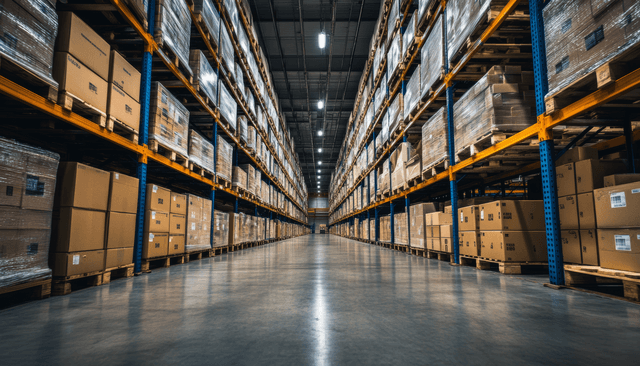
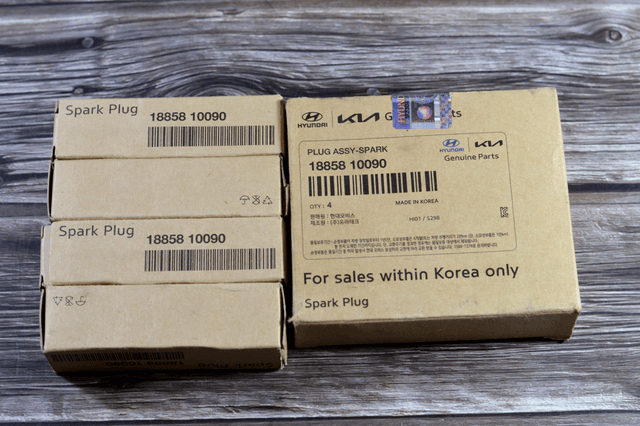
Capacity Co., Ltd. is a South Korea–based B2B export trading company specialising in the wholesale export of Korean automotive spare parts (genuine, OEM and aftermarket components for Hyundai, Kia and Genesis vehicles) and used Korean-manufactured automobiles. The company operates as a trading principal and export consolidator: it sources products from Korean manufacturers and authorised distributors, aggregates orders for overseas buyers, performs quality control and packaging, and coordinates export logistics through the ports of Pyeongtaek and Busan. The company is based in Pyeongtaek, Gyeonggi Province — in direct proximity to tier-one Korean parts suppliers and major export terminals.
The spare parts export line is the core activity, accounting for approximately 75–80% of total revenue, while used vehicle exports contribute roughly 20–25%. Both lines serve the same B2B client base and utilise the same logistics infrastructure. The spare parts portfolio covers three sourcing tiers: genuine parts (via Hyundai Mobis and official channels), OEM components and aftermarket alternatives, with gross margins ranging between 20% and 28%. Used vehicles are sourced through Korean wholesale auctions and leasing companies, with margins of 15–21%. The blended gross margin across both lines is approximately 22–24%.
The operating model is order-driven and asset-light: procurement is performed against confirmed customer orders, which limits inventory risk. The operating cycle begins with a customer advance payment (typically 30–50% of order value), followed by procurement, inspection, packaging and export shipment. Suppliers are paid in full at procurement, while customers settle the remaining balance after receipt of shipping documentation, creating a working capital gap of 20–60 days per transaction. Scalability is linked primarily to working capital availability rather than to fixed infrastructure.
The company was established in late 2023 and funded entirely from the owner’s personal resources: registered capital of EUR 1,333 plus a personal contribution of EUR 78,000 invested during 2023–2024, with no external debt at the start-up stage. In 2024, the first full year of operations, revenue reached EUR 684k. In 2025, revenue grew to EUR 1.2m and net profit rose to EUR 84k. Capacity currently exports to five principal markets — Kazakhstan, the UAE, Libya, Turkey and Kyrgyzstan — with secondary activity in Uzbekistan and Georgia. Client relationships are exclusively B2B, developed through trial orders followed by increasing volumes; the company does not operate under long-term supply agreements. The client base remains relatively concentrated at this stage, with several anchor buyers accounting for a significant share of revenue.
The internal team consists of four employees covering procurement coordination, logistics and warehouse operations. Accounting, tax reporting and customs brokerage are outsourced. The existing warehouse and logistics setup (approximately 640 sq.m) supports 7–10 export shipments per month and does not constrain moderate growth.
Key figure and expertise
Capacity is solely owned and managed by Ten Andrey Vladimirovich (born 1978), who serves as director and sole shareholder. Prior to founding the company, Mr. Ten accumulated over 15 years of experience in the automotive industry: first as co-owner and operational manager of an automotive service centre, then in a senior management position at an automotive dealership responsible for commercial operations, inventory management and supplier coordination. This progression provided hands-on knowledge of vehicle sourcing, parts procurement, B2B pricing and logistics.
Within Capacity, the CEO is directly responsible for all strategic decisions, key client negotiations, vehicle procurement at Korean wholesale auctions and financial oversight. The procurement and client manager handles day-to-day order execution independently, and operational processes are documented, but strategic and commercial functions remain concentrated in a single individual. This creates a structural key-person dependency recognised as characteristic of the company’s current development stage.
Loan Collateral
The EUR 550,000 facility is secured by a two-layer collateral structure combining existing company-owned operational assets and the 20 electric vehicles acquired under the Georgia contracts using loan proceeds. Collateral is valued at both nominal and conservative liquidation values, with liquidation discounts of 20% for existing operational assets and 10% for contract vehicles.
Collateral composition and coverage
Collateral source | Nominal value (EUR) | Liquidation value (EUR) |
Existing operational assets (80%) | 61,290 | 49,032 |
Contract vehicles / assigned rights (90%) | 590,000 | 531,000 |
Total collateral | 651,290 | 580,032 |
Coverage metric | Value |
Loan principal | EUR 550,000 |
Total collateral (nominal) | EUR 651,290 |
Total collateral (liquidation) | EUR 580,032 |
Nominal coverage ratio | 1.18× |
Liquidation coverage ratio | 1.05× |
- Existing operational assets include warehouse infrastructure, materials handling equipment, two vehicles (Hyundai Porter II and Hyundai Tucson, both 2021), CCTV, IT equipment and office furniture. Aggregate book value.
- Contract vehicles (20 units — ten Genesis G80 Electrified and ten Hyundai Ioniq 5) form the principal collateral layer. During procurement and transit, vehicles are directly pledged in favour of the lender. After delivery in Batumi, vehicles are transferred to the buyer on instalment terms with a registered lien in favour of Capacity, recorded in the National Agency of Public Registry of Georgia. The lender’s security transitions from a direct pledge on physical assets to a claim on Capacity’s enforceable contractual rights and security interests, including the registered liens and the right to receive outstanding instalment payments.
- The 90% liquidation rate on contract vehicles reflects the high liquidity and active secondary market for Korean electric vehicles in the 2022–2024 model year range.
Coverage assessment
At liquidation values, the collateral package provides coverage of 1.05× relative to the EUR 550,000 loan principal. At nominal values, coverage is 1.18×. Coverage is adequate but not excessive, which is consistent with the nature of the transaction: the primary source of loan repayment is the contracted cash flow from the Georgia contracts and the company’s ongoing operations, while the collateral provides tangible downside protection. As the buyer settles instalments, Capacity’s cash position improves (reducing effective loan exposure), and fully paid vehicles are released from encumbrance. In the event of buyer default, the registered liens give the lender priority enforcement rights over the remaining vehicles.
Capacity Co was foundedNov 27, 2023
Start of active work/productionDec 1, 2023
Min target10,000 USDC
Investors47
Interest paymentsmonthly
Principal repaymentsbullet
Total payments9 months
Risk scoring
Total risk scoreBBB
Debt to equity3.16
LTV95%
Credit history8 / 10
Collateral typeCompany Assets
Rating BBB (the fourth tier) reflects a young but profitable exporter: founded in late 2023 on the owner’s own money, it grew revenue from €684k in 2024 to €1.2M in 2025 and has used no external debt to date.
- D/E (Debt-to-equity) of 3.16 is high, as equity is still small — €174,275 at the end of 2025;
- LTV of 95% means collateral at liquidation value covers the €550k facility about 1.05 times;
- Credit history score of 8/10.
Keep in mind:
- the Georgia contracts are preliminary agreements, to be finalised once financing is secured;
- strategy and key client relationships rest with the owner, a key-person dependency;
- several anchor buyers account for a significant share of revenue, with no long-term supply agreements;
- sea transit takes up to three months, and the ~€31,000 buffer is only a minimum reserve.
Financials
Revenue 2025€1.2M
Net profit 2025€84k
Gross margin 202523.9%
Interest cover3.9×
€ thousands
€684k684
€1202k1202
€1667k*1667*
€1770k*1770*
202420252026F2027F
* 2026–2027 are management forecasts including the Georgia EV contracts and interest on the €550k facility; 2025 is management accounts
Capacity grew fast in its first two full years. The 2026 forecast adds the Georgia EV contracts on top of the core parts and used-car business.
Fast revenue growth
- Revenue rose 75.8%, from €684k in 2024 to €1.2M in 2025.
- The forecast is €1.67M in 2026 (+38.6%) and €1.77M in 2027 (+6.2%), as the Georgia contracts settle.
Improving profitability
- Gross margin improved from 21.6% to 23.9% as procurement became more efficient at higher volumes.
- Net profit rose from €11k to €84k; the forecast is €118k in 2026 and €131k in 2027.
Operating leverage and debt service
- OPEX grew 44.3% against 75.8% revenue growth, cutting OPEX to revenue from 19.2% to 15.8%.
- Interest rises to €45.9k in 2026, but operating profit covers it 3.9× in 2026 and 4.6× in 2027 — well above the 1.5× minimum.
Market
South Korea exported $22.55bn of car parts in 2024, anchored by the Hyundai Motor Group ecosystem, and about 639,000 used vehicles in 2023. Central Asia and the Middle East favour Korean models; in Kazakhstan, the region’s largest market, Hyundai and Kia hold about 32% of new-car sales. Key risks are Chinese aftermarket competition, destination-market tariffs and shipping disruption.
Collateral breakdown
Contract vehicles (20 Korean EVs) · €590K
Contract vehicles (20 Korean EVs)€590,000
Existing operational assets€61,290
Total pledged€651,290Nominal values; at liquidation values the package is €580,032, or 1.05× the €550k facility.
The €550k facility is secured in two layers.
1. Twenty contract vehicles — €590,000
- Ten Genesis G80 Electrified and ten Hyundai Ioniq 5 bought with the loan.
- Pledged directly to the lender during procurement and transit.
- After delivery in Batumi, the security becomes a claim on the liens registered in Georgia and on the outstanding instalments.
- Discounted only 10% for liquidation, given the active secondary market for these model years.
2. Existing operational assets — €61,290
- Warehouse infrastructure and handling equipment
- Two Hyundai vehicles from 2021
- CCTV, IT equipment and office furniture
Total collateral is €651,290 nominal and €580,032 at liquidation values — 1.18× and 1.05× the principal. Coverage is adequate rather than generous: repayment comes first from the contracted cash flow, with the pledge as downside protection.
Borrower
Capacity CoGyeonggi-do, South Korea · founded 2023
Capacity Co., Ltd. is a South Korea–based B2B export trading company specialising in the wholesale export of Korean automotive spare parts (genuine, OEM and aftermarket components for Hyundai, Kia and Genesis vehicles) and used Korean-manufactured automobiles. The company operates as a trading principal and export consolidator: it sources products from Korean manufacturers and authorised distributors, aggregates orders for overseas buyers, performs quality control and packaging, and coordinates export logistics through the ports of Pyeongtaek and Busan. The company is based in Pyeongtaek, Gyeonggi Province — in direct proximity to tier-one Korean parts suppliers and major export terminals.
Reg No: 239-86-02819www.nexkoreatrade.com