Log InSign Up
  • Primary
  • Secondary
  • Cryptolending
  • Token
  • My investments
  • More
    Leagues
    Transactions
    Referral program
    Help & Feedback
    Twitter
    Telegram
    LinkedIn
  • Primary
  • Secondary
  • Cryptolending
  • Token
  • My investments
  • More
Log InSign Up
PrimarySecondaryCryptolendingInvestments
PrimarySecondaryCryptolendingTokenMy investments
LeaguesTransactionsReferral programHelp & Feedback
TwitterTelegramLinkedIn
Trustpilot
  • Terms and Conditions
  • Privacy Policy
  • Help & Feedback
  • WEB2 Platform
🧰 ServicesID: 458

Crypto Mining

20,000USDC
100% of 20,000 USDC
Fundedon May 26, 2026
Funded date
May 26, 2026
Loan period
10 months
Annual interest
20.90 %

Fundraising is closed. Positions in this deal can be bought from other investors on the Secondary market.

Repayment
Overview
Risk scoring
Financials
Collateral
Borrower
Adding ASIC capacity in partner data centres

CRYPTON is raising a batch-based line of up to €3M a month for five months to buy new ASIC miners and install them in partner data centres in Ethiopia, Oman and Argentina under contracted power tariffs.

20,000USDC
100% of 20,000 USDC
Risk score: A10 months20.90 %Funded
Crypto Mining

CRYPTON s.r.o. is a privately held digital‑asset infrastructure operator headquartered in Prague, Czech Republic (Reg. No. 11931078). Incorporated in 2021 and strategically pivoted in April 2024, the Company focuses exclusively on Bitcoin (BTC) mining under an asset‑light model: hardware is deployed in partner Tier‑1 data centers, enabling rapid scale without greenfield build‑outs.

Business model

From the auditor’s perspective, CRYPTON operates a three‑strand model within a single asset‑light framework. First, the Company acquires and runs industrial ASIC miners, treating the resulting BTC as treasury and converting selectively to fund operating costs and growth. Second, it provides a turnkey managed‑mining service for retail‑scale and small institutional investors: CRYPTON sources hardware under negotiated supplier terms, places it in partner data centers, connects it to preferred pools, and delivers transparent performance and payout reporting; compensation is a fixed share of the BTC produced on client‑owned machines. Third, the Company leverages procurement scale to supply equipment on attractive terms, deepening supplier access while keeping inventory risk limited. In the auditor’s assessment, these streams reinforce one another—supplier pricing and hosting access improve proprietary unit economics, while proprietary scale supports more favorable pool terms for client deployments.

Footprint & capacity

  • Sites: Ethiopia, Oman, Argentina (partner data centers).

  • Fleet: 450 ASICs valued at €1.55m+; 0.100288 EH/s proprietary hashrate; ~1.5 MW power draw.

  • With client hardware under management: total effective hashrate >0.22 EH/s.

  • Monthly production: ~1.8–1.9 BTC, subject to network difficulty, uptime, and pool variance.

Revenue model & profit structure

  1. BTC from proprietary mining (core driver; upside to BTC price).

  2. BTC‑denominated management fees from client equipment hosted via CRYPTON’s partner contracts and pool terms.

  3. Equipment margins on ASIC sourcing/sales.

Leadership

Kamila Tirpáková (Managing Director) — BTC advocate since 2017 with deep relationships across hardware suppliers, data‑center operators, and mining pools; leads strategy, procurement, and treasury oversight. The auditor views these relationships as a material competitive advantage in procurement, hosting access, and pool terms.

Competitive advantages

  • Scalable by capital, not real estate: modular expansion via partner capacity.

  • Multi‑site resilience: Ethiopia/Oman/Argentina diversification mitigates jurisdiction and grid risk.

  • Contracted costs: multi‑year, fixed electricity and O&M rates vs. higher, volatile pricing for new entrants.

  • Dual‑engine revenues: proprietary mining + recurring BTC fees from managed mining.

  • Institutional‑grade for retail: pooled procurement, standardized SLAs, and clear reporting give smaller investors access to institution‑level terms.

  • Pool relationships: aggregate hashrate secures better fee tiers and service.

Key considerations

  • BTC price & difficulty cycles can affect short‑term profitability; mitigated by low tariffs, efficiency upgrades, and disciplined treasury.

  • Third‑party hosting reliance managed through SLAs and multi‑site placement.

  • BTC‑only focus concentrates exposure but preserves operational specialization.


Loan Collateral

To secure the batch‑based funding line (target up to €3,000,000 per month for five months at 20.9% p.a., 10‑month legal maturity per Draw), CRYPTON s.r.o. grants a first‑ranking pledge over (i) the existing ASIC fleet and (ii) new equipment financed under each Draw, together with the assignment of BTC payout receivables per Batch. Collateral is documented at the Batch Schedule level and grows dynamically with each funded Draw.

  • Existing fleet (baseline collateral): gross purchase ≈ €1.55m; current estimated value ≈ €1.20m (≈20% depreciation) — shared across the programme.

  • New collateral per Draw: additional ASICs and required electrical BoS; assets added to pledge at invoice level. BTC receivables generated by that Batch are assigned to support coupon service and liquidity for the bullet.

Collateral coverage

Collateral type

Coverage basis / estimated value

Baseline pledged equipment

~€1.20m (current estimate; one‑time, programme‑wide)

Pledged new equipment per Draw

80% of funded amount (20% haircut to invoices)

Assigned BTC receivables per Batch

Monthly pool payouts pledged to debt service (interest) and liquidity build for principal at maturity

Indicative cumulative hard‑asset coverage (for €15m: 5 × €3m)

After Draw 1: 120% → After Draw 5 (peak €15m): ~88%. Assigned BTC receivables are expected to lift effective coverage toward ≥100% over the term, subject to production and performance.

The security package is simple and auditable: tracked ASICs plus assigned BTC receivables that accrue with each Batch. Batch‑level documentation and partner SLAs support enforceability and transparency, while residual values (typically ~50–60% after ~12 months; ~20–30% after 24–36 months, market‑dependent) provide additional recovery paths beyond the hard‑asset percentage.

CRYPTON s.r.o. was foundedOct 12, 2021
Start of active work/productionOct 12, 2021
Min target10,000 USDC
Investors44
Interest paymentsmonthly
Principal repaymentsbullet
Total payments10 months

Details

CRYPTON s.r.o. began active BTC mining shortly after its April 2024 strategic pivot. Output ramped through Q2–Q4 2024 as capacity came online and stabilized further in 2025. The Company operates an asset‑light model: proprietary miners hosted with partners, complemented by equipment sales and managed‑mining fees from client hardware purchased via CRYPTON and deployed under the Company’s contracts. Revenue in EUR varies with BTC sales timing (treasury policy), network difficulty, and power tariffs; operational uptime and pool terms provide cash‑flow predictability.

Yearly financial summary

Metric \ Period

FY 2023

FY 2024

2025 YTD (Jan–Sep)

Revenue

€212,182

€915,068

€1,674,419

Expenses

€205,791

€938,448

€276,731.60

Operating profit

€6,391

€-24,174

€1,234,600

Net result

€8,130

€-23,426

€223,320

2025 annotation: during Jan–Sep 2025 the Company repaid ~€450,000 of the owner‑provided debt and purchased ASIC equipment for ~€561,000.

Quarterly BTC production

Quarter

Proprietary BTC

BTC mining fees

Total BTC

Q2 2024

0.5696436

0.0000000

0.5696436

Q3 2024

3.6525382

0.0248274

3.6773656

Q4 2024

3.9874906

0.0393657

4.0268563

Total 2024

8.2096724

0.0641931

8.2738655

Q1 2025

4.3872471

0.0572256

4.4444727

Q2 2025

5.0533925

0.0803635

5.1337560

Q3 2025

5.3414299

0.0796150

5.4210449

BTC sold (treasury realizations)

Quarter

BTC sold

Q4 2024

8.1698400

Q1 2025

2.7557434

Q2 2025

4.8214953

Q3 2025

4.4246215

Capacity & power metrics

Quarter

Operating EH/s (proprietary, quarter‑end)

Operating capacity (MW, quarter‑end)

Electricity consumption (kWh, quarter)

Q2 2024

0.018486

0.277290

1,581,596

Q3 2024

0.064128

0.971403

2,030,843

Q4 2024

0.064128

0.971403

3,850,823

Q1 2025

0.079948

1.212518

2,269,006

Q2 2025

0.100288

1.522523

2,838,469

Q3 2025

0.100288

1.522523

3,291,385

Capital formation & debt snapshot

Item

Amount / Status

Hardware CAPEX (2024)

€895,964 invested in ASICs

Funding source

Owner’s personal capital and owner‑provided debt

Repaid in 2025

~€450,000 (principal)

Outstanding balance (owner)

~€264,000

Restructuring

Executed in 2025: higher interest rate; principal repayment extended through Dec‑2027; schedule aligned to operating cash flows

Note: Investments in ASICs were financed via a mix of the Managing Director’s own funds and loans to the Company. The outstanding owner loan has been re‑termed to balance liquidity and growth.


Growth Plan

From late‑2025 through the next Bitcoin halving (≈2028), CRYPTON aims to expand hashrate rapidly and efficiently by adding machines under partner‑hosted capacity, without constructing its own sites. The strategic rationale is that Bitcoin’s new supply declines over time while adoption broadens; in such cycles, low‑cost, high‑reliability operators tend to capture outsized value.

During this period, the Company plans to accumulate the majority of mined BTC (treasury stacking) and sell only amounts necessary to fund organic growth and essential operating expenses (power, hosting/O&M). Capacity expansion will proceed along two tracks: scaling the proprietary fleet, and onboarding client hardware under the Company’s data‑centre and pool agreements. Deployments will remain multi‑site (Ethiopia, Oman, Argentina) to maintain predictable tariffs and high uptime.

Approaches to growth

Path A — Organic reinvestment

  • Reinvest a defined share of cash flows from proprietary mining and BTC mining fees (client equipment) into additional ASIC units.

  • Allocate purchases in tranches tied to delivery windows and power blocks; prioritise top‑efficiency models and negotiated pool tiers.

  • Target steady hashrate compounding while preserving operating liquidity and treasury accumulation targets.

Path B — External capital (10–24 month programmes)

  • Raise programmatic debt or structured capital with tenors of 10–24 months to fund accelerated ASIC procurement under existing hosting and power contracts.

  • Debt service: aligned to BTC production (pool payouts) with optional support from resale of de‑risked equipment at residual value near or after payback.

  • Expected payback per ASIC cohort ≈ 10–14 months (model‑based, subject to BTC price/difficulty/power). Beyond payback, cohorts contribute free cash flow.

Financial model – illustrative €8m cohort

Setup

  • Initial CapEx: €8,000,000 for ASICs (installed under existing hosting/power terms)

  • Target payback: 10–14 months net of power/hosting/O&M

  • Effective operating life: 2–3 years (assume 2.5 years / 30 months for base illustration)

  • Resale (residual) value:
    • After ~10 months: typically 50–60% of purchase price
    • After 24–36 months: typically 20–30% of purchase price (if market conditions are favourable)

Conservative year‑1 view (~not the best case)

  • With a 14‑month payback, average monthly net cash flow ≈ €8,000,000 / 14 ≈ €571,000 per month

  • Year‑1 net (12 months): ≈ €6.85m

  • By month 12 the cohort is fully repaid; equipment remains on the balance sheet

Two‑to‑three‑year economics (net cash flow plus residual)

Horizon

Payback Period (scenario)

Net CF multiple vs. CapEx

Net CF (€) on €8m

Residual (as % of CapEx)

Residual (€)

Total value (Net CF + Residual)

24 months

12

2.00×

€16.0m

20–30%

€1.6–2.4m

€17.6–18.4m

24 months

14

1.71×

€13.7m

20–30%

€1.6–2.4m

€15.3–16.1m

30 months (2.5 yrs)

12

2.50×

€20.0m

20–30%

€1.6–2.4m

€21.6–22.4m

30 months (2.5 yrs)

14

2.14×

€17.1m

20–30%

€1.6–2.4m

€18.7–19.5m

Why scaling is effectively unconstrained

  • Elastic capacity: expansion depends primarily on capital availability and partner rack/power blocks, not on building proprietary real estate.

  • Multi‑site network: parallel deployments across Ethiopia, Oman, Argentina reduce single‑site bottlenecks and enable continuous roll‑ins.

  • Procurement lanes: supplier relationships secure batch allocations; pooled logistics reduce lead‑time friction.

  • Operations abstraction: site O&M delivered by partners under SLA, letting CRYPTON focus on procurement, pool optimisation, and treasury.

Operating priorities during scale‑up

  • Procurement discipline: model‑driven selection of ASIC efficiency/price, batch scheduling, and RMA/warranty coverage.

  • Power economics: lock‑in or index favourable tariffs; monitor blended €/kWh and curtailment policies.

  • Treasury policy: accumulate BTC through the cycle; convert selectively for opex, capex, and debt service in line with liquidity buffers.

Capital formation & debt stance

  • 2024 hardware CAPEX €895,964 funded by owner capital and loans; ~€450,000 repaid in 2025; ~€264,000 outstanding restructured with higher coupon and principal amortisation extended to Dec‑2027.

  • Future raises to be structured as programme lines against ASIC cohorts with clear collateralisation (equipment + receivables from pool payouts) and transparent reporting (dashboards, monthly statements).

Risk management for growth

  • BTC price & difficulty: scenario plans (base/bull/bear) drive tranche sizing and liquidity buffers

  • Tariff drift: multi‑site benchmarks and renegotiation triggers; curtailment playbooks

  • Counterparty risk: diversified hosting and pool partners; SLA enforcement and performance scorecards

  • Supply chain: multi‑vendor ASIC sourcing; spares inventory and RMA SLAs

  • Regulatory: jurisdictional reviews and documentation via partners; conservative disclosures

CRYPTON’s growth plan is designed to showcase the strengths of its business model: asset‑light deployment, disciplined procurement, and institutional‑grade partnerships with data‑centre operators and mining pools. Over 2025–2028 the Company will compound hashrate in modular tranches, keep operating overhead lean, and retain the majority of mined BTC—selling primarily to fund organic expansion and essential operating costs.

This “mine‑and‑hold through the halving” stance is aligned with Bitcoin’s supply schedule and historically rewarded efficient operators: as new issuance declines and adoption broadens, well‑run miners with low unit costs and reliable uptime tend to capture disproportionate value. With contracted power, multi‑site diversification (Ethiopia, Oman, Argentina), and programmatic cohort financing, CRYPTON is positioned to approach the next halving with materially higher EH/s, robust uptime, and a larger BTC treasury—creating meaningful operating leverage if market demand persists.

For capital partners, the model offers clear collateral (equipment plus receivables from pool payouts), transparent reporting, and downside mitigants via residual equipment value and SLA‑backed hosting. Overall, CRYPTON presents a capital‑efficient, scalable, and resilient platform for building Bitcoin hashrate and converting operational execution into durable cash flows across cycles.


Description of the Loan

CRYPTON s.r.o. seeks a programmatic monthly funding line to deploy ASIC capacity under partner data‑centres. The Company targets allocations of up to €3,000,000 per month for five months (Investor discretion) at 20.9% p.a. on outstanding principal. Each Draw carries a 10‑month legal final maturity, with monthly interest‑only coupons and a single bullet principal at term end. Funds are disbursed against Batch Schedules naming site, hardware, tariffs, timelines, and pool settings; the Company may request smaller allocations or pause Draws based on capacity and pricing.

Use of proceeds (per Draw)

ASIC miners; required electrical balance‑of‑system (PDUs/breakers/cabling/racks where applicable); site install/commissioning fees; logistics and installation (shipping/customs/racking/burn‑in); initial power/O&M prepayments under contracted tariffs.

Loan Structure

  • Monthly allocation target: up to €3,000,000 (Investor discretion) for 5 months; subsequent allocations contingent on new capacity

  • Annual interest rate: 20.9% on outstanding principal, payable monthly in arrears

  • Tenor / Legal Final Maturity: 10 months per Draw; multiple Draws may be outstanding concurrently

  • Repayment: interest‑only during term; 100% principal repaid in a single bullet at maturity

  • Disbursement: funds released during pre‑agreed monthly windows against a Batch Schedule specifying country/site, hosting partner, ASIC model & units, unit pricing, expected EH/s & power (MW), contracted power tariff (€/kWh), install/commissioning dates, pool/payout model, and a use‑of‑proceeds breakdown

  • Allocation control: proceeds are allocated exclusively to the named Batch and applied solely to that deployment

  • Reporting: investor dashboards and monthly statements with line‑item reconciliation of purchases, pool statements, power & O&M, and net cash flow by Draw

Risk scoring

Total risk scoreA
Debt to equity0.79
LTV84%
Credit history8 / 10
Collateral typeCompany Assets

Rating A (the third tier) reflects a growing, multi-site mining operation with contracted power costs and a collateral package that grows with every draw, tempered by a short history as a miner: active mining began after the April 2024 pivot.

  • D/E (Debt-to-equity) of 0.79 is low;
  • LTV of 84%: hard-asset coverage runs from 120% after the first draw to ~88% at the €15m peak, with assigned BTC receivables expected to lift it toward 100%;
  • Credit history score of 8/10.

Keep in mind:

  • BTC price and network difficulty cycles can hit short-term profitability;
  • all machines run in third-party data centres, so the company relies on hosting partners and their SLAs;
  • the business is BTC-only;
  • about €264,000 of owner-provided debt remains outstanding, amortising through Dec-2027.

Key considerations and risk management

  • BTC price and difficulty cycles can affect short-term profitability; mitigated by low tariffs, efficiency upgrades and a disciplined treasury.
  • Reliance on third-party hosting is managed through SLAs and multi-site placement.
  • BTC-only focus concentrates exposure but preserves operational specialisation.

Risk management for growth

  • BTC price and difficulty: base, bull and bear scenario plans drive tranche sizing and liquidity buffers.
  • Tariff drift: multi-site benchmarks and renegotiation triggers; curtailment playbooks.
  • Counterparty risk: diversified hosting and pool partners; SLA enforcement and performance scorecards.
  • Supply chain: multi-vendor ASIC sourcing; spares inventory and RMA SLAs.
  • Regulatory: jurisdictional reviews and documentation via partners; conservative disclosures.

Financials

Revenue 2025 YTD€1,674,419
Net result 2025 YTD€223,320
Proprietary hashrate0.100288 EH/s
Monthly production~1.8–1.9 BTC
€ thousands
€212k212
+331%€915k915
+83%€1674k*1674*
202320242025

* 2025 covers January–September only
Crypto Mining

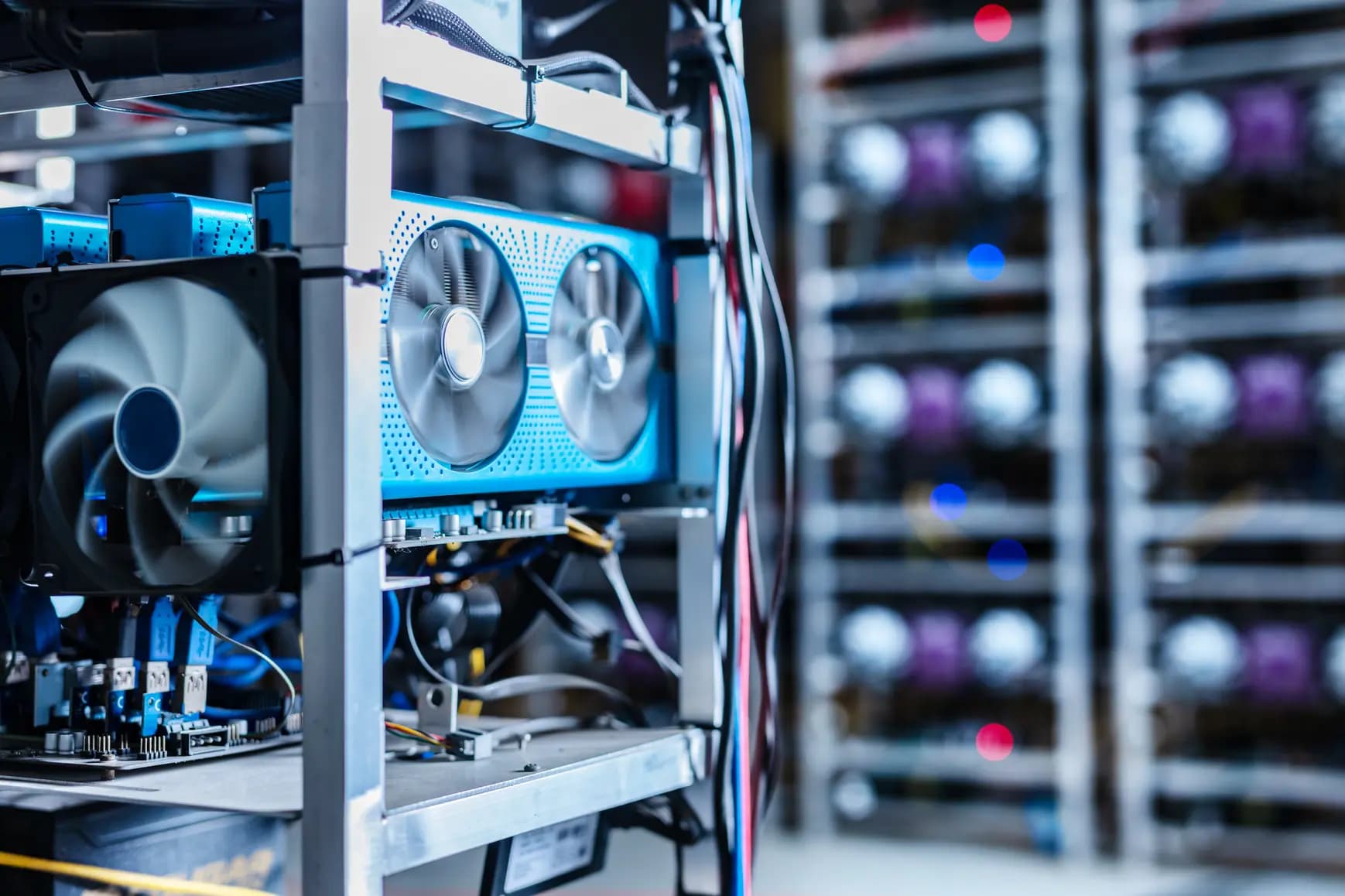
CRYPTON pivoted to Bitcoin mining in April 2024, and output has ramped quarter by quarter as new machines came online.

Fast revenue growth

  • Revenue rose from €212,182 in 2023 to €915,068 in 2024.
  • In January–September 2025 alone it reached €1,674,419.

Back to profit

  • A small net loss in 2024, the year of the pivot and the €895,964 hardware build-out.
  • Net result of €223,320 and operating profit of €1,234,600 in January–September 2025.
  • In the same period the company repaid ~€450,000 of owner debt and bought ~€561,000 of new ASICs.

Growing hashrate

  • Proprietary hashrate grew from 0.018486 EH/s in Q2 2024 to 0.100288 EH/s in Q2 2025.
  • Quarterly output reached 5.4210449 BTC in Q3 2025; monthly production is ~1.8–1.9 BTC.

Market

Bitcoin’s supply is capped at 21M and the block subsidy has been 3.125 BTC since the April 2024 halving, with the next one expected around 2028. Spot ETFs and corporate treasuries keep absorbing supply, and the mining sector runs at record hashrate in 2025. After each halving, operators with low-tariff power, high uptime and modern hardware tend to consolidate share.

Financial performance

MetricFY 2023FY 20242025 YTD (Jan–Sep)
Revenue€212,182€915,068€1,674,419
Expenses€205,791€938,448€276,731.60
Operating profit€6,391€-24,174€1,234,600
Net result€8,130€-23,426€223,320

During January–September 2025 the company repaid ~€450,000 of the owner-provided debt and purchased ASIC equipment for ~€561,000.

Production, treasury sales and capacity

Quarterly BTC production

QuarterProprietary BTCBTC mining feesTotal BTC
Q2 20240.56964360.00000000.5696436
Q3 20243.65253820.02482743.6773656
Q4 20243.98749060.03936574.0268563
Total 20248.20967240.06419318.2738655
Q1 20254.38724710.05722564.4444727
Q2 20255.05339250.08036355.1337560
Q3 20255.34142990.07961505.4210449

BTC sold (treasury realisations)

QuarterBTC sold
Q4 20248.1698400
Q1 20252.7557434
Q2 20254.8214953
Q3 20254.4246215

Capacity and power metrics

QuarterOperating EH/s (proprietary, quarter-end)Operating capacity, MW (quarter-end)Electricity consumption, kWh (quarter)
Q2 20240.0184860.2772901,581,596
Q3 20240.0641280.9714032,030,843
Q4 20240.0641280.9714033,850,823
Q1 20250.0799481.2125182,269,006
Q2 20250.1002881.5225232,838,469
Q3 20250.1002881.5225233,291,385

Capital formation and debt

ItemAmount / status
Hardware CAPEX (2024)€895,964 invested in ASICs
Funding sourceOwner’s personal capital and owner-provided debt
Repaid in 2025~€450,000 (principal)
Outstanding balance (owner)~€264,000
RestructuringExecuted in 2025: higher interest rate; principal repayment extended through Dec-2027; schedule aligned to operating cash flows

Investments in ASICs were financed via a mix of the Managing Director’s own funds and loans to the company; the outstanding owner loan has been re-termed to balance liquidity and growth. Future raises are to be structured as programme lines against ASIC cohorts with clear collateralisation (equipment plus receivables from pool payouts) and transparent reporting through dashboards and monthly statements.

Growth plan

From late 2025 through the next Bitcoin halving (≈2028), CRYPTON aims to expand hashrate rapidly and efficiently by adding machines under partner-hosted capacity, without constructing its own sites. The rationale is that Bitcoin’s new supply declines over time while adoption broadens; in such cycles, low-cost, high-reliability operators tend to capture outsized value. The company plans to accumulate the majority of mined BTC and sell only the amounts needed to fund organic growth and essential operating expenses (power, hosting/O&M). Expansion proceeds along two tracks — scaling the proprietary fleet and onboarding client hardware under the company’s data-centre and pool agreements — and stays multi-site to keep tariffs predictable and uptime high.

Path A — organic reinvestment

  • Reinvest a defined share of cash flows from proprietary mining and BTC mining fees into additional ASIC units.
  • Allocate purchases in tranches tied to delivery windows and power blocks; prioritise top-efficiency models and negotiated pool tiers.
  • Target steady hashrate compounding while preserving operating liquidity and treasury accumulation targets.

Path B — external capital (10–24 month programmes)

  • Raise programmatic debt or structured capital with tenors of 10–24 months to fund accelerated ASIC procurement under existing hosting and power contracts.
  • Debt service aligned to BTC production (pool payouts), with optional support from resale of de-risked equipment at residual value near or after payback.
  • Expected payback per ASIC cohort ≈ 10–14 months (model-based, subject to BTC price, difficulty and power); beyond payback, cohorts contribute free cash flow.

Why scaling is effectively unconstrained

  • Elastic capacity: expansion depends primarily on capital and partner rack/power blocks, not on proprietary real estate.
  • Multi-site network: parallel deployments reduce single-site bottlenecks and enable continuous roll-ins.
  • Procurement lanes: supplier relationships secure batch allocations; pooled logistics reduce lead-time friction.
  • Operations abstraction: site O&M is delivered by partners under SLA, letting CRYPTON focus on procurement, pool optimisation and treasury.

Operating priorities during scale-up

  • Procurement discipline: model-driven selection of ASIC efficiency and price, batch scheduling, RMA/warranty coverage.
  • Power economics: lock in or index favourable tariffs; monitor blended €/kWh and curtailment policies.
  • Treasury policy: accumulate BTC through the cycle; convert selectively for opex, capex and debt service in line with liquidity buffers.

Illustrative €8m ASIC cohort

The model assumes initial CapEx of €8,000,000 for ASICs installed under existing hosting and power terms, a target payback of 10–14 months net of power, hosting and O&M, and an effective operating life of 2–3 years (2.5 years / 30 months in the base illustration). Resale value is typically 50–60% of the purchase price after ~10 months and 20–30% after 24–36 months, if market conditions are favourable.

In a conservative year-1 view (not the best case), a 14-month payback implies average monthly net cash flow of ≈ €571,000 and a year-1 net of ≈ €6.85m; by month 12 the cohort is fully repaid and the equipment remains on the balance sheet.

HorizonPayback period, months (scenario)Net CF multiple vs CapExNet CF on €8mResidual, % of CapExResidualTotal value (net CF + residual)
24 months122.00×€16.0m20–30%€1.6–2.4m€17.6–18.4m
24 months141.71×€13.7m20–30%€1.6–2.4m€15.3–16.1m
30 months (2.5 yrs)122.50×€20.0m20–30%€1.6–2.4m€21.6–22.4m
30 months (2.5 yrs)142.14×€17.1m20–30%€1.6–2.4m€18.7–19.5m

Over 2025–2028 the company intends to compound hashrate in modular tranches, keep operating overhead lean and retain the majority of mined BTC. With contracted power, multi-site diversification and programmatic cohort financing, CRYPTON aims to approach the next halving with materially higher EH/s, robust uptime and a larger BTC treasury.

Market assessment

Bitcoin in one line

A fixed supply (21M cap) and Proof-of-Work issuance that halves (3.125 BTC since April 2024; next ≈2028) create a steadily tightening new-supply curve. Blocks target a ~10-minute cadence with automatic difficulty retargets every 2,016 blocks, making issuance predictable and resistant to manipulation; as adoption and long-term holding grow, the tradable float contracts.

Institutional adoption

Spot Bitcoin ETFs run by major asset managers, alongside corporate and selected public-sector treasuries, have become persistent accumulators, typically holding in long-term custody. This moves inventory off exchanges, reduces free float and deepens institutional liquidity, which supports miners by stabilising offtake expectations and financing options around production.

Mining industry snapshot

A professional, multi-site sector operating at record network hashrates in 2025. Revenues remain multi-billion annually, driven by BTC price, the block subsidy (3.125 BTC), transaction-fee cycles and unit-cost advantages — chiefly power tariffs, uptime, pool fees and ASIC efficiency (lower J/TH). Post-halving, margins compress for high-cost fleets; operators with low-tariff power, >98–99% uptime, modern hardware and disciplined procurement tend to consolidate share.

CRYPTON geographies

Ethiopia, Oman and Argentina offer competitive electricity, available partner data-centre capacity and SLA-backed operations; their climates and tariffs favour efficient cooling and stable uptime. Finite issuance, post-halving supply compression and sustained institutional demand create a supportive backdrop for miners that deploy high-efficiency ASICs into contracted low-tariff capacity ahead of the ~2028 halving.

Collateral breakdown

Existing ASIC fleet (current estimate) · €1.2M
Existing ASIC fleet (current estimate)€1,200,000
Total pledged€1,200,000Current estimated value of the fleet (≈ €1.55m at purchase); new equipment is added to the pledge at 80% of each funded draw.

The funding line is secured by a first-ranking pledge that grows with each funded draw.

1. Existing ASIC fleet — ~€1.20m

  • 450 machines bought for ≈ €1.55m, valued today with ≈20% depreciation.
  • Shared across the whole programme as baseline collateral.

2. New equipment from each draw

  • Every ASIC bought with the loan is added to the pledge at invoice level.
  • It counts at 80% of the funded amount (a 20% haircut).

3. BTC payout receivables

  • Pool payouts from each batch are assigned to interest service and to building liquidity for the bullet.

Hard-asset coverage is 120% after the first draw and ~88% at the €15m peak; the assigned BTC receivables are expected to lift effective coverage toward 100% over the term. Residual equipment values of ~50–60% after ~12 months add further recovery paths.

Loan collateral

To secure the batch-based funding line, CRYPTON s.r.o. grants a first-ranking pledge over (i) the existing ASIC fleet and (ii) new equipment financed under each Draw, together with the assignment of BTC payout receivables per Batch. Collateral is documented at the Batch Schedule level and grows dynamically with each funded Draw.

  • Existing fleet (baseline collateral): gross purchase ≈ €1.55m; current estimated value ≈ €1.20m (≈20% depreciation), shared across the programme.
  • New collateral per Draw: additional ASICs and required electrical balance-of-system, added to the pledge at invoice level. BTC receivables generated by that Batch are assigned to support coupon service and liquidity for the bullet.
Collateral typeCoverage basis / estimated value
Baseline pledged equipment~€1.20m (current estimate; one-time, programme-wide)
Pledged new equipment per Draw80% of funded amount (20% haircut to invoices)
Assigned BTC receivables per BatchMonthly pool payouts pledged to debt service (interest) and liquidity build for principal at maturity

Indicative cumulative hard-asset coverage for €15m (5 × €3m): 120% after Draw 1, falling to ~88% after Draw 5 at the €15m peak. Assigned BTC receivables are expected to lift effective coverage toward ≥100% over the term, subject to production and performance. Batch-level documentation and partner SLAs support enforceability and transparency, while residual equipment values (typically ~50–60% after ~12 months; ~20–30% after 24–36 months, market-dependent) provide additional recovery paths.

Description of the loan

CRYPTON s.r.o. seeks a programmatic monthly funding line to deploy ASIC capacity in partner data centres. Funds are disbursed against Batch Schedules naming site, hardware, tariffs, timelines and pool settings; the company may request smaller allocations or pause Draws based on capacity and pricing.

Use of proceeds (per Draw)

ASIC miners; required electrical balance-of-system (PDUs, breakers, cabling, racks where applicable); site install and commissioning fees; logistics and installation (shipping, customs, racking, burn-in); initial power and O&M prepayments under contracted tariffs.

Loan structure

ParameterValue
Monthly allocation targetUp to €3,000,000 (investor discretion) for 5 months; subsequent allocations contingent on new capacity
Annual interest rate20.9% on outstanding principal, payable monthly in arrears
Tenor / legal final maturity10 months per Draw; multiple Draws may be outstanding concurrently
RepaymentInterest-only during the term; 100% of principal in a single bullet at maturity
DisbursementPre-agreed monthly windows against a Batch Schedule specifying country and site, hosting partner, ASIC model and units, unit pricing, expected EH/s and power (MW), contracted tariff (€/kWh), install and commissioning dates, pool and payout model, and a use-of-proceeds breakdown
Allocation controlProceeds are allocated exclusively to the named Batch and applied solely to that deployment
ReportingInvestor dashboards and monthly statements with line-item reconciliation of purchases, pool statements, power and O&M, and net cash flow by Draw

Borrower

CRYPTON s.r.o.founded 2021
CRYPTON s.r.o.

CRYPTON s.r.o. is a privately held digital‑asset infrastructure operator headquartered in Prague, Czech Republic (Reg. No. 11931078). Incorporated in 2021 and strategically pivoted in April 2024, the Company focuses exclusively on Bitcoin (BTC) mining under an asset‑light model: hardware is deployed in partner Tier‑1 data centers, enabling rapid scale without greenfield build‑outs.

Reg No: 11931078www.cryptonmining.cz

About the company

CRYPTON s.r.o. is a privately held digital-asset infrastructure operator headquartered in Prague, Czech Republic. Incorporated in 2021 and strategically pivoted in April 2024, the company focuses exclusively on Bitcoin (BTC) mining under an asset-light model: hardware is deployed in partner Tier-1 data centres, enabling rapid scale without greenfield build-outs.

Active mining began shortly after the pivot. Output ramped through Q2–Q4 2024 as capacity came online and stabilised further in 2025. Monthly production is ~1.8–1.9 BTC, subject to network difficulty, uptime and pool variance.

Corporate identifiers: CRYPTON s.r.o., a Czech limited liability company; Reg. No. 11931078; incorporated October 2021; headquartered in Prague.

Business model and revenue streams

From the auditor’s perspective, CRYPTON operates a three-strand model within a single asset-light framework:

  • Proprietary mining — the core driver: the company acquires and runs industrial ASIC miners, treating the resulting BTC as treasury and converting selectively to fund operating costs and growth, with upside to the BTC price.
  • Managed mining — a turnkey service for retail-scale and small institutional investors: CRYPTON sources hardware under negotiated supplier terms, places it in partner data centres, connects it to preferred pools and delivers transparent performance and payout reporting. Compensation is a fixed, BTC-denominated share of the BTC produced on client-owned machines.
  • Equipment supply — procurement scale is used to supply equipment on attractive terms, earning margins on ASIC sourcing and sales while keeping inventory risk limited.

In the auditor’s assessment the streams reinforce one another: supplier pricing and hosting access improve proprietary unit economics, while proprietary scale supports more favourable pool terms for client deployments. Revenue in EUR varies with BTC sales timing (treasury policy), network difficulty and power tariffs; operational uptime and pool terms provide cash-flow predictability.

Leadership and competitive advantages

Kamila Tirpáková (Managing Director) has been a BTC advocate since 2017, with deep relationships across hardware suppliers, data-centre operators and mining pools; she leads strategy, procurement and treasury oversight. The auditor views these relationships as a material competitive advantage in procurement, hosting access and pool terms.

  • Scalable by capital, not real estate: modular expansion via partner capacity.
  • Multi-site resilience: diversification across Ethiopia, Oman and Argentina mitigates jurisdiction and grid risk.
  • Contracted costs: multi-year, fixed electricity and O&M rates versus higher, volatile pricing for new entrants.
  • Dual-engine revenues: proprietary mining plus recurring BTC fees from managed mining.
  • Institutional-grade for retail: pooled procurement, standardised SLAs and clear reporting give smaller investors access to institution-level terms.
  • Pool relationships: aggregate hashrate secures better fee tiers and service.

Target clients

  • Newcomers (€5k–€40k): turnkey entry — hardware, hosting, pools and reporting.
  • Scaling investors (≤€500k): small funds, family offices and HNW individuals — priority procurement and standardised SLAs.
  • Migrators: operators with poor tariffs or pool terms moving under CRYPTON’s agreements.
Fundedon May 26, 2026
20,000USDC
100% of 20,000 USDC
Funded date
May 26, 2026
Loan period
10 months
Annual interest
20.90 %

Fundraising is closed. Positions in this deal can be bought from other investors on the Secondary market.