Agro Engineering

🌾Agriculture
ID: 395
200USDC
Open
1% of 20,000 USDC
- Loan period9 months
- Lending APR22.50 %
- Expires23 days, 12:11:12
About
Manefield Investments Limited is a Kenyan private company registered in Nairobi in 2017. The company operates in the agricultural processing and agro‑industrial engineering sector and is fully owned and managed by its founder and CEO, Josiah Olgah Mayaka. Manefield is positioned as an EPC‑style engineering integrator focused on delivering turnkey processing solutions for agricultural producers and processors within the Kenyan market.
Core business and business model
The company’s core activity is the delivery of agricultural and agro‑processing projects on a turnkey basis, covering technical needs assessment, preparation of equipment specifications, international procurement, logistics and customs clearance, on‑site installation, commissioning, and post‑installation technical support. Manefield does not manufacture equipment but acts as an engineering integrator, combining equipment sourcing from foreign manufacturers with technical adaptation, project coordination, and local implementation. Revenue is generated primarily through the sale of complete processing solutions with embedded margins on equipment supply, supplemented by installation, commissioning, maintenance services, spare parts, and consumables. The business model is project‑driven and contract‑based, with pricing structured per project depending on scope, technical complexity, and delivery timelines.
The company deliberately operates outside the premium equipment segment, focusing on reliable and proven manufacturers offering a balanced price‑to‑performance ratio aligned with the budget constraints of Kenyan agro‑processors. Manefield primarily serves farmer cooperatives, agri‑enterprises, and local processing plants across multiple value‑added segments, including grains and legumes, fruits and vegetables, oilseeds and nuts, dairy, coffee, and tea.
Operational execution covers the full project lifecycle, from client acquisition and technical assessment to equipment validation, procurement, logistics, installation, commissioning, operator training, and post‑installation service. The company works with a network of foreign equipment manufacturers and suppliers primarily based in Europe, China, and India, while engaging external engineering and construction contractors on a contractual basis for site preparation and specialized works. Manefield retains full responsibility for equipment selection, system compatibility, and functional performance of the integrated production lines.
Key figure, management and team
Manefield Investments Limited is fully owned and managed by its founder and CEO, Josiah Olgah Mayaka. He has relevant technical and managerial education and prior experience in EPC and engineering‑driven companies. His background supports the company’s positioning as a turnkey solution provider, combining commercial decision‑making with an understanding of technical integration, supplier coordination, and project execution.
Operational execution is supported by a lean internal team covering sales and business development, project and technical management, service and maintenance engineering, and operational administration. Strategic decisions, key supplier relationships, and overall operational oversight remain centralized at the CEO level. Non‑core and project‑specific activities are supplemented by external contractors, allowing execution flexibility without permanently increasing fixed costs.
Strengths
- The company operates in a structurally important sector of the Kenyan economy focused on agricultural processing and value addition.
- The turnkey delivery model allows value capture across engineering, supply, installation, and commissioning stages.
- Direct cooperation with foreign manufacturers provides access to a broad range of technologies and competitive sourcing options.
- Local engineering presence in Nairobi supports installation, commissioning, and after‑sales service.
- Management has relevant EPC‑related experience aligned with the company’s business model.
Weaknesses
- Minimal registered capital limits the equity base relative to the capital intensity of EPC projects.
- Ownership and management concentration increases key‑person dependency.
- Broad operational scope across multiple processing segments may dilute focus.
- Reliance on imported equipment exposes the company to foreign exchange, logistics, and customs‑related risks.
Conclusion
Manefield Investments Limited is positioned as a local EPC‑style integrator in Kenya’s agricultural processing sector, offering full‑cycle engineering and equipment solutions tailored to local conditions. The business model is aligned with demand for value‑added agricultural processing and is supported by local execution capability and an experienced founder‑led management structure. At the same time, modest capitalization, reliance on imported equipment, and concentration of management represent structural constraints. From an investor or lender perspective, the company’s positioning is supported by an existing track record of executed projects, while future scalability will depend on disciplined risk management, gradual strengthening of the capital base, and continued consistency in project execution.
Loan Collateral
General overview of collateral
The €500,000 loan facility is secured by a diversified collateral package combining liquid assets, movable fixed assets, and newly acquired project equipment. The collateral structure includes cash balances, operational vehicles and equipment, and the fruit processing line financed under the Feast Foods Processors Ltd. contract. Newly acquired equipment is pledged at a conservative discounted value.
Fixed and dynamic collateral assets
The collateral package consists of the following components:
- Cash reserves:
- Cash balances held on company bank accounts with an estimated value of €120,000, providing immediate liquidity and a first-loss buffer.
- Vehicles and operational equipment:
- Toyota Harrier 2.0 (2020): €35,000.
- Toyota HiAce (2018): €19,000.
- Warehouse forklift: €9,500.
- Warehouse and office equipment: €12,000.
- Total value of vehicles and operational equipment: €75,500.
- Contract-linked equipment (newly acquired assets):
- Fruit processing equipment supplied under the Feast Foods contract, pledged at a 20% discount to procurement cost (excluding logistics).
- Discounted collateral value of contract equipment: €492,800.
Total collateral coverage
Collateral category | Value (€) |
Cash reserves | 120,000 |
Vehicles and operational equipment | 75,500 |
Contract equipment (discounted) | 492,800 |
Total collateral value | 688,300 |
The combined collateral value provides coverage of approximately 138% of the requested loan principal.
Conclusion
The proposed collateral structure provides adequate security for the €500,000 loan through a combination of liquid cash reserves, movable fixed assets, and discounted contract-linked equipment. The diversified nature of the collateral mitigates execution and timing risk, while conservative valuation of newly acquired assets strengthens lender protection.
Highlights
Max target
20,000 USDC
Min target
10,000 USDC
Investors
1
Interest payments
9 months
Principal repayments
bullet
Total payments
monthly
Risk scoring
- CollateralCompany Assets
- Total risk scoreBBB
- Debt to equity2.55
- LTV73 %
- Credit history9/10
Details

Financial Performance
General overview of financial performance
Between 2021 and 2025, Manefield Investments Limited demonstrated consistent growth in revenue and profitability, reflecting the gradual scaling of its project‑based engineering and equipment integration model. Revenue increased from approximately €1.46 million in 2021 to €2.15 million in 2025, representing cumulative growth of around 47%, while net profit rose from €196 thousand to €330 thousand. Over this period, the company gradually shifted from smaller, equipment‑focused projects toward more complex turnkey solutions with a higher service component. The 2026 forecast indicates a step‑change in operational scale driven by a major contract linked to the planned financing, complemented by recurring service and maintenance revenues, with forecast figures already incorporating interest expenses related to the proposed loan facility.
Profit and loss statement
The profit and loss statement illustrates the company’s revenue composition, cost structure, and profitability dynamics over time, allowing assessment of scalability and the balance between equipment sales and services.
The company’s statutory financial statements are prepared in Kenyan Shillings (KES). For comparability, historical figures have been translated into euros using average annual EUR/KES exchange rates.
Average EUR/KES exchange rates:
- 2021: 129.72.
- 2022: 124.37.
- 2023: 153.15.
- 2024: 144.48.
- 2025: 146.08.
- 2026 (forecast): 147.90.
All financial figures below are presented in thousands of Kenyan Shillings (KES) and thousands of euros (EUR).
P&L item | 2021 | 2022 | 2023 | 2024 | 2025 | 2026 (forecast) |
Revenue | 189,514 / 1,461 | 217,941 / 1,752 | 289,426 / 1,890 | 292,867 / 2,027 | 313,514 / 2,146 | 406,500 / 2,748 |
– Sales | 133,463 / 1,028 | 148,566 / 1,194 | 200,067 / 1,306 | 205,252 / 1,420 | 223,928 / 1,532 | 310,000 / 2,095 |
– Services | 56,050 / 432 | 69,375 / 557 | 89,359 / 583 | 87,614 / 606 | 89,585 / 613 | 96,500 / 652 |
COGS | 117,707 / 907 | 129,977 / 1,045 | 170,427 / 1,112 | 171,797 / 1,189 | 186,578 / 1,277 | 248,678 / 1,681 |
Gross profit | 71,806 / 553 | 87,963 / 707 | 118,998 / 777 | 121,069 / 837 | 126,935 / 868 | 157,821 / 1,067 |
OPEX | 34,112 / 262 | 39,229 / 315 | 52,096 / 340 | 52,536 / 363 | 56,432 / 386 | 73,170 / 494 |
Profit before tax | 36,450 / 280 | 47,236 / 379 | 65,513 / 427 | 66,407 / 459 | 68,980 / 472 | 71,146 / 481 |
Net profit | 25,515 / 196 | 33,065 / 265 | 45,859 / 299 | 46,485 / 321 | 48,286 / 330 | 49,802 / 336 |
The P&L reflects a structurally healthy operating profile with revenue growth driven primarily by equipment sales, while services provide a stable and recurring income component. Costs evolve broadly in line with revenue, indicating disciplined cost management. The 2026 forecast shows higher absolute profit levels with moderated margins, reflecting financing costs and the execution of a larger, more capital‑intensive contract.
Margin analysis
Margin | 2021 | 2022 | 2023 | 2024 | 2025 | 2026 |
Gross profit margin |
|
|
|
|
|
|
PBT margin |
|
|
|
|
|
|
Net profit margin |
|
|
|
|
|
|
Margins improved consistently between 2021 and 2024, reflecting better pricing discipline and a higher contribution from value‑added services. In 2025 margins remained broadly stable. The forecasted margin compression in 2026 is primarily attributable to financing costs and the different margin profile of the larger financed contract, rather than operational deterioration.
Year‑on‑year growth
YoY growth | 2022 | 2023 | 2024 | 2025 | 2026 |
Revenue |
|
|
|
|
|
Gross profit |
|
|
|
|
|
Profit before tax |
|
|
|
|
|
Year‑on‑year dynamics reflect a mix of operational growth, periods of consolidation, and currency translation effects. The strong growth projected for 2026 is primarily operational and driven by execution of a major client contract underpinning the financing request.
Key financial insights
- The company has remained profitable throughout the entire historical period.
- Service revenues contribute to margin stability and recurring cash flows.
- Forecast figures explicitly include interest expenses related to the planned financing.
- Financial performance remains sensitive to project timing and foreign exchange movements.
Strengths and weaknesses
Strengths
- Consistent historical revenue growth with no loss‑making years.
- Stable and positive net profit across all periods.
- Strong gross margins for an EPC‑light integration model.
- Conservative treatment of financing costs in the forecast.
Weaknesses
- Project‑driven revenue creates timing volatility.
- The 2026 forecast relies materially on a single large contract.
- Margin compression reduces the buffer against execution risk.
- Exposure to FX volatility affects cost predictability.
Conclusion
Manefield Investments Limited shows a solid historical financial track record characterized by steady growth and consistent profitability. The 2026 forecast reflects a controlled expansion phase anchored by a major contract and supported by external financing. While the outlook is positive, disciplined execution, monitoring of contract concentration, and management of foreign exchange exposure will be critical to sustaining financial stability as the company scales.
Growth Plan of MANEFIELD INVESTMENTS LIMITED
Strategic growth directions
Manefield Investments Limited growth strategy focuses on a measured transition from a purely project-driven equipment supply model toward a more standardized, service-oriented integration business aimed at improving scalability, cash-flow stability, and client lifetime value.
Standardization of solutions: formalization of frequently deployed agro-processing configurations to shorten sales cycles, reduce engineering lead time, improve procurement efficiency, and lower execution risk while retaining site-specific flexibility.
Client-side financing support: provision of technical and commercial documentation to support clients’ access to external financing, combined with selective acceptance of extended payment schedules for repeat and well-established clients, enabling deeper project integration without acting as a lender.
As a result of these pillars, the company expects a gradual shift in revenue composition toward recurring service income, reducing dependence on one-off equipment sales and smoothing project-driven cash-flow volatility.
Justification for growth
The growth strategy is aligned with Kenya’s policy-driven expansion of agro-processing capacity, persistent post-harvest losses, and increasing compliance requirements in domestic and export food value chains. As competition in equipment supply intensifies, building an installed base through standardized solutions enables subsequent monetization via services, supporting higher revenue stability and resilience over time.
Flagship contract supporting the growth strategy: Feast Foods Processors Ltd.
The Feast Foods Processors Ltd. contract illustrates the growth strategy in execution through a repeat-client engagement covering the design, supply, installation, and commissioning of a complete fruit processing line. The project follows a standard turnkey structure, with a 20% client advance payment and the remaining balance payable upon completion of installation and commissioning, reflecting operational sequencing rather than client financing.
Equipment scope and procurement cost
The project covers a full, integrated fruit processing line, from water treatment and raw fruit handling to concentration, packaging, and quality control. The equipment scope includes the following major systems:
No. | System description | Supplier cost (€) |
1 | Pure Water Treatment Machines System | 27,000 |
2 | Fresh Fruits Processing Machines System | 129,000 |
3 | Fruit Concentration Pulp Processing Machines System | 164,000 |
4 | Fruit Jam Processing System | 46,000 |
5 | Tin Can Filling & Pasteurizer Processing System | 112,000 |
6 | CIP System | 21,000 |
7 | Chiller & Cooling Water System | 14,000 |
8 | Pipes, fittings, valves, and electrical control systems | 85,000 |
9 | Laboratory materials and shipping costs | 48,000 |
The total procurement and logistics cost for the equipment package amounts to approximately €646,000.
Contract economics
The commercial structure of the Feast Foods contract is summarized below:
Description | Amount (€) |
Total contract revenue | 768,950 |
– Equipment sales | 721,650 |
– Engineering, installation, commissioning, and training services | 47,300 |
Total execution costs | 646,000 |
Gross profit | 122,950 |
Service-related revenues, while smaller in absolute terms, contribute disproportionately to margin generation and support the development of long-term service relationships with the client.
Execution timeline
The project is planned to be executed in clearly defined stages from late Q4 2025 through early Q4 2026, covering engineering design, supplier payments, manufacturing, delivery, installation, commissioning, and final client acceptance. This phased structure underpins working-capital planning and supports the rationale for external financing to bridge the temporary gap between supplier payments and final client settlement.
Strengths and weaknesses of the growth plan
Strengths
- Strategy grounded in observable market expansion and policy-driven demand for agro-processing capacity.
- Standardization improves scalability, execution efficiency, and margin predictability.
- Repeat-client contract validates execution capability and commercial credibility.
- Increased focus on services enhances revenue stability over time.
Weaknesses and risks
- Selective use of extended payment schedules increases short-term working-capital exposure.
- Turnkey project execution remains exposed to site readiness and third-party coordination risks.
- Scaling service operations requires disciplined process development and availability of skilled technical staff.
Conclusion
Manefield Investments Limited’s growth plan represents a controlled and internally consistent evolution of its business model, focused on deepening integration within existing value chains rather than pursuing rapid geographic expansion. The Feast Foods contract provides tangible, contract-backed evidence of this strategy in execution, directly linking external financing to revenue generation and supporting improved revenue visibility and cash-flow stability.
Description of the Loan
Loan purpose and amount
Manefield Investments Limited is seeking a loan facility in the total amount of €500,000 to finance the procurement and delivery of equipment for a confirmed turnkey fruit processing project for Feast Foods Processors Ltd., a repeat client of the company. The loan is strictly linked to this contract and is intended to cover supplier payments and related logistics costs during the project execution period.
The financing does not support general corporate purposes or speculative expansion. Its sole objective is to bridge the temporary working-capital gap between advance and milestone payments to equipment suppliers and final settlement by the client under the confirmed contract.
Planned asset acquisition
Loan proceeds will be used to finance the procurement and delivery of a complete fruit processing line forming part of the Feast Foods project. The financed assets include integrated processing systems covering water treatment, raw fruit processing, pulp concentration, jam production, filling and pasteurization, CIP systems, cooling systems, piping, electrical control systems, and laboratory-related equipment.
The total procurement and logistics value of the equipment package amounts to approximately €646,000, with the loan covering a defined portion of these costs in line with supplier payment milestones.
The allocation of loan proceeds by tranche is summarized below:
Tranche | Amount (€) | Primary use of funds |
Tranche 1 | 185,000 | Advance payment to the equipment supplier to secure production and manufacturing slots for the fruit processing line. |
Tranche 2 | 315,000 | Final equipment payment and settlement of international logistics, shipping, and delivery costs. |
Repayment terms
The key terms of the requested loan facility are summarized below:
- Total loan amount: €500,000.
- Loan term: 9 months.
- Interest rate: 23,5% per annum (fixed).
- Disbursement structure: Two tranches.
- Interest payment schedule: Periodic interest servicing during the loan term.
- Principal repayment: Full principal repayment in a single lump sum at maturity (bullet repayment).
The tranche-based disbursement is aligned with supplier payment milestones under the Feast Foods contract, ensuring that loan proceeds are deployed strictly for equipment procurement and related logistics.
Alignment with cash flows and collateral reference
The repayment structure is aligned with expected cash inflows from the Feast Foods project, with principal repayment scheduled after project completion and client settlement. Details of collateral securing the loan, including cash balances, operational assets, and project equipment, are presented separately in the Loan Collateral section.
This structure ensures transparency of use of proceeds, alignment between financing and operational execution, and clear linkage between the loan and a confirmed, revenue-generating contract.
Key facts
- MANEFIELD INVESTMENTS LIMITED was foundedJun 22, 2017
- Start of active work/productionJan 01, 2018
Borrower info
MANEFIELD INVESTMENTS LIMITED
Nairobi, Harambee Avenue, Embassy House, LR NO.209/4864/65, PR5C+PMV
Manefield Investments Limited is a Kenyan private company registered in Nairobi in 2017. The company operates in the agricultural processing and agro‑industrial engineering sector and is fully owned and managed by its founder and CEO, Josiah Olgah Mayaka. Manefield is positioned as an EPC‑style engineering integrator focused on delivering turnkey processing solutions for agricultural producers and processors within the Kenyan market.
- Reg No.PVT-AAACBP2
Market description & size
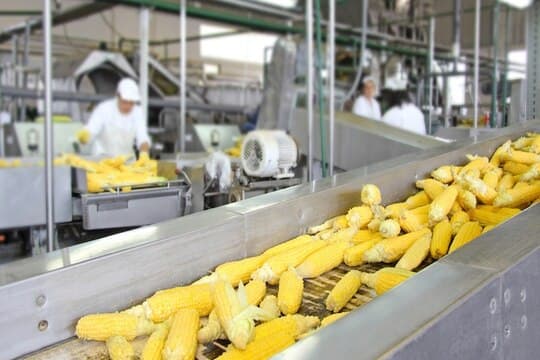
The company operates within the African agrifood and agro‑processing market, which is structurally supported by population growth, urbanization, and the gradual industrialization of agricultural value chains. Africa’s food and agribusiness market is estimated at approximately €260 billion annually, with long‑term projections indicating potential expansion toward €900 billion by 2030, driven primarily by increased processing, storage, and value addition rather than growth in primary production.
At the equipment and integration level, the relevant benchmark is the Middle East & Africa food processing equipment market, estimated at approximately €3.5–3.6 billion with an expected compound annual growth rate of around 4–5%. The gap between overall agricultural output and relatively low processing penetration highlights sustained demand for processing lines, retrofit projects, and turnkey integration services.
Key regional growth drivers include rising post‑harvest loss reduction initiatives, expanding domestic food consumption, increasing compliance requirements for formal retail and export markets, and public and development‑finance‑supported investments in agro‑industrial infrastructure.
Country‑specific market overview (Kenya)
Agriculture remains a core pillar of the Kenyan economy, accounting for approximately 20% of GDP and a significant share of employment. In value terms, the agricultural sector generates an estimated €22–24 billion annually. National and county‑level policy increasingly emphasize local processing and value addition as a means to reduce imports, improve farmer incomes, and increase food security.
Based on regional benchmarks and Kenya’s relative scale within East Africa, the addressable market for agro‑processing equipment and turnkey integration services in Kenya is estimated in the range of €150–250 million per year. Demand is driven by new processing facilities, capacity expansions, and modernization of existing plants across grains, dairy, fruits and vegetables, beverages, and export‑oriented value chains.
The competitive landscape is fragmented and consists of local engineering firms, equipment importers, OEM representatives, and small integrators. Competition is primarily price‑ and delivery‑driven, while technical integration capability, installation quality, and after‑sales service act as differentiating factors. Market saturation remains moderate, particularly outside premium equipment segments.
Regulatory and operational requirements influencing the market include food safety and quality compliance, utilities availability, customs and import procedures, and alignment with county‑level industrial development programs such as County Aggregation and Industrial Parks (CAIPs).
Company’s market position
Manefield Investments Limited operates as a B2B engineering integrator and turnkey solution provider for agro‑processing enterprises. The company does not compete as a mass equipment distributor but positions itself in the mid‑range segment, focusing on integrated processing solutions adapted to local operating conditions.
Differentiation is based on full‑cycle project delivery, combining equipment sourcing, technical integration, installation, commissioning, and post‑installation services. The company’s involvement extends beyond one‑off equipment sales to ongoing maintenance, spare parts, and technical support, supporting recurring client engagement. Operations are primarily contract‑based and project‑driven, with repeat clients forming a meaningful part of the order pipeline.
Key clients
The company serves a diversified B2B client base within Kenya’s food and agro‑processing sector, including poultry, tea, fruit and vegetable processing, beverages, and packaged foods. Representative clients include established processors such as Del Monte Kenya, Litein Tea Factory, Kevian Kenya, Premier Foods, and Feast Foods Processors.
These relationships indicate exposure to operationally established processors rather than exclusively early‑stage operators, supporting repeat business, service revenues, and utilization of installed processing capacity.
Investment‑relevant market considerations
Market growth trends are directly aligned with the company’s core service categories, including processing lines, retrofit projects, and after‑sales services. Barriers to entry remain limited for basic equipment trading but increase materially for turnkey integration due to technical requirements, project coordination complexity, and compliance obligations. These factors indirectly support the company’s positioning as an engineering integrator rather than a pure trader.
Overall, the market environment provides a structurally supportive backdrop for sustained demand in agro‑processing integration, while competition and execution capability remain the primary determinants of long‑term performance.