Log InSign Up
  • Primary
  • Secondary
  • Cryptolending
  • Token
  • My investments
  • More
    Leagues
    Transactions
    Referral program
    Help & Feedback
    Twitter
    Telegram
    LinkedIn
  • Primary
  • Secondary
  • Cryptolending
  • Token
  • My investments
  • More
Log InSign Up
PrimarySecondaryCryptolendingInvestments
PrimarySecondaryCryptolendingTokenMy investments
LeaguesTransactionsReferral programHelp & Feedback
TwitterTelegramLinkedIn
Trustpilot
  • Terms and Conditions
  • Privacy Policy
  • Help & Feedback
  • WEB2 Platform
📦 ProductionID: 284

Production Lines

24,999.70USDC
100% of 25,000 USDC
Fundedon Feb 26, 2026
Funded date
Feb 26, 2026
Loan period
8 months
Annual interest
23.10 %

Fundraising is closed. Positions in this deal can be bought from other investors on the Secondary market.

Repayment
Overview
Risk scoring
Financials
Collateral
Borrower
A signed bottling-line contract for Premier Foods

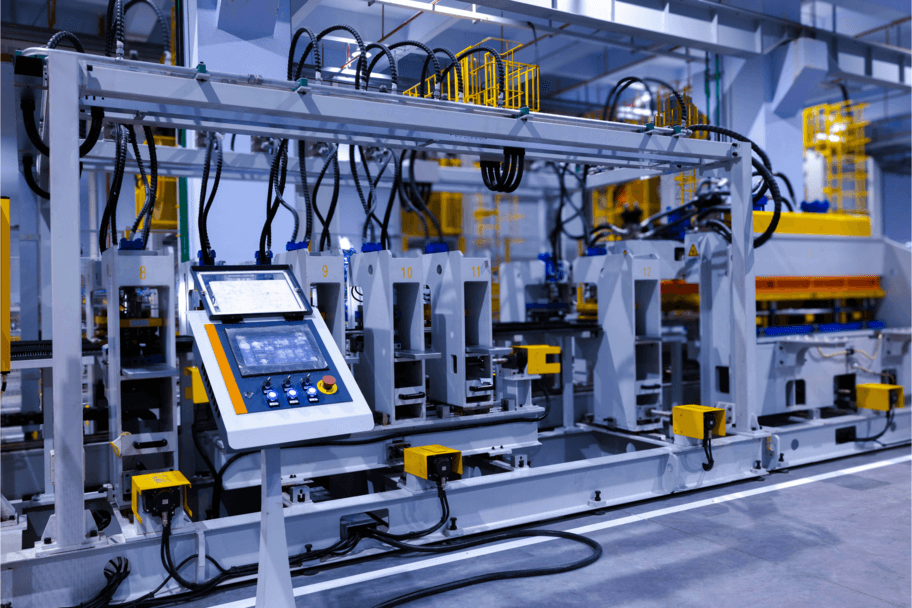
Evolve Ways is raising €750k in three tranches to pay the equipment supplier and cover logistics and customs for a 3,000-bottle-per-hour PET line for Premier Foods — a €1,058,600 EPC contract.

24,999.70USDC
100% of 25,000 USDC
Risk score: A8 months23.10 %Funded
Production Lines

Evolve Ways Ltd is a privately owned engineering company operating as an EPC / turnkey integrator of light industrial and agro‑processing production lines. The company is active primarily in Kenya, with selective project execution across East Africa. Its operations focus on the design, supply, integration, installation, and commissioning of complete production facilities for small and medium‑sized manufacturers.

Core business

Evolve Ways Ltd delivers turnkey production lines by integrating third‑party industrial equipment into fully functional manufacturing systems. The company does not manufacture equipment itself and does not maintain significant physical assets or inventory. Instead, it operates as an asset‑light EPC integrator, creating value through engineering design, system integration, supplier coordination, and disciplined project execution.

The company’s services typically cover the full project cycle, including technical needs assessment, production line design, equipment specification and selection, international procurement through OEM partners, logistics and import coordination, on‑site installation management, commissioning, and client staff training. Projects are executed under EPC or fixed‑scope turnkey contracts, with Evolve Ways assuming overall responsibility for technical performance and delivery outcomes.

Key figure and management background

The company is owned and led by its shareholder and CEO, Angelineh Mueni Mbwii. She is an experienced entrepreneur with a formal engineering education and a professional background in African engineering and project‑based companies. Her career progression spans from Junior Engineer roles to senior management positions, culminating in a Head of PMO role prior to founding Evolve Ways Ltd.

Her professional experience combines hands-on engineering exposure with project governance, delivery coordination, and cross‑functional management. This background directly shapes the company’s operating model, which emphasizes technical accountability, structured project management, and centralized decisionmaking at the executive level. Strategic direction, major commercial decisions, supplier relationships, and overall execution oversight remain closely tied to the CEO.

Products, services, and target clients

Evolve Ways does not offer standardized products. Its core offering consists of customized turnkey production lines tailored to specific client requirements. These solutions are targeted at small and medium‑sized manufacturers, agro‑processors, bottlers, and FMCG‑oriented producers seeking operational production capacity rather than standalone equipment purchases.

Clients typically value EPC responsibility, predictable delivery outcomes, and local execution support. The company’s model is particularly suited to customers with access to project financing who require a single accountable integrator capable of managing multiple international suppliers and local contractors.

Strengths

  • Evolve Ways operates a capital‑light EPC model, limiting balance‑sheet intensity and fixed asset exposure.
  • The company’s leadership combines engineering competence with project management experience, aligning management capability with the technical nature of the business.
  • Turnkey responsibility differentiates the company from pure equipment traders and reduces client coordination burden.
  • Local presence in Kenya supports on‑site execution, commissioning, and adaptation to regulatory and operational conditions.
  • The project‑based structure allows scalability through volume and standardization rather than physical expansion.

Weaknesses

  • The company’s operations and strategic direction are highly dependent on the CEO, creating key‑person risk.
  • Evolve Ways relies extensively on third‑party equipment suppliers and subcontractors, limiting direct control over certain execution risks.
  • The asset‑light model constraints collateral availability and may reduce financial flexibility in stress scenarios.
  • Project‑based revenues expose the company to variability in cash flow and pipeline timing.
  • The internal team remains relatively lean for EPC‑style activities, increasing sensitivity to execution bottlenecks.

Conclusion

Evolve Ways Ltd is positioned as a technically driven EPC integrator serving light industrial and agro‑processing clients in Kenya and the wider East African region. Its business model is coherent, focused, and aligned with the leadership’s engineering and project management background. The company’s capital‑light structure and turnkey positioning support operational flexibility and controlled scaling. However, concentration of management authority, reliance on external partners, and project‑based revenue dynamics represent structural risks that must be carefully managed. From an investor or lender perspective, the company presents a technically credible but execution‑sensitive profile, where future stability depends on disciplined project selection, cash‑flow control, and gradual institutionalization beyond founder‑led management.

Loan Collateral

General overview of collateral

To secure the €750,000 loan facility, Evolve Ways Ltd proposes a collateral package combining dynamic financial reserves, equipment linked to the Premier Foods EPC contract, and a personal asset pledge from the company director. This diversified collateral structure provides security through both retained earnings and identifiable, contract-specific assets.

Collateral structure summary

Collateral Component

Value (€)

Notes

Retained earnings

275,000

Company profits reinvested and available as unrestricted reserves

Contingency reserve

56,000

Allocated funds for operational risk mitigation

Initial capital

664.00

Nominal registered capital

Equipment (Premier Foods contract)

656,000

Discounted by 20% for conservatism; remains company property until final client payment

Director's pledge – Toyota FJ Cruiser (2019)

33,000

Personal guarantee, non-core to business operations

Total collateral coverage

1,020,664

Equivalent to 136% of loan amount

Fixed and dynamic collateral components

  • Dynamic reserves: The combination of retained earnings and contingency reserve (totalling €331,000.00) provides a cash-equivalent buffer that enhances liquidity coverage.

  • Contract-linked assets: The equipment supplied under the Premier Foods EPC contract remains the property of Evolve Ways until final payment is received. The collateral valuation applies a conservative 20% discount to the procurement value to reflect potential resale constraints.

  • Director’s pledge: The inclusion of a personal vehicle as pledged collateral strengthens the lender’s recourse options without compromising the company’s operational assets.

Conclusion

The proposed collateral structure covers approximately 136% of the requested loan amount, combining cash-equivalent reserves, contract-backed equipment, and a director-level personal asset pledge. The blend of dynamic and fixed collateral significantly reduces credit exposure for the lender while maintaining operational flexibility for the borrower. The use of project-specific equipment as part of the collateral aligns the loan security with the revenue-generating activity it supports, thereby providing an asset-backed risk mitigation framework.

The collateral is appropriately structured for a working capital loan facility of this nature and scale, with sufficient liquidity, contract linkage, and cross-coverage to support lender confidence and minimize repayment risk.


Evolve Ways Limited was foundedJun 19, 2020
Start of active work/productionAug 1, 2020
Min target12,500 USDC
Investors43
Interest paymentsmonthly
Principal repaymentsbullet
Total payments8 months

Details

The financial performance of Evolve Ways Ltd reflects a project-based, asset-light EPC integration model characterized by stable revenue growth, structurally capped margins, and consistent profitability. The analysis covers historical results for 2023–2025 and management forecasts for 2026 and Q1 2027. Financial outcomes are primarily driven by the timing and scale of EPC contracts, with a high proportion of pass-through equipment costs and limited operating leverage.

All figures are presented in EUR and translated from KES using average annual exchange rates to ensure comparability across periods.

Profit and Loss summary (EUR)

Year

Revenue

Gross Profit

EBITDA

Net Profit

2023

2,373,540

470,925

170,771

114,726

2024

2,407,980

488,585

179,017

121,962

2025

2,494,535

497,631

171,063

115,771

2026F

3,558,600

688,956

342,956

158,738

Q1 2027F

625,000

125,000

41,000

13,913

Historical performance shows moderate but consistent revenue growth from EUR 2.37 million in 2023 to EUR 2.49 million in 2025, reflecting a stable flow of EPC projects rather than structural pricing changes. Profitability remains positive across all periods, though net margins are constrained by the cost structure inherent to EPC integration.

The 2026 forecast reflects a step-up in revenue driven by the execution of one large EPC contract in addition to the company’s baseline project activity. Importantly, projected results fully incorporate financing costs related to the planned loan facility, confirming that profitability is not overstated through the exclusion of debt service expenses.

Margin analysis

Year

Gross Margin

EBITDA Margin

Net Margin

2023

19.84%

7.19%

4.83%

2024

20.29%

7.43%

5.06%

2025

19.95%

6.86%

4.64%

2026F

19.36%

9.64%

4.46%

Q1 2027F

20.00%

6.56%

2.23%

Gross margins remain stable at approximately 19–20%, confirming the structurally high share of equipment procurement within EPC contracts. EBITDA margins historically range between 6.9% and 7.4%, with a temporary uplift projected in 2026 due to increased revenue scale and operating leverage from a larger contract.

Net margins remain below 5% across all periods, reflecting the combined impact of subcontracted execution, logistics costs, and, in the forecast period, interest expenses. This margin profile indicates limited buffer against execution delays or cost overruns, consistent with small and mid-sized EPC integrators.

Revenue analysis

Revenue generation is driven by discrete EPC and turnkey projects rather than recurring contractual income. Equipment supply represents approximately 80–85% of total revenue, with the remaining portion derived from engineering, integration, installation, commissioning, and training services embedded within project pricing.

The projected revenue increase in 2026 is primarily attributable to a single large EPC contract linked to the financing request, while the underlying level of recurring project activity remains broadly consistent with historical performance. As a result, revenue visibility beyond the active pipeline remains limited and highly sensitive to project timing and client payment schedules.

Key financial takeaways

  • The company demonstrates consistent revenue growth and sustained profitability across all reviewed periods.

  • Gross margins are stable but structurally capped by the EPC cost model.

  • EBITDA improves with scale, though net margins remain constrained.

  • Financial forecasts conservatively include full interest costs related to the planned loan.

  • Revenue and cash flow remain highly project-dependent, with limited recurring income.

Growth Plan of Evolve Ways Limited

Strategic growth directions

Evolve Ways Ltd’s growth strategy is project-driven and focused on scaling execution capacity rather than asset accumulation. The company aims to strengthen its position as a mid-sized EPC-light integrator by selectively increasing contract size, improving internal capabilities, and enhancing commercial visibility. The core growth levers include:

  • Supplier alignment: strengthening relationships with key OEM partners to improve payment terms, production lead times, and execution reliability.

  • Client financing efficiency: prioritizing projects with structured payment schedules and creditworthy counterparties to better align working capital outflows with predictable cash inflows.

  • Digital commercial development: upgrading the company website and case-study portfolio to support inbound B2B lead generation.

  • Field engineering expansion: selectively increasing internal engineering and site supervision capacity to reduce subcontracting reliance and capture additional service margin.

  • Industry visibility: participation in local trade shows and sector events to reinforce brand credibility and support deal origination.

The strategy emphasizes disciplined growth tied to confirmed contracts and execution readiness rather than speculative pipeline expansion.

Flagship Contract: Premier Foods Limited

The anchor project for the 2026 growth plan is a full-scope EPC-style contract for the delivery of a still water and syrup bottling line for Premier Foods Limited, a well-established Kenyan FMCG producer. The line is designed for an output of approximately 3,000 bottles per hour (1L format) and incorporates modern hygiene and energy-efficiency standards.

Technical scope overview

System block

Description

Blow molding system

Two-cavity PET system with energy recovery; output up to 3,000 bph (1L).

Filling & capping

Triblock mass-flow system with integrated CIP and UV disinfection.

Caps feeding

Centrifugal orientation with synchronized handling.

Labeling

High-speed wraparound PET labeling unit.

Shrink packing

Automatic shrink wrapping for multiple bundle formats.

Palletizing

Semi-automated robotic palletizer with integrated conveyors.

Auxiliaries

Compressor, chiller, conveyors, coding system, mobile CIP.

Contract economics

Item

Value (€)

Total contract revenue

1,058,600

- Equipment supply

1,008,600

- Engineering & integration

20,000

- Installation & commissioning

25,000

- Training

5,000

Total COGS

860,000

Gross profit

198,600

The contract combines equipment supply with value-added engineering, installation, and training services, supporting a margin profile consistent with the company’s EPC integration model.

Execution timeline

Quarter

Phase

Key activities

Q1

Engineering & procurement

Final specifications, layouts, supplier orders.

Q2

Manufacturing & preparation

Equipment production, FATs, logistics planning.

Q3

Delivery & installation

Shipping, customs clearance, on-site installation.

Q4

Commissioning & acceptance

Test runs, training, provisional and final acceptance.

Justification for growth

The projected revenue expansion in 2026 is primarily driven by the execution of the Premier Foods contract, complemented by the company’s recurring baseline of smaller EPC projects. Growth assumptions are supported by:

  • a confirmed signed contract with a blue-chip FMCG client;

  • stable demand in Kenya’s food, beverage, and packaging sectors;

  • Evolve Ways’ established execution track record with mid-sized manufacturers;

  • targeted investments in commercial visibility and engineering capacity.

Key strengths and constraints

Strengths

  • Contract-backed growth anchored by a single, well-defined flagship project.

  • Bundled EPC scope combining equipment, installation, and training.

  • Modular supplier architecture based on proven OEM relationships.

Constraints

  • Elevated working capital requirements during the execution phase.

  • Execution risk related to import logistics and site readiness.

  • Limited recurring revenue from long-term service or maintenance contracts.

Conclusion

Evolve Ways Ltd’s growth plan is pragmatic and execution-focused. It relies on scaling confirmed EPC contracts rather than expanding fixed assets or speculative pipeline volume. The Premier Foods project provides a clear revenue and credibility anchor for 2026, while incremental investments in engineering capacity and commercial visibility are expected to support sustainable growth without materially increasing balance-sheet risk.


Description of the Loan

Loan overview

Evolve Ways Ltd is seeking a project-specific working capital loan in the amount of €750,000 to finance the execution of a signed EPC / turnkey contract for the supply, installation, and commissioning of a PET bottling production line for Premier Foods Limited. The financing is strictly linked to this contract and is intended to bridge the timing gap between upfront supplier payments and the receipt of final client settlement upon project acceptance.

The loan supports equipment procurement, logistics, and related execution costs during the most cash-intensive phases of the project, without being allocated to general corporate expenses.

Loan structure

The facility is structured as a multi-tranche loan aligned with the operational milestones of the EPC project.

  • Total loan amount: €750,000.

  • Number of tranches: 3.

  • Interest rate: 23.1% per annum (fixed).

  • Loan term: 8 months for each tranche, calculated from the respective drawdown date.

  • Repayment structure: Monthly interest servicing with bullet repayment of principal at maturity.

The tranche-based structure ensures that funds are drawn only when required for project execution, minimizing idle liquidity and aligning debt utilization with actual cash outflows.

Use of funds by tranche

Tranche

Amount (€)

Purpose

Tranche 1

300,000

Advance payment to equipment supplier (combined with client advance).

Tranche 2

410,000

Final equipment payment prior to shipment.

Tranche 3

40,000

International logistics, import, and customs costs.

Tranche 1 is used in combination with approximately €110,000 of advance payment received from the client, reducing initial financing pressure and aligning interests between the parties.

The bullet repayment structure has been selected to preserve operational liquidity during project execution, as the majority of contract revenues are contractually received after commissioning and final acceptance.

Strategic rationale

The loan enables Evolve Ways Ltd to execute the Premier Foods EPC contract under a contractor-financed delivery model without constraining day-to-day operations or delaying parallel projects. By aligning loan maturity with the project lifecycle, the facility supports disciplined cash flow management while allowing the company to maintain full EPC responsibility.

Successful execution of the financed project is expected to contribute materially to 2026 revenues and strengthen the company’s positioning in the FMCG and bottling segments, providing reference value for future EPC assignments.


Risk scoring

Total risk scoreA
Debt to equity2.26
LTV73%
Credit history8 / 10
Collateral typeCompany Assets

Rating A (the third tier) rests on a consistently profitable record since 2023, a signed contract with an established FMCG client and collateral covering about 136% of the facility.

  • D/E (Debt-to-equity) of 2.26 is moderate for a project-based contractor;
  • LTV of 73% means the collateral package covers the €750k facility about 1.36 times;
  • Credit history score of 8/10.

Keep in mind:

  • strategy, key decisions and supplier relationships rest with the CEO, a key-person dependency;
  • net margins are around 5% or lower, leaving a limited buffer against delays or cost overruns;
  • the 2026 revenue step-up depends mainly on one contract, exposed to import logistics and site readiness;
  • revenue is project-based, with little recurring income.

Strengths and weaknesses

Strengths

  • A capital-light EPC model limits balance-sheet intensity and fixed asset exposure.
  • Leadership combines engineering competence with project management experience, matching the technical nature of the business.
  • Turnkey responsibility differentiates the company from pure equipment traders and reduces the client’s coordination burden.
  • Local presence in Kenya supports on-site execution, commissioning and adaptation to regulatory and operational conditions.
  • The project-based structure allows scaling through volume and standardisation rather than physical expansion.

Weaknesses

  • Operations and strategic direction are highly dependent on the CEO, creating key-person risk.
  • Extensive reliance on third-party equipment suppliers and subcontractors limits direct control over certain execution risks.
  • The asset-light model constrains collateral availability and may reduce financial flexibility in stress scenarios.
  • Project-based revenues expose the company to variability in cash flow and pipeline timing.
  • The internal team remains relatively lean for EPC-style activities, increasing sensitivity to execution bottlenecks.

From a lender’s perspective, the company presents a technically credible but execution-sensitive profile, where future stability depends on disciplined project selection, cash-flow control and gradual institutionalisation beyond founder-led management. Net margins of around 5% or lower leave a limited buffer against execution delays or cost overruns, and the flagship contract adds execution risk from import logistics and site readiness.

Financials

Revenue 2025€2.49M
Net profit 2025€115,771
Gross margin 202519.95%
EBITDA margin 2026F9.64%
€ millions
€2.37M2.37
+2%€2.41M2.41
+3%€2.49M2.49
+43%€3.56M*3.56*
−82%€0.63M*0.63*
2023202420252026FQ1 2027F

* 2026 and Q1 2027 are management forecasts including interest on the planned loan; Q1 2027 covers one quarter only

Production Lines

Evolve Ways has grown steadily and stayed profitable in every year reviewed. The 2026 step-up comes mainly from the Premier Foods contract linked to this loan.

Steady revenue growth

  • Revenue rose from €2.37M in 2023 to €2.49M in 2025.
  • The 2026 forecast is €3,558,600, including the Premier Foods contract of €1,058,600.

Consistent profitability

  • Net profit held between €114,726 and €121,962 in 2023–2025.
  • The 2026 forecast of €158,738 already includes full interest on the planned loan.

Capped but stable margins

  • Gross margin stays at about 19–20%, as equipment supply makes up 80–85% of revenue.
  • EBITDA margin rises to 9.64% in 2026 from 6.86% in 2025, on the larger contract.

Market

East Africa’s combined manufacturing output exceeds €27 billion a year, and the addressable market for equipment supply and EPC-light integration is estimated at €900–1,100 million annually. In Kenya, the region’s largest industrial market, it is estimated at €450–600 million a year, driven by plant upgrades, capacity expansions and compliance with retail and export standards.

Financial performance

The financials reflect a project-based, asset-light EPC integration model with stable revenue growth, structurally capped margins and consistent profitability. They cover historical results for 2023–2025 and management forecasts for 2026 and Q1 2027, all in EUR, translated from KES at average annual exchange rates.

Profit and loss summary, EUR

YearRevenueGross profitEBITDANet profit
20232,373,540470,925170,771114,726
20242,407,980488,585179,017121,962
20252,494,535497,631171,063115,771
2026F3,558,600688,956342,956158,738
Q1 2027F625,000125,00041,00013,913

Revenue grew moderately but consistently from EUR 2.37 million in 2023 to EUR 2.49 million in 2025, reflecting a stable flow of EPC projects rather than structural pricing changes. The 2026 forecast steps up on the execution of one large EPC contract in addition to baseline project activity, and fully incorporates financing costs of the planned loan, so profitability is not overstated by excluding debt service.

Margin and revenue analysis

YearGross marginEBITDA marginNet margin
202319.84%7.19%4.83%
202420.29%7.43%5.06%
202519.95%6.86%4.64%
2026F19.36%9.64%4.46%
Q1 2027F20.00%6.56%2.23%

Gross margins remain stable at approximately 19–20%, confirming the structurally high share of equipment procurement within EPC contracts. EBITDA margins have historically ranged between 6.9% and 7.4%, with a temporary uplift in 2026 from greater revenue scale and operating leverage on a larger contract. Net margins stay around 5% or below, reflecting subcontracted execution, logistics costs and, in the forecast period, interest expenses — a profile consistent with small and mid-sized EPC integrators.

Revenue comes from discrete EPC and turnkey projects rather than recurring contractual income. Equipment supply represents approximately 80–85% of revenue; the rest is engineering, integration, installation, commissioning and training embedded in project pricing. The 2026 increase is primarily attributable to the single large contract linked to this financing, while underlying project activity stays broadly in line with history — so revenue visibility beyond the active pipeline remains limited and highly sensitive to project timing and client payment schedules.

Growth plan

The growth strategy is project-driven and focused on scaling execution capacity rather than accumulating assets. The company aims to strengthen its position as a mid-sized EPC-light integrator by selectively increasing contract size, improving internal capabilities and enhancing commercial visibility:

  • Supplier alignment — stronger relationships with key OEM partners to improve payment terms, production lead times and execution reliability.
  • Client financing efficiency — prioritising projects with structured payment schedules and creditworthy counterparties, to align working capital outflows with predictable inflows.
  • Digital commercial development — an upgraded website and case-study portfolio to support inbound B2B lead generation.
  • Field engineering expansion — more in-house engineering and site supervision capacity to reduce subcontracting and capture additional service margin.
  • Industry visibility — participation in local trade shows and sector events to support deal origination.

The growth assumptions rest on a confirmed signed contract with a blue-chip FMCG client, stable demand in Kenya’s food, beverage and packaging sectors, an established execution track record with mid-sized manufacturers, and targeted investment in commercial visibility and engineering capacity.

Strengths

  • Contract-backed growth anchored by a single, well-defined flagship project.
  • Bundled EPC scope combining equipment, installation and training.
  • A modular supplier architecture based on proven OEM relationships.

Constraints

  • Elevated working capital requirements during the execution phase.
  • Execution risk related to import logistics and site readiness.
  • Limited recurring revenue from long-term service or maintenance contracts.

Flagship contract: Premier Foods Limited

The anchor project for 2026 is a full-scope EPC-style contract to deliver a still water and syrup bottling line for Premier Foods Limited, a well-established Kenyan FMCG producer. The line is designed for approximately 3,000 bottles per hour in the 1L format and incorporates modern hygiene and energy-efficiency standards.

Technical scope

System blockDescription
Blow molding systemTwo-cavity PET system with energy recovery; output up to 3,000 bph (1L)
Filling & cappingTriblock mass-flow system with integrated CIP and UV disinfection
Caps feedingCentrifugal orientation with synchronised handling
LabelingHigh-speed wraparound PET labeling unit
Shrink packingAutomatic shrink wrapping for multiple bundle formats
PalletizingSemi-automated robotic palletizer with integrated conveyors
AuxiliariesCompressor, chiller, conveyors, coding system, mobile CIP

Contract economics, EUR

ItemValue
Total contract revenue1,058,600
— equipment supply1,008,600
— engineering & integration20,000
— installation & commissioning25,000
— training5,000
Total COGS860,000
Gross profit198,600

Execution timeline

QuarterPhaseKey activities
Q1Engineering & procurementFinal specifications, layouts, supplier orders
Q2Manufacturing & preparationEquipment production, FATs, logistics planning
Q3Delivery & installationShipping, customs clearance, on-site installation
Q4Commissioning & acceptanceTest runs, training, provisional and final acceptance

Successful execution is expected to contribute materially to 2026 revenues and strengthen the company’s position in the FMCG and bottling segments, providing reference value for future EPC assignments.

Market assessment

The East African light industrial and agro-processing integration market is supported by sustained growth in consumer demand, regional industrialisation policies and gradual modernisation of manufacturing capacity. Across Kenya, Tanzania, Uganda, Rwanda and Ethiopia, combined manufacturing output exceeds €27 billion annually, with agro-processing, food and beverages, packaging, plastics and light construction materials as the core demand base.

The addressable market for industrial equipment supply and EPC-light integration services in the region is estimated at approximately €900–1,100 million per year, driven by import substitution strategies, stricter product and hygiene standards, rising urban consumption and more project-based financing from development finance institutions and commercial lenders. The market remains structurally fragmented, with limited local capacity for full-cycle system integration — an opening for technically competent integrators able to coordinate multi-vendor supply, installation, commissioning and training under a single responsibility framework.

Kenya

Kenya is the largest and most developed industrial market in East Africa and a regional logistics and manufacturing hub. Manufacturing accounts for approximately 7–8% of GDP, with food and beverage processing the dominant sub-sector; agro-processing output alone is estimated at over €8 billion annually, supported by beverages, dairy, grain processing and packaged consumer goods.

The Kenyan market for industrial equipment and integration services is estimated at €450–600 million per year. Key segments are food and beverage processing, plastics and packaging, paints and chemicals, and light building materials, where demand increasingly comes from plant upgrades, capacity expansions and compliance with formal retail and export standards rather than greenfield development. Public industrial programmes provide a supportive backdrop, but capital expenditure remains primarily private-sector driven, favouring EPC providers that deliver predictable outcomes, manage import complexity and support commissioning under local conditions.

Collateral breakdown

Equipment (Premier Foods contract) · €656K€275K
Equipment (Premier Foods contract)€656,000
Retained earnings€275,000
Contingency reserve€56,000
Director’s Toyota FJ Cruiser (2019)€33,000
Initial registered capital€664
Total pledged€1,020,664Equipment at procurement value less 20%; the package totals €1,020,664, about 136% of the facility.

The €750k facility is backed by contract equipment, company reserves and a personal pledge from the director.

1. Premier Foods equipment — €656,000

  • The bottling-line equipment financed by the loan.
  • Remains the property of Evolve Ways until the client’s final payment.
  • Valued at procurement cost less a 20% discount for resale constraints.

2. Company reserves — €331,000

  • Retained earnings of €275,000
  • Contingency reserve of €56,000

3. Director’s pledge — €33,000

  • A Toyota FJ Cruiser (2019), non-core to business operations.

Together with the nominal registered capital, the package totals €1,020,664 — about 136% of the loan. The primary repayment source is the Premier Foods contract, whose revenue is mostly received after commissioning and final acceptance.

Loan collateral

To secure the €750,000 facility, Evolve Ways proposes a collateral package combining dynamic financial reserves, equipment linked to the Premier Foods EPC contract, and a personal asset pledge from the company director.

Collateral componentValue (€)Notes
Retained earnings275,000Company profits reinvested and available as unrestricted reserves
Contingency reserve56,000Allocated funds for operational risk mitigation
Initial capital664.00Nominal registered capital
Equipment (Premier Foods contract)656,000Discounted by 20% for conservatism; remains company property until final client payment
Director’s pledge – Toyota FJ Cruiser (2019)33,000Personal guarantee, non-core to business operations
Total collateral coverage1,020,664Equivalent to 136% of the loan amount
  • Dynamic reserves: retained earnings and the contingency reserve, totalling €331,000, provide a cash-equivalent buffer that enhances liquidity coverage.
  • Contract-linked assets: the equipment supplied under the Premier Foods contract remains the property of Evolve Ways until final payment is received; the valuation applies a conservative 20% discount to the procurement value to reflect potential resale constraints.
  • Director’s pledge: a personal vehicle strengthens the lender’s recourse options without touching the company’s operational assets.

The package covers approximately 136% of the requested loan. Using project-specific equipment as part of the collateral aligns the loan security with the revenue-generating activity it supports.

Description of the loan

Evolve Ways is seeking a project-specific working capital loan of €750,000 to execute a signed EPC / turnkey contract for the supply, installation and commissioning of a PET bottling line for Premier Foods Limited. The financing is strictly linked to this contract: it bridges the gap between upfront supplier payments and the final client settlement on project acceptance, funding equipment procurement, logistics and related execution costs during the most cash-intensive phases, and is not allocated to general corporate expenses.

Loan structure

ParameterValue
Total loan amount€750,000
Number of tranches3
Interest rate23.1% per annum (fixed)
Loan term8 months for each tranche, from the respective drawdown date
RepaymentMonthly interest servicing with bullet repayment of principal at maturity

Use of funds by tranche

TrancheAmount (€)Purpose
Tranche 1300,000Advance payment to the equipment supplier, combined with the client advance
Tranche 2410,000Final equipment payment prior to shipment
Tranche 340,000International logistics, import and customs costs
Total750,000

Tranche 1 is used together with approximately €110,000 of advance payment from the client, reducing initial financing pressure and aligning the interests of the parties. Funds are drawn only when required for execution, minimising idle liquidity. The bullet structure preserves operating liquidity during the project, as most contract revenue is received after commissioning and final acceptance, and lets the company deliver the contract under a contractor-financed model without constraining day-to-day operations or delaying parallel projects.

Borrower

Evolve Ways LimitedNairobi, Kenya · founded 2020
Evolve Ways Limited

Evolve Ways Ltd is a privately owned engineering company operating as an EPC / turnkey integrator of light industrial and agro‑processing production lines. The company is active primarily in Kenya, with selective project execution across East Africa. Its operations focus on the design, supply, integration, installation, and commissioning of complete production facilities for small and medium‑sized manufacturers.

Reg No: PVT-PJUB2G9evolvewaysltd.com

About the company

Evolve Ways Ltd is a privately owned engineering company operating as an EPC / turnkey integrator of light industrial and agro-processing production lines. It is active primarily in Kenya, with selective project execution across East Africa, and focuses on the design, supply, integration, installation and commissioning of complete production facilities for small and medium-sized manufacturers.

The company operates as an asset-light EPC integrator, creating value through engineering design, system integration, supplier coordination and disciplined project execution. Its services typically cover the full project cycle: technical needs assessment, production line design, equipment specification and selection, international procurement through OEM partners, logistics and import coordination, on-site installation management, commissioning and client staff training. Projects are executed under EPC or fixed-scope turnkey contracts, with Evolve Ways assuming overall responsibility for technical performance and delivery outcomes.

Corporate identifiers: Evolve Ways Limited; registration number PVT-PJUB2G9; established 19 June 2020; registered office Njiruplaza, Kangundo Road, Njiru District, Nairobi, Kenya.

Leadership and management

The company is owned and led by its shareholder and CEO, Angelineh Mueni Mbwii, an experienced entrepreneur with a formal engineering education and a professional background in African engineering and project-based companies. Her career spans Junior Engineer roles to senior management, culminating in a Head of PMO role before she founded Evolve Ways.

Her experience combines hands-on engineering with project governance, delivery coordination and cross-functional management. This shapes the operating model, which emphasises technical accountability, structured project management and centralised decision-making at the executive level. Strategic direction, major commercial decisions, supplier relationships and overall execution oversight remain closely tied to the CEO.

Products, clients and market position

Evolve Ways does not offer standardised products. Its core offering is customised turnkey production lines for small and medium-sized manufacturers, agro-processors, bottlers and FMCG-oriented producers that want operational production capacity rather than standalone equipment. Clients typically value EPC responsibility, predictable delivery and local execution support; the model particularly suits customers with access to project financing who need a single accountable integrator for multiple international suppliers and local contractors.

The company sits in the mid-sized EPC-light segment, between basic equipment traders and large international EPC contractors. Its positioning rests on technical integration capability, local execution presence and flexibility in adapting international equipment to site-specific African operating environments. The asset-light structure supports competitive pricing, while EPC responsibility sets it apart from pure resellers and agents. Although it operates at a limited scale, its focus on execution reliability and on-site commissioning lets it compete for mid-sized contracts where full EPC guarantees are not economically viable for larger contractors.

Key clients

  • Premier Foods Limited
  • Techpak Industries Limited
  • Chandaria Industries Limited
  • Ramco Group
  • General Plastics Limited
  • Capwell Industries Limited
  • Imarisha Mabati Limited
  • Basco Products Limited

The portfolio reflects exposure to established, mid-sized industrial operators with recurring capital investment needs and structured procurement processes, supporting repeat business and reference value for future EPC and turnkey assignments.

Fundedon Feb 26, 2026
24,999.70USDC
100% of 25,000 USDC
Funded date
Feb 26, 2026
Loan period
8 months
Annual interest
23.10 %

Fundraising is closed. Positions in this deal can be bought from other investors on the Secondary market.