Loan Originator
45,666.50USDC
99.28% of 46,000 USDCRepaidon May 8, 2026
- Funded date
- Dec 13, 2025
- Repaid date
- May 8, 2026
- Loan period
- 5 months
- Annual interest
- 22.90 %
Lending capacity across four product lines
The €9M facility is drawn at €800k a month and funds new loans across consumer, business, factoring and the secured asset-finance line, and refinances the first facility’s August–October 2026 maturities.
45,666.50USDC
99.28% of 46,000 USDCRisk score: A5 months22.90 %Repaid
.jpg&w=3840&q=75)
Tanir Credit & Accounting Services Limited (hereinafter referred to as Tanir) was founded in 2018 and is transitioning to a fully digital model. The company currently operates a hybrid model and ismoving loan applications online via its website, with a native mobile app planned within 2–3 years. Tanir serves Kenya’s domestic market end‑to‑end, with borrower concentrations in Nairobi and Mombasa, and uses M-Pesa for loan disbursement and repayment. The company provides short-term credit (short-tenor) across two lines: B2C micro‑loans for individuals and B2B loans to micro and small enterprises, including a dedicated factoring product.
Origins and evolution
Tanir began with vehicle‑related lending (auto finance for transport operators). It then broadened into general short‑tenor lending to individuals and businesses, building underwriting and collections based on cash flow. As digital channels have matured, the company tested online applications via chatbots and automated tools while maintaining limited offline support for exceptional cases. Today Tanir is consolidating origination on its website—with a native mobile app to follow—to become fully online over the next 2–3 years. In parallel, the company expanded into SME credit, offering standard working‑capital loans (≈30–180 days) and factoring (≈104 days), both under enhanced due diligence (contract, invoice and counterparty verification). This digital shift enables better scalability, improved risk insights, and more efficient unit economics.
Factoring is short-term financing against verified invoices or contracts… repayment typically comes from the debtor once the invoice is settled. It bridges a supplier’s cash‑flow gap before the buyer pays; repayment is typically sourced from the debtor’s settlement of the invoice/contract. This setup helps mitigate credit risk compared to unsecured working capital loans and supports higher ticket sizes for reliable SMEs.
Products & Pricing
Tanir currently issues 85,000+ loans per year, serving both B2C and B2B customers through primarily digital channels (website today; mobile app to follow). In the consumer line, short‑tenor micro‑loans of 7–30 days are priced at an average rate of 0.76% per day (≈277% p.a., simple interest). Typical loan sizes range from KSh 3,000–60,000 (average €160), with an average term of ≈20 days and a ≈21% repeat rate (which is considered high for consumer micro‑loans) driven by progressive credit limits.
In the business (non‑factoring) line, working‑capital loans carry tenors of ≈30–180 days at ≈41% p.a., with typical tickets from KSh 300,000–2,000,000 (average €8,667) under manual underwriting. The SME factoring product finances verified invoices or contracts under enhanced due diligence (contract/invoice/counterparty checks), with a typical tenor of ≈104 days at ≈31% p.a. and ticket sizes of KSh 300,000–6,000,000 (average €30,406).
Over the past three quarters, the portfolio-weighted default rate is ≈9.3% (Individuals 13%, Business 2%, Factoring 1%), in line with the current portfolio mix (67.39% / 21.59% / 11.02% respectively). Disbursements and repayments are executed via M‑Pesa (with bank transfers supported), and underwriting uses CRB-integrated scoring and behavioral analytics.
License & Compliance
Tanir is licensed as a Digital Credit Provider (DCP) issued by the Central Bank of Kenya (CBK) — CBK/DCP/2024/82, dated 7 October 2024. The license is in good standing; the company pays all applicable licence and supervisory fees on time.
Historically, digital lending in Kenya operated for an extended period with limited direct regulation. After the CBK introduced the DCP licensing regime, all providers were required to apply for authorisation. During the transition, and while applications were under CBK review — a process that, for some firms, could extend up to about 2.5 years — compliant applicants were permitted to continue operating within Kenya pending a final decision. Tanir applied in due course and continued serving the domestic market until formal licence issuance.
Leadership & Organization
Tanir is fully owned by its founder and Chief Executive Officer, Leah Muthoni Nganga. This alignment of ownership and leadership supports long-term strategic decisions and capital discipline, including a conservative dividend and bonus policy focused on reinvestment. As CEO, Leah defines strategy, oversees the company’s credit policy and key partnerships, and leads engagement with investors and the Central Bank of Kenya.
The executive team also includes a Chief Financial Officer responsible for financial planning, treasury, taxation, audits, funding management, and unit economics, and a Chief Operating Officer who coordinates day‑to‑day operations across risk, scoring, collections, and customer support while designing and enforcing processes and SLAs. Core functions—Risk, Scoring, and Legal, Collections, Customer Support, IT & Development, and Marketing & Growth—are each led by a dedicated manager. This structure reduces key‑person dependence, strengthens governance, and enables scalable execution.
Loan Collateral
General overview of collateral
The €3,500,000 loan will be secured primarily by the company’s working assets, supplemented by fixed assets and personal guarantees. The collateral structure combines the active loan book, cash reserves, office equipment, and a pledged vehicle, providing a diversified base of both dynamic and tangible assets. In addition, cash flow control mechanisms will ensure transparent monitoring of loan disbursements and repayments.
Dynamic assets
Loan book: €1,550,000 – representing the active portfolio of loans disbursed to clients, net of expected credit losses. The loan book is revolving and provides continuous cash inflows through scheduled repayments.
Cash reserves: €304,000 – available liquidity held in company accounts, pledged as part of the collateral package.
Combined, these working assets total €1,854,000 and represent the core operating base of the business. They are monitored monthly to ensure portfolio quality and collateral adequacy.
Fixed assets
Office equipment: €67,482 – including desks, chairs, computers, monitors, and kitchen equipment.
Toyota Land Cruiser 300 3.5 AT (2023): €78,360 – pledged vehicle as collateral; director provides a separate personal guarantee.
Cash flow and reserve mechanisms
All loan disbursements and borrower repayments are processed through dedicated mobile money paybill and bank accounts. This ensures transparent tracking of daily inflows and provides the lender with clear visibility over cash generation. The loan book is expected to revolve multiple times during the facility’s term, generating sufficient liquidity to service interest and principal. Additionally, the company will accumulate repayment reserves ahead of tranche maturities, creating an extra liquidity buffer for bullet settlements.
Collateral summary
Component | Value (€) |
Loan book | 1,550,000 |
Cash reserves | 304,000 |
Office equipment | 67,482 |
Vehicle (Land Cruiser) | 78,360 |
Total | 1,999,842 |
Tanir Credit & Acoounting Services Limited was foundedApr 11, 2018
Start of active work/productionApr 11, 2018
Revenue in 2023€2,029,834
Revenue in 2024€2,449,452
Min target23,000 USDC
Investors36
Interest paymentsmonthly
Principal repaymentsbullet
Total payments5 months
Risk scoring
Total risk scoreA
Debt to equity1.04
LTV54%
Credit history8 / 10
Collateral typeCompany Assets
Rating A (the third tier) rests on a CBK licence in good standing, profits in every year since 2021 with net margin widening from 7.9% to 30.7% in 2025, and a first debt round of €5,126,275 whose matured tranches were repaid on schedule.
- D/E (Debt-to-equity) of 1.04 is moderate for a lender, where leverage is the operating model;
- LTV of 54% is measured against the facility’s ≈€4.8M peak outstanding, not the €9M commitment;
- Credit history score of 8/10.
Keep in mind:
- the track record under external debt is short — a single facility drawn from late 2025;
- the collateral relies mostly on the revolving loan book rather than fixed assets;
- the asset-finance line is young and contested by larger incumbents (Watu, Mogo, M-KOPA);
- ≈€3.55M of the first facility matures in August–October 2026, partly refinanced by this one;
- funding is in hard currency against shilling revenue.
Financials
Revenue 2025€3.06M
Net profit 2025€939k
Net margin 202530.7%
Loans 2025≈88,100
€ millions
€1.58M1.58
€2.03M2.03
€2.45M2.45
€3.06M3.06
€9.61M*9.61*
€13.61M*13.61*
20222023202420252026F2027F
* 2026–2027 are the management base case with this facility drawn as planned; 2026 includes January–May actuals

Tanir’s growth has been limited by liquidity rather than demand: as capital from the first facility arrived, monthly deployment rose from roughly €0.25M to €1.34M in May 2026.
Growing revenue
- Revenue rose every year, from €1,381,277 in 2021 to €3,061,377 in 2025.
- January–May 2026 alone brought €2,899,025.
- The base case forecasts €9,613,122 in 2026 and €13,614,848 in 2027.
Widening margins
- Net profit grew from €109,216 in 2021 to €939,106 in 2025, and €1,060,039 in January–May 2026.
- Net margin widened from 7.9% (2021) to 30.7% (2025).
Loan volumes and quality
- ≈88,100 loans in FY2025; run-rate origination of ≈112,000 a year in 2026.
- Blended default rate of ≈3.7% over January–May 2026, down from ≈4.0% in FY2025.
Market
Kenya is East Africa’s most advanced digital lending market: ~€10.0 billion lent across ~270 million digital loans in 2019–2023, with approximately 153 licensed providers. Its digital and alternative lending market is projected to grow from ~€246 million in 2023 to ~€670 million by 2028. Boda-boda asset finance is among the fastest-growing segments, with over two million licensed riders.
Collateral breakdown
Loan book (net of expected credit losses) · €8.7M
Loan book (net of expected credit losses)€8,695,000
Cash reserves (pledged)€500,000
Office equipment€90,000
Vehicle (Land Cruiser 300, 2023)€78,360
Total pledged€9,363,360Loan book as of end-May 2026; ≈1.95x the ≈€4.8M peak outstanding, plus a personal guarantee from the director.
The facility is secured mainly by Tanir’s working assets, plus fixed assets and a personal guarantee from the director.
1. Loan book and cash
- Active loan book of ≈€8.70M net of expected credit losses (end-May 2026), revolving through scheduled repayments.
- A growing share is secured asset-finance receivables: retained logbooks, GPS telematics and insurance.
- €500,000 of cash reserves pledged.
2. Fixed assets
- Office equipment worth €90,000.
- A 2023 Toyota Land Cruiser 300 worth €78,360.
Coverage
Total collateral of ≈€9.36M is measured against the peak outstanding of ≈€4.8M, because tranches are repaid before later ones are drawn. That gives coverage of ≈1.95x. All disbursements and repayments run through dedicated paybill and bank accounts, and reserves are built ahead of each bullet maturity.
Borrower
Tanir Credit & Acoounting Services LimitedKiambu, Kenya · founded 2018
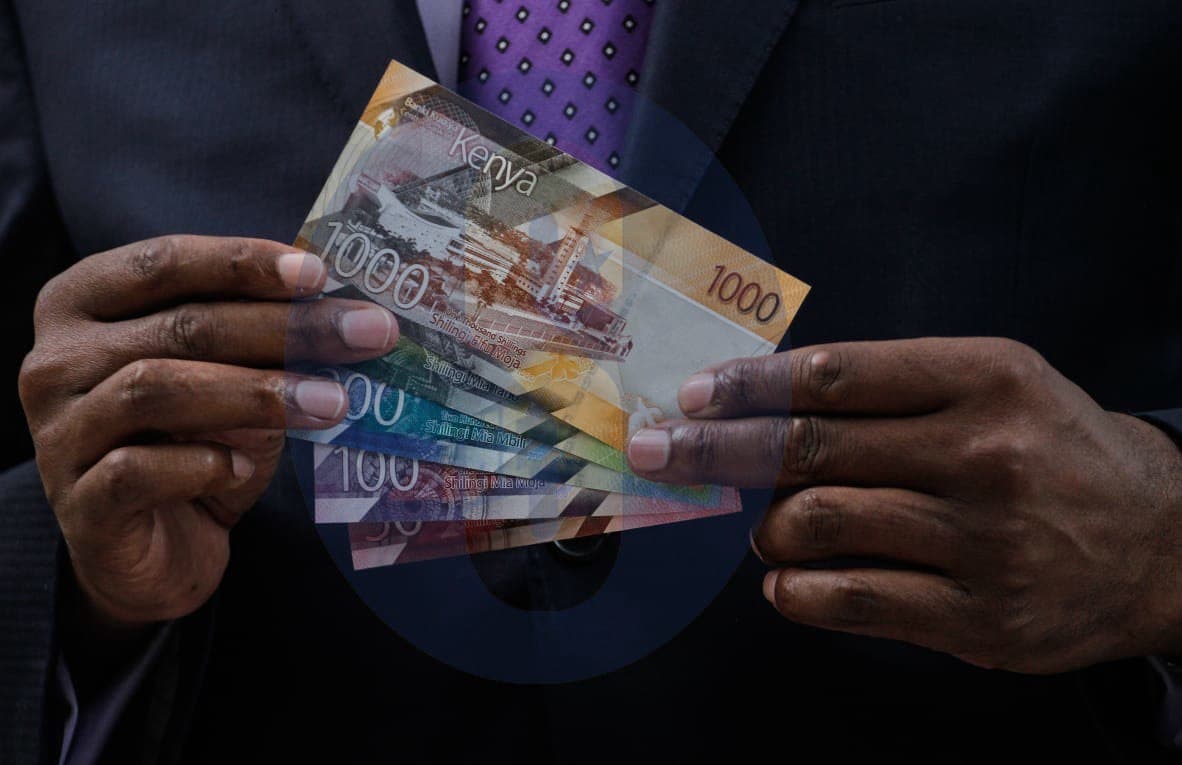
Tanir Credit & Accounting Services Limited (hereinafter referred to as Tanir) was founded in 2018 and is transitioning to a fully digital model. The company currently operates a hybrid model and ismoving loan applications online via its website, with a native mobile app planned within 2–3 years. Tanir serves Kenya’s domestic market end‑to‑end, with borrower concentrations in Nairobi and Mombasa, and uses M-Pesa for loan disbursement and repayment. The company provides short-term credit (short-tenor) across two lines: B2C micro‑loans for individuals and B2B loans to micro and small enterprises, including a dedicated factoring product.
Reg No: PVT-Y2U3BX7tanirltd.co.ke