Waste Management
100USDC
0.67 % von 15,000 USDCRisikobewertungBBB
Jahreszins21 %
Laufzeit9 Monate
Läuft ab
Vom Elektroschrott-Handel zur eigenen Sortierung
SIA Ramotti nimmt 575.000 € auf, um eine eigene Sortieranlage für Elektroschrott im Raum Riga auszustatten und genehmigen zu lassen und so die gesamte Sortiermarge selbst zu behalten, die es derzeit mit externen Verarbeitungspartnern teilt.
100USDC
0.67 % von 15,000 USDCRisikobewertung: BBB9 Monate21 %
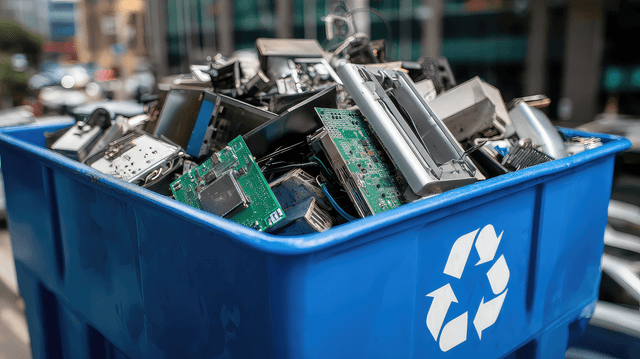
SIA Ramotti is a Latvian e-waste collection, brokerage and trading company incorporated on 30 January 2019 (reģ. nr. 42103088650). The company has operated in the Baltic electronic waste market since inception, initially testing several commercial models within the e-waste value chain before consolidating around the collector–broker–trader model that has defined its operations from 2023 onward. Over seven years of continuous activity, SIA Ramotti has built a sourcing network spanning Latvia, Lithuania and Estonia, established commercial relationships with downstream recycling processors and metallurgical facilities across the EU, and developed a practical understanding of every link in the e-waste value chain — from the composition and pricing dynamics of mixed electronic waste at the collection stage, through the economics of sorting and fraction preparation, to the specification requirements and pay-rate structures of industrial buyers at the refining end. The company is now executing a defined transition from pure brokerage to an integrated collector–sorter–trader model, with plans to launch its own licenced sorting facility in Q2 2026.
The company operates with a compact team of four permanent employees — the owner-manager (CEO), a business development manager, a dedicated sorting line engineer, and an administrative assistant — with plans to recruit 4–6 sorting operators upon facility commissioning. SIA Ramotti positions itself not as a general scrap dealer but as a specialist e-waste intermediary with fraction-level expertise: the commercial model is built on the ability to source metal-rich electronic waste at competitive procurement cost, accurately classify material by recoverable metal content, and place specification-grade output lots with the downstream buyer type — precious-metals recycler, industrial smelter, secondary alloy producer or specialist PCB processor — where each fraction commands the strongest commercial terms. This fraction-routing capability distinguishes the company from undifferentiated scrap collectors and provides the commercial foundation for the transition to in-house sorting.
Corporate identifiers: Reģistrācijas Nr. 42103088650. PVN Nr. LV42103088650. Registered address: Baltā iela 24 – 49, Rīga, LV-1055, Latvia. Legal form: Sabiedrība ar ierobežotu atbildību (SIA). Share capital: EUR 2,800. Website: ramotti.com.
Ownership, leadership and governance
SIA Ramotti operates as an owner-managed enterprise with centralised leadership and clear accountability for execution. Natālija Kuzmiča-Poliščuka serves as CEO and sole shareholder (100%), under whose direction the company has grown from a market-entry-stage operation testing business models in 2019 to a commercially active e-waste brokerage generating EUR 1.0m in annual revenue with a contracted buyer pipeline spanning five countries. Commercial and operational control is anchored in the CEO, who holds all principal supplier and buyer relationships and directs procurement, pricing and strategic decisions — a governance structure that provides decision-making speed in a transactional market where procurement timing and price negotiation require fast response, but creates key-person concentration that is characteristic of early-stage, owner-managed micro-enterprises.
Business model and revenue mechanics
SIA Ramotti’s business is single-line but dual-channel. The company earns revenue through the procurement of mixed electronic waste from Baltic-region sourcing partners and the sale of specification-grade output fractions to downstream industrial recycling and metallurgical processors. Under the current brokerage model, the physical sorting is outsourced to licenced third-party processing partners; SIA Ramotti controls the commercial chain from procurement to sale, capturing the intermediation spread between mixed-input cost and sorted-output value. From Q2 2026, the company is transitioning to in-house sorting — performing the physical transformation at its own licenced facility and retaining the full sorting spread that is currently shared with processing partners.
Revenue is transactional: each consignment is weighed, classified by fraction type and invoiced at the agreed price per tonne. There is no subscription or retainer component; repeatability is driven by established buyer relationships and the structural demand of downstream processors for consistent, specification-grade feedstock. Two output categories drive revenue: (1) high-value precious-metal-bearing fractions — PCBs, connector assemblies and component-dense boards containing recoverable gold, silver and palladium, sold to specialist precious-metals recyclers at the highest per-tonne prices in the output mix; and (2) base metal fractions — copper windings, aluminium chassis, steel casings and other ferrous and non-ferrous components, sold to base metal recyclers at LME-referenced prices. The margin formation logic is straightforward: mixed e-waste procured at approximately EUR 300–500 per tonne yields blended sorted output worth approximately EUR 1,200–1,800 per tonne; under the brokerage model, a material portion of this spread is transferred to the processing partner as a sorting fee (gross margin 14–18%), whereas in-house sorting enables SIA Ramotti to retain the full spread (target gross margin 30–35%).
Product portfolio and geographic footprint
SIA Ramotti’s output portfolio consists of sorted electronic waste fractions classified by material composition and metal-content profile, derived from the processing of discarded household appliances, consumer electronics and industrial equipment. The principal saleable fractions are: PCBs and connector-rich assemblies (EUR 1,000–6,000 per tonne depending on grade and precious metal density), copper-bearing fractions from motors, windings and cables (EUR 4,500–5,500 per tonne for clean stripped copper), aluminium fractions from chassis and heat sinks (EUR 900–1,200 per tonne), and steel and ferrous fractions (EUR 150–250 per tonne). Sourcing covers the Baltic countries — Latvia, Lithuania and Estonia. Output is sold to industrial recycling and metallurgical processors across the EU, with the destination markets determined by the location of the relevant buyer: precious-metals recyclers in Lithuania and Finland, an industrial smelter in Sweden, secondary alloy producers in Latvia, and specialist PCB processors in the Netherlands.
Key clients, target audience and go-to-market
SIA Ramotti sells B2B into the industrial secondary raw materials market. Go-to-market is direct and relationship-driven: the company sources material through its Baltic supplier network and places sorted output with downstream buyers through established commercial relationships, with pricing determined by lot composition, fraction purity and prevailing market benchmarks. The 2026 buyer pipeline comprises 3 executed contracts and 5 formalised letters of intent (EUR 1,110,000–1,310,000 total annualised off-take potential) spanning 5 countries and 5 buyer types: precious-metals recovery (NOVITERA UAB, Kat-Metal Oy), regional secondary materials trading (Metruna UAB, Baltic Recycling UAB), industrial smelter-grade processing (Boliden Group / Rönnskär), secondary aluminium alloy production (ALL Recycling SIA), and specialist PCB recycling (Holland Recycling B.V.). The contracted base alone (EUR 730,000–810,000 from NOVITERA, Metruna and Boliden) provides a structural demand floor for the sorting facility’s output.
Procurement, suppliers and execution partners
The company’s execution model is “source, arrange, place” under the current brokerage structure, transitioning to “source, sort, place” upon facility commissioning. On the procurement side, mixed electronic waste is sourced from a network of Baltic-region supply partners — companies possessing equipment recycling and disposal capabilities, consolidators of end-of-life electronics, and institutional disposal programmes — developed since 2019. The aggregate supply capacity of the partner base is reported as sufficient to sustain the planned sorting facility’s throughput requirements (300–400 tonnes per annum at capacity) without requiring simultaneous expansion of procurement activity. On the processing side, sorting is currently outsourced to licenced third-party partners; upon facility launch, the core value-creation step moves in-house, with the company performing manual disassembly and mechanical separation at its own premises. Outbound transport is outsourced to external logistics service providers.
Organisational structure and operational readiness
SIA Ramotti currently operates with a four-person team: the CEO (commercial relationships, procurement, strategy), a business development manager (supplier and buyer development), a dedicated engineer (sorting line design, equipment specification, facility commissioning), and an administrative assistant. The planned investment programme expands the team to 8–10 persons through the recruitment of 4–6 trained sorting operators, and introduces the formalised operational processes, delegation structures and environmental compliance procedures required for a licenced sorting facility. The engineer — already on staff and responsible for the sorting line design — will serve as the facility’s operational manager during the initial phase.
Summary
SIA Ramotti is a seven-year-old Latvian e-waste brokerage operation that has built a commercially functional position in the Baltic secondary metals value chain: an established multi-country sourcing network, relationships with downstream recycling processors and industrial-scale metallurgical facilities across the EU, and a demonstrated capacity to generate EUR 1.0m in annual revenue with improving margins (8.1% to 17.8% over 2023–2025) and uninterrupted operating profitability — all achieved within a capital-light, owner-managed structure with zero financial debt. The company’s core strengths are its seven years of material-level expertise, the established Baltic sourcing base that can sustain the planned sorting facility without parallel procurement expansion, and a diversified buyer pipeline of EUR 1.1–1.3m across 8 counterparties in 5 countries that provides the demand-side foundation for the transition. The material constraints are equally clear: a thin equity base (EUR 142,345), key-person concentration in the sole shareholder-CEO, no demonstrated sorting facility operating history (the projected 30–35% gross margins are industry-benchmarked rather than facility-proven), and a limited three-year financial track record. The investment case rests on the company’s ability to convert seven years of brokerage experience and a documented buyer pipeline into operational performance at its own licenced sorting facility — a transition that is operationally grounded and commercially coherent, but that represents the company’s first step into facility-based industrial operations.
Loan Collateral
The EUR 575,000 facility is supported by a consolidated collateral package combining the company’s existing fixed asset base (machinery, equipment and other fixed assets as reported on the 2025 balance sheet, totalling EUR 219,520) with newly acquired loan-financed sorting, separation and quality control equipment (EUR 530,000 of the EUR 575,000 facility). Collateral is presented at base value (balance sheet carrying amount for existing assets; purchase/invoice cost for new equipment) and at a conservative liquidation value reflecting defined haircuts (55–75% recovery depending on asset category and secondary-market characteristics) to approximate an orderly forced-sale recovery basis. Working capital (EUR 30,000, representing 5.2% of the facility) and licensing costs (EUR 15,000, representing 2.6%) are excluded from the pledgeable base, as these funds are consumed into operational costs with no separable tangible residual.
Collateral source | Base value (EUR) | Liquidation value (EUR) | Coverage vs EUR 575,000 (liquidation) |
Loan-financed equipment (major sorting at 70%; QC/analytical at 75%; remaining infrastructure at 55%) | 530,000 | 349,915 | 60.9% |
Existing operational assets (machinery and equipment at 70%; other fixed assets at 60%) | 219,520 | 149,712 | 26.0% |
TOTAL (hard collateral) | 749,520 | 499,627 | 86.9% |
Coverage metrics
Metric | Base value | Liquidation value | |
Total collateral | EUR 749,520 | EUR 499,627 | |
Coverage vs EUR 575,000 principal | 130.4% | 86.9% | |
Coverage vs EUR 665,563 total repayment | 112.6% | 75.1% |
On a conservative liquidation basis, the hard collateral package provides approximately 86.9% coverage of the EUR 575,000 principal and 75.1% coverage of total repayment including interest, with the gap attributable to the non-pledgeable working capital and licensing components (EUR 45,000) and conservative haircuts on heterogeneous small-infrastructure items (55% on the remaining sorting infrastructure category). On a base-value basis, coverage exceeds 130% of principal and 112% of total repayment. The package is primarily secured by identifiable industrial equipment — shredders, eddy current separators, cable granulators, XRF analysers, weighbridges and material handling machinery — from established manufacturers with active European secondary markets, which is consistent with the purpose of the loan and straightforward to evidence and monitor. The company’s existing machinery and equipment (EUR 180,000 carrying value, EUR 126,000 liquidation value) adds a pre-existing asset layer that is independent of the loan’s execution. As the sorting facility is commissioned and production begins, the collateral base is supplemented by the revenue-generating capacity of the installed equipment and by the contracted buyer pipeline (EUR 1,110,000–1,310,000 across 8 counterparties) — a progression that transitions downside protection from asset liquidation value to operating cash-flow coverage over the loan tenor.
SIA Ramotti wurde gegründet30. Jan. 2019
Beginn der aktiven Arbeit/Produktion1. Juni 2019
Minimales Ziel7,500 USDC
Investoren1
Zinszahlungenmonatlich
Kapitalrückzahlungenendfällig
Gesamtzahlungen9 Monate
Risikobewertung
GesamtrisikobewertungBBB
Schulden zu Eigenkapital4.00
LTV115%
Kredithistorie8 / 10
Art der SicherheitCompany Assets
Das Rating BBB (die vierte Stufe) spiegelt sieben Jahre ununterbrochene Tätigkeit auf dem baltischen Elektroschrottmarkt, durchgehende operative Profitabilität und keine Finanzverbindlichkeiten vor dieser Fazilität wider – dem stehen eine dünne Eigenkapitalbasis und der erste Schritt des Unternehmens in die anlagengestützte Sortierung gegenüber.
- D/E (Verschuldungsgrad) von 4 ist hoch und spiegelt eine Eigenkapitalbasis von 142.345 € gegenüber der Fazilität von 575.000 € wider;
- LTV von 115 % bedeutet, dass die Sachsicherheiten zum Liquidationswert 86,9 % des Kreditbetrags decken (130,4 % zum Basiswert);
- Bonitätshistorie: 8/10.
Zu beachten:
- das Unternehmen hat keine Betriebshistorie mit einer eigenen Sortieranlage, und die Zielmargen von 30–35 % sind Branchenbenchmarks;
- der Start hängt von der Umweltgenehmigung der Kategorie B und der Inbetriebnahme in Q2 2026 ab;
- fünf der acht Abnehmervereinbarungen sind Absichtserklärungen, und alle Käufe stehen unter Qualitätsvorbehalt;
- die Output-Preise folgen Kupfer und Edelmetallen, und alle wichtigen Beziehungen liegen bei der alleinigen Gesellschafterin und CEO.
Finanzen
Umsatz 20251,0 Mio. €
Bruttomarge 202517,8 %
Nettogewinn 202593.949 €
Abnehmerpipeline1,11 €–1,31 Mio.
€ Tausend
€656 Tsd.656
€519 Tsd.519
€1002 Tsd.1002
€2148 Tsd.*2148*
€3420 Tsd.*3420*
2023202420252026F2027F
* 2026–2027 sind Prognosen des Managements und umfassen die neue eigene Sortierlinie
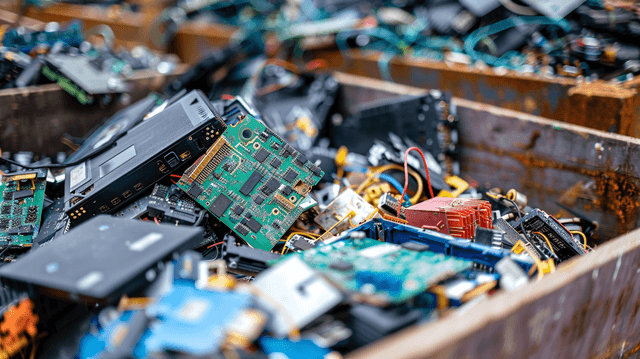
Ramotti betreibt seit 2023 ein profitables Vermittlungsgeschäft und ergänzt es ab Q2 2026 um eine eigene Sortierlinie. Die Prognose stützt sich auf eine Abnehmerpipeline von 1,11 €–1,31 Mio. bei 8 Vertragspartnern, davon 3 mit abgeschlossenen Verträgen.
Wachsender Umsatz
- Der Umsatz stieg von 656.329 € im Jahr 2023 auf 1.001.592 € im Jahr 2025, nach einem Rückgang 2024, bei dem Menge gegen höherwertiges Material getauscht wurde.
- Mit der eigenen Sortierung wird ein Umsatz von 2.148.000 € für 2026 und 3.420.000 € für 2027 prognostiziert.
- Der Vermittlungskanal läuft parallel weiter, 2026 mit rund 948.000 €.
Steigende Margen
- Die Bruttomarge stieg von 8,1 % im Jahr 2023 auf 13,7 % im Jahr 2024 und 17,8 % im Jahr 2025.
- Mit eigener Sortierung bleibt die Gebühr, die derzeit an Verarbeitungspartner gezahlt wird, im Unternehmen – die prognostizierte Marge steigt auf 28,0 % im Jahr 2026 und 32,0 % im Jahr 2027.
- Der Nettogewinn erreichte 2025 93.949 €, eine Marge von 9,4 %.
Schlanke Kostenbasis
- Die Betriebsaufwendungen lagen 2023–2025 bei 1,6–5,1 % des Umsatzes.
- Der Nettogewinn 2024 und 2025 wurde durch 43.435 € bzw. 33.462 € für Sortierausrüstung gemindert, die als Aufwand erfasst statt aktiviert wurden.
Markt
Der europäische Markt für Elektroschrottmanagement hat ein Volumen von rund 27,9 Mrd. € und wächst um 5,0 % pro Jahr, während die Edelmetallrückgewinnung aus Elektronik weltweit ein Markt von 6,2 Mrd. € ist. Lettland ist einer von drei EU-Staaten, die das WEEE-Sammelziel von 65 % erreichen, und das EU-Recyclingziel für kritische Rohstoffe bis 2030 erhöht die Nachfrage nach regelkonformen Sammlern. Die Hauptrisiken sind volatile Kupfer- und Palladiumpreise sowie einige wenige große Raffinerien, die die Konditionen bestimmen.
Aufschlüsselung der Sicherheiten
Kreditfinanzierte Sortier- und Trennausrüstung · €445K€219.5K
Kreditfinanzierte Sortier- und Trennausrüstung€445,000
Bestehende Maschinen, Ausrüstung und sonstiges Anlagevermögen€219,520
Kreditfinanzierte Wiege-, Analyse- und Lagerausrüstung€85,000
Verpfändet insgesamt€749,520Kaufpreis der neuen Ausrüstung zuzüglich Bilanzwert 2025 der bestehenden Vermögenswerte.
Die Fazilität über 575.000 € ist durch die damit gekaufte Ausrüstung und das bestehende Anlagevermögen des Unternehmens besichert.
1. Neue, mit dem Kredit gekaufte Sortierausrüstung – 530.000 €
Rund 92 % der Fazilität fließen in identifizierbare Industrieausrüstung:
- Schredder, Wirbelstromabscheider, Kabelgranulatoren und Fördertechnik – 445.000 €;
- RFA-Analysatoren, Fahrzeugwaagen, Waagen und Lagertechnik – 85.000 €;
- von etablierten Herstellern mit aktiven europäischen Sekundärmärkten.
2. Bestehendes Anlagevermögen – 219.520 €
- Maschinen und Ausrüstung laut Bilanz 2025 mit einem Buchwert von 180.000 €.
- Sonstiges Anlagevermögen des Unternehmens.
- Diese Ebene hängt nicht vom Bau der neuen Anlage ab.
Zum Liquidationswert, mit Verwertungsquoten von 55–75 %, decken die Sicherheiten schätzungsweise:
- 86,9 % des Kreditbetrags von 575.000 € (130,4 % zum Basiswert);
- 75,1 % der Gesamtrückzahlung von 665.563 €.
Die Lücke entsteht durch 45.000 € an Betriebskapital und Genehmigungskosten, die keinen verpfändbaren Vermögenswert hinterlassen. Sobald die Anlage läuft, verlagert sich der Schutz vom Wert der Vermögenswerte auf den Cashflow der installierten Ausrüstung.
So wird der Kredit ausgezahlt
Deine Investition von USDC funktioniert wie eine Anleihe mit 9 Monaten Laufzeit: monatliche Zinszahlungen, das Kapital kommt in Monat zurück.
| Datum | Zinsen | Kapital | Gesamt |
|---|
Nettogewinn+ USDC
Gesamtrückzahlung USDC
Kreditnehmer
SIA RamottiRiga, Lettland · gegründet 2019
SIA Ramotti ist ein lettisches Unternehmen für Sammlung, Vermittlung und Handel von Elektroschrott, gegründet am 30. Januar 2019 (reģ. nr. 42103088650). Das Unternehmen ist seit seiner Gründung auf dem baltischen Markt für Elektroschrott tätig; zunächst erprobte es mehrere Geschäftsmodelle innerhalb der Elektroschrott-Wertschöpfungskette, bevor es sich auf das Modell Sammler–Makler–Händler konzentrierte, das seine Tätigkeit seit 2023 prägt. In sieben Jahren ununterbrochener Tätigkeit hat SIA Ramotti ein Beschaffungsnetz in Lettland, Litauen und Estland aufgebaut, Geschäftsbeziehungen zu nachgelagerten Recyclingbetrieben und metallurgischen Anlagen in der gesamten EU geknüpft und ein praxisnahes Verständnis jedes Glieds der Elektroschrott-Wertschöpfungskette entwickelt – von der Zusammensetzung und Preisdynamik gemischten Elektroschrotts in der Sammelphase über die Wirtschaftlichkeit von Sortierung und Fraktionsaufbereitung bis hin zu den Spezifikationsanforderungen und Vergütungsstrukturen industrieller Abnehmer auf der Raffinationsstufe.
Reg Nr: 42103088650www.ramotti.com