VALIYAN
600USDC
2 % von 30,000 USDCRisikobewertungAA
Jahreszins17.90 %
Laufzeit10 Monate
Läuft ab
Mehr als 25 Jahre profitabler Geschäftstätigkeit
VALIYAN Ltd. ist ein bulgarischer Hersteller von Premiummöbeln und schlüsselfertiger FF&E-Auftragnehmer für Hotelbetreiber. Das Unternehmen nimmt 2,3 Mio. € auf, um sein 10.000 m² großes Werk in Sofia auf Industrie 4,0 umzustellen und vier Premium-Veredelungstechnologien ins eigene Haus zu holen.
600USDC
2 % von 30,000 USDCRisikobewertung: AA10 Monate17.90 %
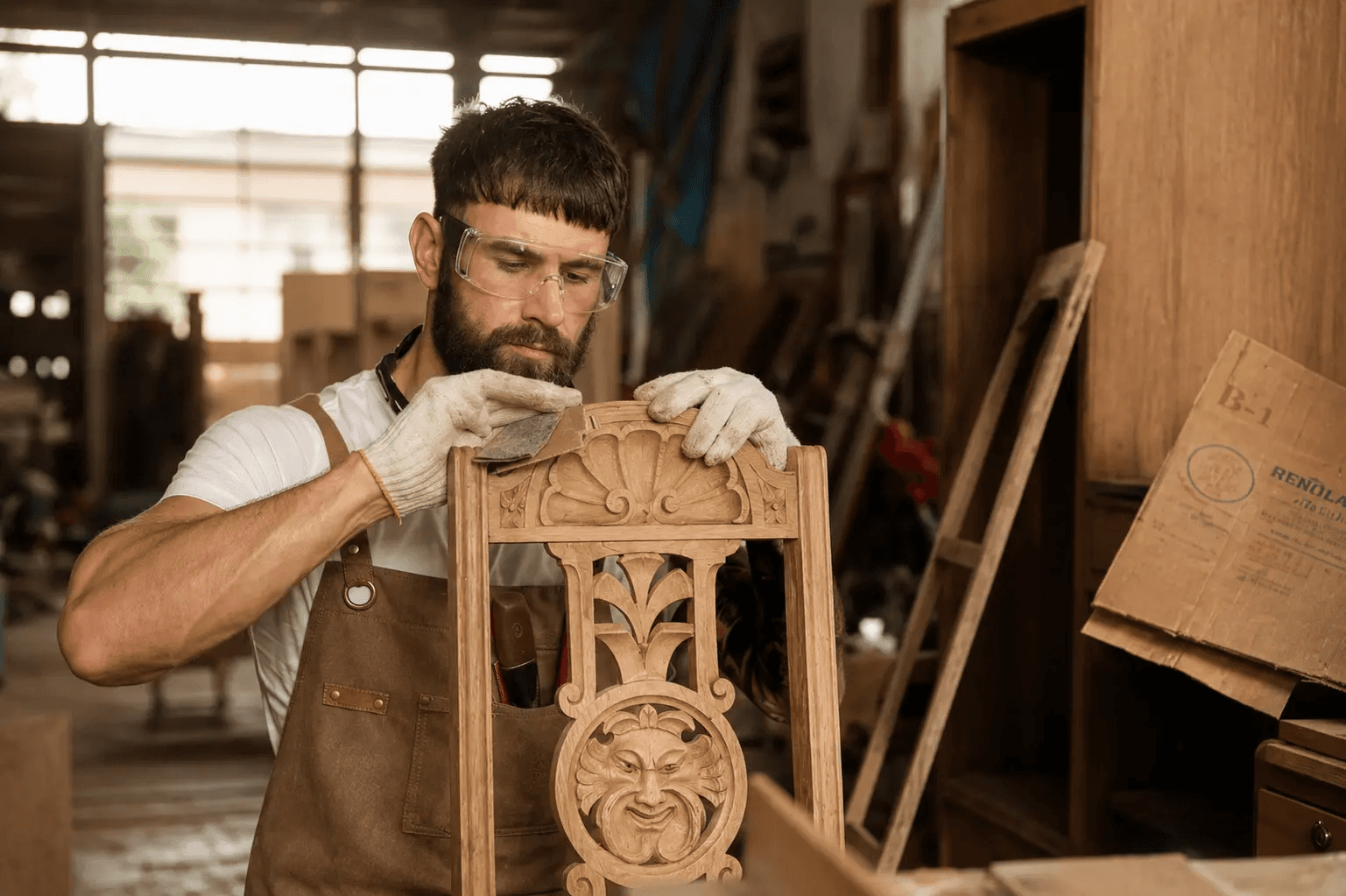
VALIYAN LTD is a Bulgarian manufacturer of premium-segment furniture and a turnkey FF&E (furniture, fixtures and equipment) contractor for international hotel operators, wellness resort chains, corporate and retail clients and owners of premium residential property. Founded in Sofia in November 1999 by two partners who began in a small rented workshop, the company has grown over more than a quarter of a century into an international supplier executing the full production cycle — concept development and technical documentation, cutting, facade production, finishing lacquer, upholstery and assembly, international logistics and installation on site — at its own 10,000 m² production complex in Sofia. It has completed several hundred projects across its home market and thirteen European export markets, runs at least five multi-site rollout programmes each year and reports a consistently high share of repeat clients. The proposed financing funds the next stage of a development sequence the company has completed repeatedly through successive investment cycles: the transition of the plant to an Industry 4.0 architecture, together with premium-segment finishing technologies.
The workforce exceeds 120, the majority of it in production. The commercial proposition is accountability: the client contracts one counterparty for an engineered, manufactured, delivered and installed interior package, and the company answers for the whole of it against the specification — where otherwise the client would coordinate joinery, upholstery, lighting, textiles, metalwork, stone and installation as separate contracts and carry the interfaces between them. The company holds ISO 9001, ISO 14001, ISO 45001, FSC and EMAS certification — the supplier-qualification threshold of international hotel operators — and has received institutional recognition as one of the greenest industrial companies in the country for the energy-saving and waste-processing systems of its plant.
Corporate identifiers: VALIYAN LTD (ВАЛИЯН ООД), a Bulgarian limited liability company; EIK 130122979; VAT BG130122979; registered 02.11.1999; registered office 7 Obelsko Shose Street, Lyulin district, Sofia 1360, Bulgaria; share capital EUR 2,556, fully paid, held equally by the two founders. The profile draws on the company’s statutory accounts, the January–August 2026 management report, the business plan and the corporate documentation reviewed for the investment memorandum.
Ownership, Leadership and Governance
The company is owned and managed by its founders, Valentin Nikolaev Georgiev and Yankul Georgiev Yankov, each holding 50% of the capital and a director’s mandate with the right of sole representation — the same two-director model that has run the company since 1999 without documented disruption. Responsibilities divide by domain: one director leads design and the client-facing side of the business, the other production, with commercial and financial matters shared. Day-to-day operational management and the company’s public representation have passed to a second-generation team of commercial and technical leaders, while the founders retain ownership control and strategic direction — a transition the company reports as completed without disruption. The concentration of strategy and principal client relationships in the two owner-managers gives the company speed of decision at the cost of key-person dependency, a trade-off structural to a family-owned manufacturer at this scale and mitigated by the functional heads and middle-management layer beneath the directors.
Business Model and Revenue Mechanics
VALIYAN manufactures to order — nothing is made for stock — and sells one vertically integrated production core through five reinforcing commercial formats:
- Turnkey FF&E project contracts — the principal revenue stream: complete interior packages engineered, produced, delivered and installed under one contract for hotel, wellness, corporate and specialised properties, including multi-site rollout programmes in which one approved specification is replicated across a series of properties.
- Bespoke residential interiors — complete furnishing of luxury residences, channelled through leading architectural practices and the company’s Sofia showroom, at margins above the company average.
- Own-brand catalogue collections — a standardised line of upholstered furniture made to order in configurable fabric, leather and finish options, with a short order cycle and no repeated engineering.
- Designer collaborations — joint lines with invited international designers and architects, including award-recognised pieces shown at leading industry exhibitions; the format earns reputation and the designer network that channels project orders.
- OEM production — custom furniture ordered by international design studios under their own name for their end clients, a growing format whose economics rest on repeat orders without new client acquisition.
Pricing follows project economics rather than a price list: each proposal builds up the full cost of the package — materials, own production, subcontracted works, logistics and installation — and adds margin at three points: on in-house manufacturing, on the coordination of subcontracted components, and on the management of the project as a whole. The payment structure de-risks the cycle: an advance of at least 30% at signature, interim tranches tied to production and installation milestones, and final settlement on acceptance. Material prices are fixed with suppliers at quotation, so margin is not exposed to price movements between proposal and production, and every contract, domestic and export, is denominated and settled in euro. Repeat revenue is built on relationships: hotel operators return on the 7–10-year renewal cycle of their room stock, one delivered brand standard converts into rollout series, corporate clients return on expansion and refurbishment, and in residential work the architectural practice — not the end client — is the recurring counterparty.
Product Portfolio and Geographic Footprint
The portfolio is organised in four product groups, combined into one turnkey package in hospitality, wellness, corporate and retail projects and in the configuration each property requires in residential work:
- Casegoods and built-in furniture — the production core: wardrobes, cabinets, tables, reception desks, minibar units and headboards, kitchens, bathroom modules, wall panelling, door systems and built-in integrations, manufactured across a palette from FSC-certified solid wood and veneer to solid-surface composites, brass, stainless steel, glass, stone and marble.
- Upholstered furniture — project orders to individual specification and the own-brand catalogue line of sofas and armchairs, produced on the complex’s own upholstery line.
- FF&E components and integration — lighting, curtains and textiles, mirrors, decorative elements and special finishes, performed partly in-house and partly through specialised subcontractors within the one client contract — the layer that turns a furniture delivery into a complete interior.
- Designer furniture and collaborations — an award-recognised line created with international design studios; the company has debuted at the leading world furniture exhibition as part of the national stand.
Bulgaria is the home and largest market, where the company is present across all four client segments. Completed projects span thirteen export markets — Austria, Germany, Switzerland, France, the United Kingdom, Italy, the Netherlands, Denmark, Belgium, Hungary, Romania, Croatia and Norway — with the DACH region the largest export cluster. Deliveries run by road within the single market without customs procedures; orders outside the EU arrive through the OEM design-studio channel. Spain, Portugal, Greece, Poland, the Czech Republic, Slovenia and Scandinavia are identified for expansion, to be entered through the operator and studio relationships established on current markets.
Key Clients, Target Audience and Go-to-Market
The company sells B2B into the project supply chains of five buyer groups: international hotel operators, contracting both room-stock renewal programmes and new openings and rollouts; wellness and spa resort chains, served with series of properties to a common specification; owners of premium residential property, engaging through leading architectural practices; corporate and retail clients, commissioning headquarters, offices, premium retail spaces and specialised educational facilities; and international design studios in the OEM format. The buyer structure shapes the selling: in hospitality the brand’s design or technical department specifies while the developer, owner or management company pays, and one delivered brand standard qualifies the company across that brand’s other properties and developers; in corporate and residential work the architectural practice is the gatekeeper, and one practice tends to bring a sequence of projects for different end clients. In this summary clients and counterparties are described by role rather than named, each being identified in the investment memorandum. The documented growth pipeline stands at EUR 16,100,000 across ten engagements with nine distinct counterparties — EUR 2,870,000 in execution, EUR 6,790,000 in documentation with commercial terms agreed and EUR 6,440,000 under letters of intent, ~47.9% of it with repeat clients — and is set out in the Growth Plan section of this summary.
Production Platform and Organisational Structure
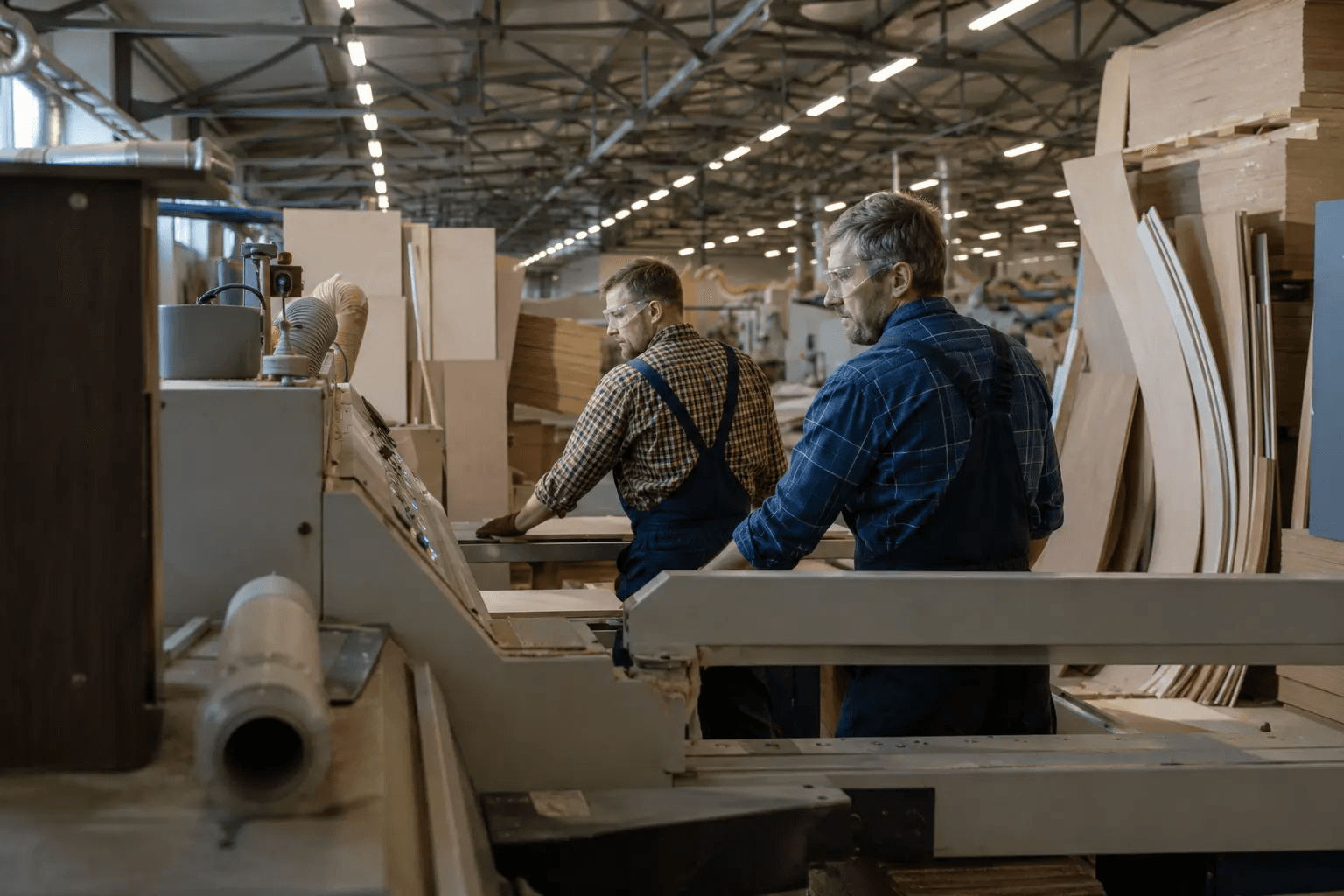
The execution model keeps the critical value chain in-house: engineering and brand-standards knowledge, CNC machining across fifteen centres, facade production, finishing lacquer on a line recovering up to 97% of process heat, the upholstery cycle, project management and the company’s own installation crews. Auxiliary and narrow-specialism works — lighting, textiles, stone and metal specialities, international transport, customs brokerage — are contracted from an established pool of profile partners integrated into the company’s project structure. The plant runs on photovoltaic generation with battery storage, geothermal cooling, rainwater recovery and central extraction, with an ERP system over the production flow. The proposed investment programme addresses the platform’s binding constraints directly: automated material flow, a second finishing line and real-time production management multiply the number of programmes the plant can run in parallel, and four premium-finish technologies bring subcontracted, higher-value specification positions in-house.
Summary
VALIYAN is a mature, full-cycle industrial operator: more than twenty-five years of continuous operating history, an owned and certified 10,000 m² production complex, several hundred completed projects across its home market and thirteen export markets, a delivery record under the brand standards of international hotel operators, and a business model that stacks manufacturing, coordination and integration margin inside one contract. Its constraints are those structural to a family-owned manufacturer at this scale, and each carries a mitigant: strategy and key client relationships concentrate in the two founder-owners, balanced by the functional split between them, the management layers below and the completed generational transition; all production depends on the single, insured Sofia site; the order book is rebuilt through relationship cycles rather than framework agreements, spread across four client segments and five commercial formats; and hospitality, the largest segment, moves with the hotel investment cycle, softened but not offset by the corporate, residential and OEM flows. The company enters the proposed financing with a history of profitable operations and serviced credit facilities, and with a facility directed at the next stage of an investment sequence it has completed repeatedly in the past.
Loan Collateral
To secure the proposed EUR 2,300,000 facility, VALIYAN offers a consolidated collateral package built on two hard-asset layers: the equipment acquired through the loan-financed investment programme, offered as first-priority pledged collateral, and the company’s existing operational asset base — the land, buildings, machinery and technical installations of the Sofia production complex. Collateral is presented at base value (invoice purchase cost for the new equipment, current replacement value for the existing assets) and at a conservative liquidation value on an orderly forced-sale basis, with defined recoveries of 40–75% by asset category. Of the facility, EUR 1,900,400 (82.6%) is deployed into tangible, serial-numbered equipment that forms the pledgeable loan-financed base; the remaining EUR 399,600 (17.4%), covering software, integration, delivery and commissioning, is consumed into licences and services, produces no separable recoverable asset and is excluded from the collateral base. No encumbrances over the existing asset base have been reported by the company; the ranking and registration of the security will be established in the facility documentation.
Hard collateral summary (EUR)
Collateral source | Base value | Liquidation value | Coverage of principal (liquidation) |
Loan-financed equipment (first-priority pledge) | 1,900,400 | 1,420,675 | 61.8% |
Existing operational assets (land, buildings, machinery, installations) | 28,399,520 | 17,951,526 | 7.8× |
TOTAL (hard collateral) | 30,299,920 | 19,372,201 | 8.4× |
The scale of the existing base is the defining feature of the package. The Sofia complex enters the collateral at a current replacement value of EUR 28,399,520: a serviced industrial land plot of approximately 18,000 m² (EUR 2,500,000, 75% recovery), the purpose-built, insured 10,000 m² production facility with its administrative part (EUR 6,630,000, 70%), eleven groups of production machinery totalling EUR 12,425,730 (70%) — woodworking machinery of leading European manufacturers with an established pan-European secondary market, led by the CNC machining and nesting park of EUR 4,445,000 — and the plant’s technical installations of EUR 6,843,790, carried at a conservative 40% because their realisable value is principally as part of the property complex. The loan-financed layer adds the nine equipment sections of the Growth Plan: serial-numbered, invoice-backed, insurable production assets that remain at the company’s premises throughout the loan term, carried at a 75% recovery against established secondary markets for woodworking, finishing and robotic machinery, with the MES shop-floor hardware at the standard 50% IT-hardware discount.
Coverage of principal and of the total repayment obligation
Coverage metric | At base value | At liquidation value |
Hard collateral vs EUR 2,300,000 principal | 13.2× | 8.4× |
Hard collateral vs EUR 2,711,125 total repayment (principal + interest) | 11.2× | 7.1× |
On a conservative liquidation basis the package provides multiple coverage of the facility from hard assets alone: the pledged new equipment covers 61.8% of principal by itself, the existing operational base covers principal 7.8 times on its own, and the combined hard collateral covers principal 8.4× and the full repayment obligation, principal and interest, 7.1× — no supplementary layers of inventory or receivables are required to reach full coverage. The package is secured by production-critical assets, consistent with the purpose of the loan and straightforward to evidence, insure and monitor, and it strengthens as the programme is executed: each drawdown converts directly into a pledged asset installed at the complex and insured in favour of the lender. The primary repayment source remains the company’s operating cash flow, with the collateral providing downside protection at a multiple of the exposure.
VALIYAN LTD wurde gegründet2. Nov. 1999
Beginn der aktiven Arbeit/Produktion1. Jan. 2000
Minimales Ziel15,000 USDC
Investoren2
Zinszahlungenmonatlich
Kapitalrückzahlungenendfällig
Gesamtzahlungen10 Monate
Risikobewertung
GesamtrisikobewertungAA
Schulden zu Eigenkapital0.32
LTV12%
Kredithistorie9 / 10
Art der SicherheitExisting operational assets
Das Rating AA (die zweite Stufe) beruht auf mehr als 25 Jahren ununterbrochener, profitabler Geschäftstätigkeit, einem eigenen zertifizierten Produktionskomplex und Sicherheiten, die die Finanzierung um ein Vielfaches abdecken. Jede ausgewiesene Periode seit 2023 schloss mit einem Nettogewinn ab, und bestehende Bankkredite wurden ohne Unterbrechung bedient.
- D/E (Verschuldungsgrad) von 0,32 ist für einen Industriehersteller niedrig;
- LTV von 12 % bedeutet, dass die harten Sicherheiten zum Liquidationswert die Finanzierung über 2,3 Mio. € etwa 8,4-fach abdecken;
- Bonitätshistorie: 9/10.
Zu beachten:
- Strategie und wichtige Kundenbeziehungen sind bei den beiden Gründern und Eigentümern konzentriert;
- die gesamte Produktion befindet sich an einem einzigen versicherten Standort in Sofia;
- die Hotellerie (das größte Segment) folgt dem Hotelinvestitionszyklus;
- etwa 58 % der Pipeline entfallen auf zwei serielle Rahmenprogramme.
Finanzen
Produktionsleistung 20255,00 Mio. €
Nettogewinn 2026 YTD1,27 Mio. €
Bruttomarge36,9 %
Pipeline16,1 Mio. €
€ Millionen
€3.89 Mio.3.89
€5.01 Mio.5.01
€5.00 Mio.5.00
€6.12 Mio.*6.12*
€6.59 Mio.*6.59*
2023202420252026F2027F
* 2026–2027 sind Prognosen des Managements; der Nettogewinn 2026 enthält Projekte, die 2025 gefertigt und 2026 geliefert wurden
VALIYAN verfügt derzeit über eine Pipeline von 16,1 Mio. € aus 10 Hotelprojekten. Das Management prognostiziert jedoch konservativ und geht nicht davon aus, dass die gesamte Pipeline zu Umsatz wird. Die folgenden Wachstumsprognosen beruhen daher hauptsächlich auf der verfügbaren Produktionskapazität des Unternehmens.
Wachsende Produktion
- Die Produktionsleistung stieg von 3,89 Mio. € im Jahr 2023 auf 5,01 Mio. € im Jahr 2024 — ein Plus von 28,9 %.
- 2025 blieb die Produktionsleistung bei rund 5,0 Mio. €, da mehrere Großprojekte noch in Produktion waren und 2026 fertiggestellt und geliefert wurden.
- Mit der Inbetriebnahme der neuen Produktionskapazität soll die Produktionsleistung 2026 6,12 Mio. € und 2027 6,59 Mio. € erreichen.
Hohe Rentabilität
- Das Unternehmen erzielte von 2023 bis 2025 jedes Jahr einen Nettogewinn zwischen 643 Tsd. € und 841 Tsd. €.
- Allein im Januar–August 2026 erreichte der Nettogewinn 1,27 Mio. €, unterstützt durch die Lieferung von aus 2025 übertragenen Projekten.
- Die Bruttomarge liegt über 2025–2026 bei rund 37 %.
- Die Prognose für 2027 unterstellt eine etwas niedrigere Marge von 35,5 %, die als normales Niveau für das Geschäft gilt.
Bessere Kosteneffizienz
- Die jährlichen Gemeinkosten blieben mit 336 Tsd. €–414 Tsd. € relativ stabil, obwohl die Produktion stieg.
- Dadurch sank der Betriebsaufwand von 10,6 % der Produktionsleistung auf unter 7 %.
Markt
Europäische Objektmöbel sind ein Markt von 47,3 Mrd. €, der um ~4,6 % pro Jahr wächst, mit der Hotellerie als größtem Endverwendungsbereich. Die Hoteleröffnungen in Europa steigen von 259 im Jahr 2025 auf prognostizierte 319 im Jahr 2026, jede mit einem kompletten FF&E-Paket und festem Termin, und eine Lücke von 3 Millionen Betten bei Studentenwohnheimen sorgt für zusätzliche Nachfrage nach seriellen Rahmenverträgen. Das Hauptrisiko ist der Zyklus: FF&E-Ausgaben werden als Erstes aufgeschoben, wenn sich die Hotelfinanzierung verknappt.
Aufschlüsselung der Sicherheiten
Produktionsmaschinen (11 Gruppen, CNC-Park) · €12.4M€6.8M€6.6M
Produktionsmaschinen (11 Gruppen, CNC-Park)€12,425,730
Technische Anlagen des Werks€6,843,790
Produktionsgebäude, 10.000 m²€6,630,000
Industriegrundstück, 18.000 m²€2,500,000
Kreditfinanzierte Ausrüstung (erstrangiges Pfand)€1,900,400
Verpfändet insgesamt€30,299,920Wiederbeschaffungswert des Komplexes in Sofia zuzüglich Anschaffungswert der neuen Ausrüstung. Eingetragen über Maclear AG.
Die Finanzierung über 2,3 Mio. € ist durch umfangreiche Sachwerte im Eigentum von VALIYAN besichert.
1. Mit dem Darlehen gekaufte neue Maschinen — 1,9 Mio. €
Der größte Teil des Darlehens, 1,9 Mio. €, wird für den Kauf neuer Produktionsausrüstung verwendet.
- Die Maschinen werden anhand von Seriennummern und Rechnungen eindeutig identifiziert.
- Sie werden versichert und verbleiben am Produktionsstandort von VALIYAN in Sofia.
- Der Kreditgeber erhält an diesen Maschinen ein erstrangiges Sicherungsrecht.
Die mit dem Darlehen gekauften neuen Maschinen werden also als Sicherheit verpfändet.
2. Bestehendes Werk und bestehende Ausrüstung
VALIYAN verpfändet außerdem seinen bestehenden Industriekomplex in Sofia, zu dem gehören:
- 18.000 m² Industriegrundstück
- Produktionsgebäude mit 10.000 m²
- Bestehende Produktionsmaschinen, einschließlich der CNC-Ausrüstung
- Weitere technische Anlagen
Der Kreditgeber verlässt sich also nicht nur auf die neuen Maschinen. Auch das bestehende Werk und die Ausrüstung des Unternehmens dienen als Sicherheit.
Selbst nach Anwendung dieser konservativen Werte decken die Sicherheiten schätzungsweise:
- den Darlehensbetrag von 2,3 Mio. € 8,4-fach
- die Gesamtrückzahlung von 2,71 Mio. € 7,1-fach
Es gibt also deutlich mehr Sachsicherheiten als den Darlehensbetrag. Das Unternehmen muss keine Vorräte oder offenen Kundenrechnungen einbeziehen, um diese Deckung zu erreichen.
Die verbleibenden 0,4 Mio. € der Finanzierung sind für Software, Integration und Inbetriebnahme bestimmt. Diese Kosten schaffen keinen separaten Sachwert, der sich leicht verkaufen ließe, und werden daher nicht in die Berechnung der Sicherheiten einbezogen. Die Sicherheit wird über Maclear AG eingetragen. Bei jedem Abruf aus der Finanzierung werden die Mittel für den Erwerb oder die Installation eines Vermögenswerts verwendet, der zugunsten des Kreditgebers verpfändet und versichert wird.
So wird der Kredit ausgezahlt
Deine Investition von USDC funktioniert wie eine Anleihe mit 10 Monaten Laufzeit: monatliche Zinszahlungen, das Kapital kommt in Monat zurück.
| Datum | Zinsen | Kapital | Gesamt |
|---|
Nettogewinn+ USDC
Gesamtrückzahlung USDC
Kreditnehmer
VALIYAN LTDSofia, Bulgarien · gegründet 1999
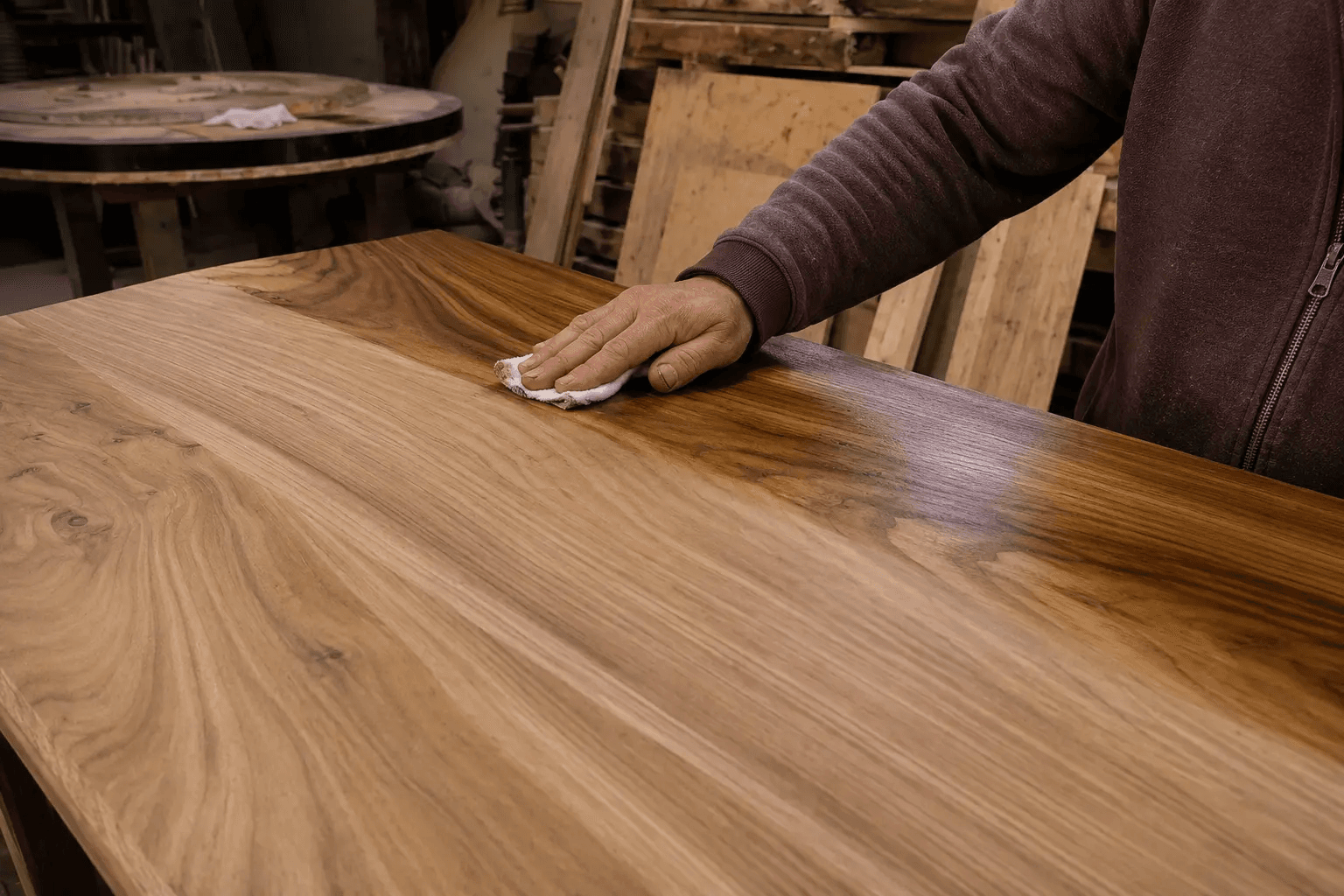
VALIYAN LTD ist ein bulgarischer Hersteller von Premium-Möbeln und ein schlüsselfertiger FF&E-Dienstleister (Möbel, Einbauten und Ausstattung) für internationale Hotelbetreiber, Wellness-Resort-Ketten, Unternehmens- und Einzelhandelskunden sowie Eigentümer von Premium-Wohnimmobilien. Gegründet in Sofia im November 1999 von zwei Partnern, die in einer kleinen gemieteten Werkstatt begannen, hat sich das Unternehmen über mehr als ein Vierteljahrhundert zu einem internationalen Lieferanten entwickelt, der den gesamten Produktionszyklus – Konzeptentwicklung und technische Dokumentation, Zuschnitt, Fassadenproduktion, Lackierung, Polsterung und Montage, internationale Logistik und Installation vor Ort – in seinem eigenen 10.000 m² großen Produktionskomplex in Sofia abwickelt. Es hat mehrere hundert Projekte auf seinem Heimatmarkt und dreizehn europäischen Exportmärkten abgeschlossen, führt jährlich mindestens fünf Multi-Site-Rollout-Programme durch und verzeichnet einen konstant hohen Anteil an Stammkunden. Die vorgeschlagene Finanzierung finanziert die nächste Stufe einer Entwicklungssequenz, die das Unternehmen in aufeinanderfolgenden Investitionszyklen wiederholt abgeschlossen hat: den Übergang des Werks zu einer Industrie-4.0-Architektur zusammen mit Premium-Segment-Veredelungstechnologien.
Reg Nr: 130122979valiyan.com